Biomedical Sciences Research Complex, School of Biology, University of St Andrews, St Andrews KY16 9ST, United Kingdom; and.
MRC-University of Glasgow Centre for Virus Research, Glasgow G61 1QH, United Kingdom.
J Immunol. 2020 Jul 1;205(1):261-271. doi: 10.4049/jimmunol.1901472. Epub 2020 May 18.
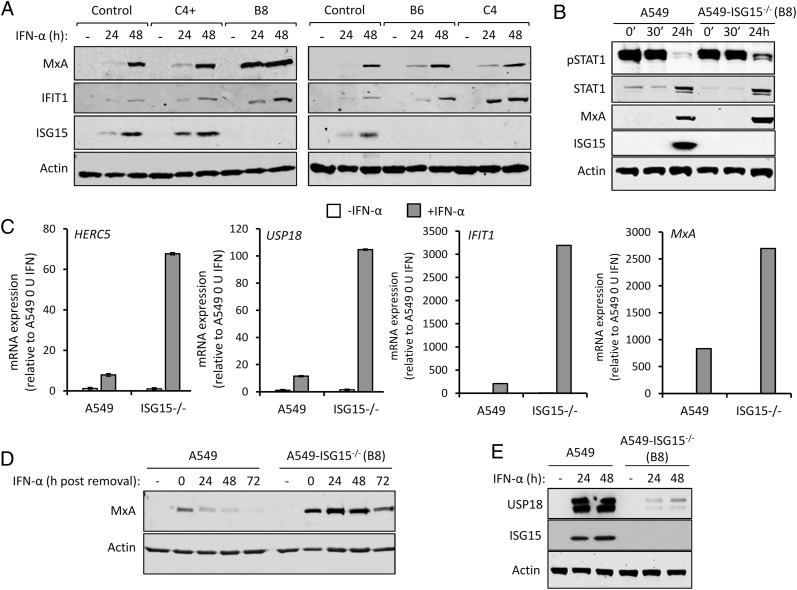
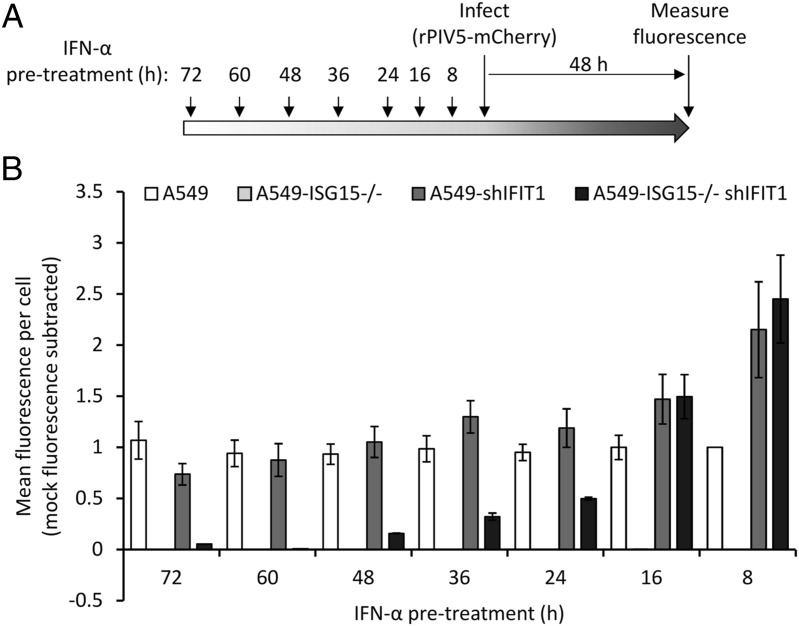
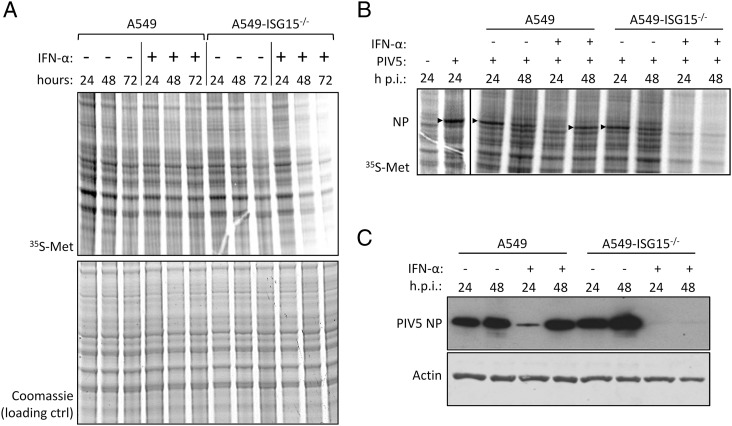
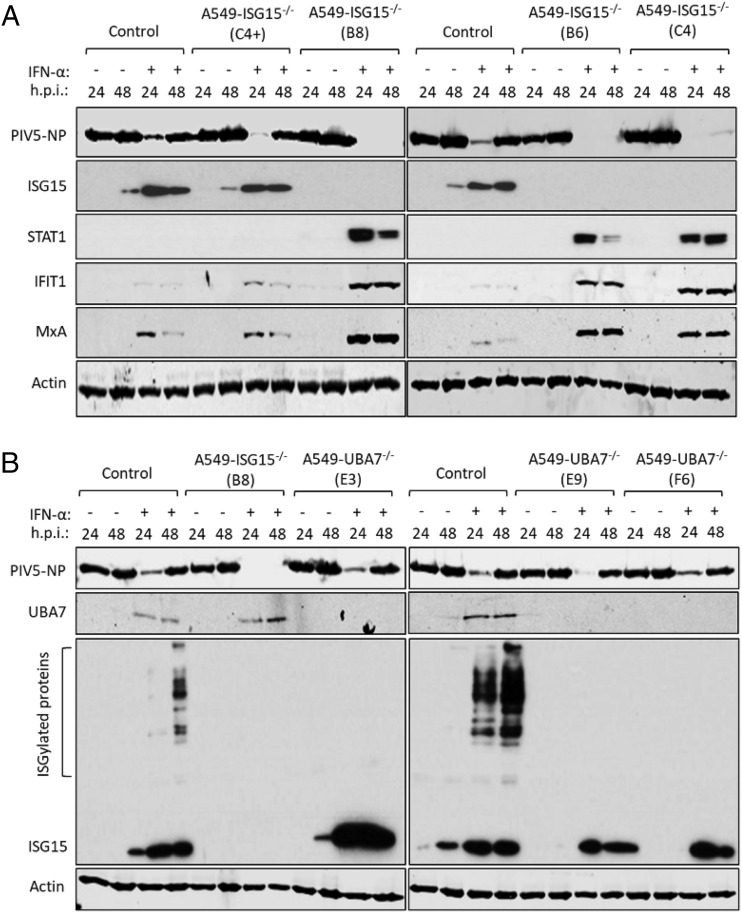
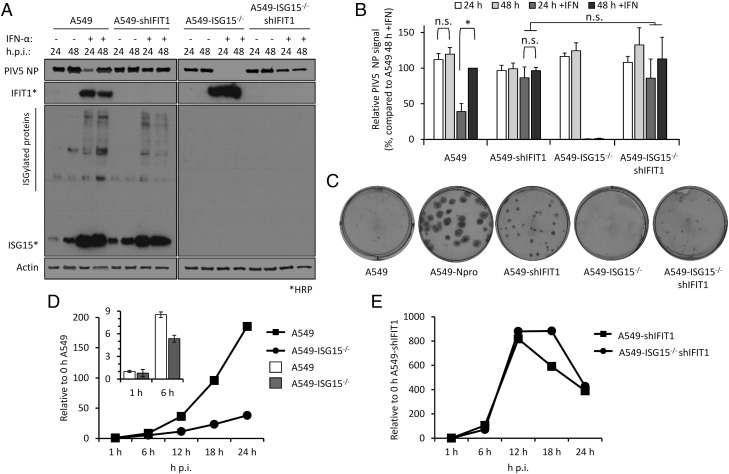
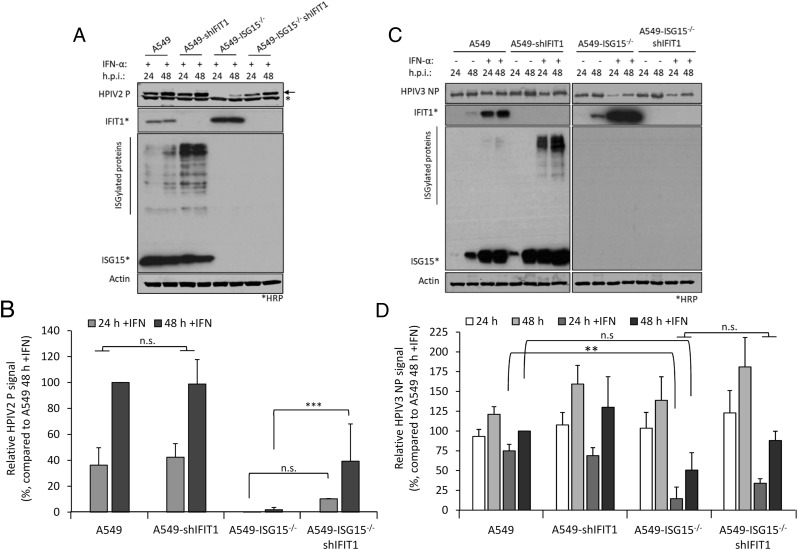
IFNs, produced during viral infections, induce the expression of hundreds of IFN-stimulated genes (ISGs). Some ISGs have specific antiviral activity, whereas others regulate the cellular response. Besides functioning as an antiviral effector, ISG15 is a negative regulator of IFN signaling, and inherited ISG15 deficiency leads to autoinflammatory IFNopathies, in which individuals exhibit elevated ISG expression in the absence of pathogenic infection. We have recapitulated these effects in cultured human A549-ISG15 cells and (using A549-UBA7 cells) confirmed that posttranslational modification by ISG15 (ISGylation) is not required for regulation of the type I IFN response. ISG15-deficient cells pretreated with IFN-α were resistant to paramyxovirus infection. We also showed that IFN-α treatment of ISG15-deficient cells led to significant inhibition of global protein synthesis, leading us to ask whether resistance was due to the direct antiviral activity of ISGs or whether cells were nonpermissive because of translation defects. We took advantage of the knowledge that IFN-induced protein with tetratricopeptide repeats 1 (IFIT1) is the principal antiviral ISG for parainfluenza virus 5. Knockdown of IFIT1 restored parainfluenza virus 5 infection in IFN-α-pretreated, ISG15-deficient cells, confirming that resistance was due to the direct antiviral activity of the IFN response. However, resistance could be induced if cells were pretreated with IFN-α for longer times, presumably because of inhibition of protein synthesis. These data show that the cause of virus resistance is 2-fold; ISG15 deficiency leads to the early overexpression of specific antiviral ISGs, but the later response is dominated by an unanticipated, ISG15-dependent loss of translational control.
IFNs 是在病毒感染期间产生的,它能诱导数百种 IFN 刺激基因(ISGs)的表达。一些 ISGs 具有特定的抗病毒活性,而其他则调节细胞反应。ISG15 除了作为抗病毒效应物外,还是 IFN 信号的负调节剂,遗传性 ISG15 缺乏会导致自身炎症性 IFN 病,其中个体在没有致病性感染的情况下表现出升高的 ISG 表达。我们在培养的人 A549-ISG15 细胞中重现了这些效应(并使用 A549-UBA7 细胞)证实了 ISG15 的翻译后修饰(ISGylation)对于 I 型 IFN 反应的调节不是必需的。经 IFN-α预处理的 ISG15 缺陷细胞对副粘病毒感染具有抗性。我们还表明,IFN-α 处理 ISG15 缺陷细胞会导致全球蛋白质合成的显著抑制,这使我们不禁要问这种抗性是由于 ISGs 的直接抗病毒活性还是由于细胞由于翻译缺陷而无法增殖。我们利用这样的知识,即干扰素诱导的具有四肽重复结构域 1(IFIT1)的蛋白是副流感病毒 5 的主要抗病毒 ISG。IFIT1 的敲低恢复了 IFN-α预处理的 ISG15 缺陷细胞中的副流感病毒 5 感染,证实了抗性是由于 IFN 反应的直接抗病毒活性所致。但是,如果细胞用 IFN-α预处理更长时间,就可以诱导出抗性,这可能是由于蛋白质合成的抑制。这些数据表明,病毒抗性的原因有两个;ISG15 缺乏会导致特定抗病毒 ISGs 的早期过度表达,但随后的反应则主要由意想不到的、依赖于 ISG15 的翻译控制丧失所主导。