Stem Cells and Diabetes Laboratory, Institute of Molecular and Cell Biology, A*STAR, Proteos, Singapore, 138673, Singapore.
School of Biological Sciences, Nanyang Technological University, Singapore, 637551, Singapore.
Cell Death Dis. 2020 May 18;11(5):378. doi: 10.1038/s41419-020-2589-7.
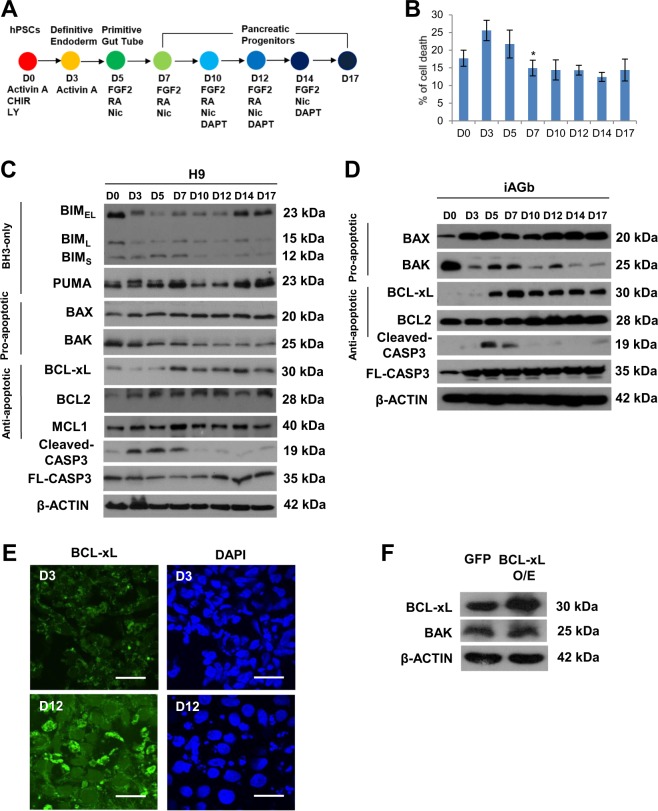
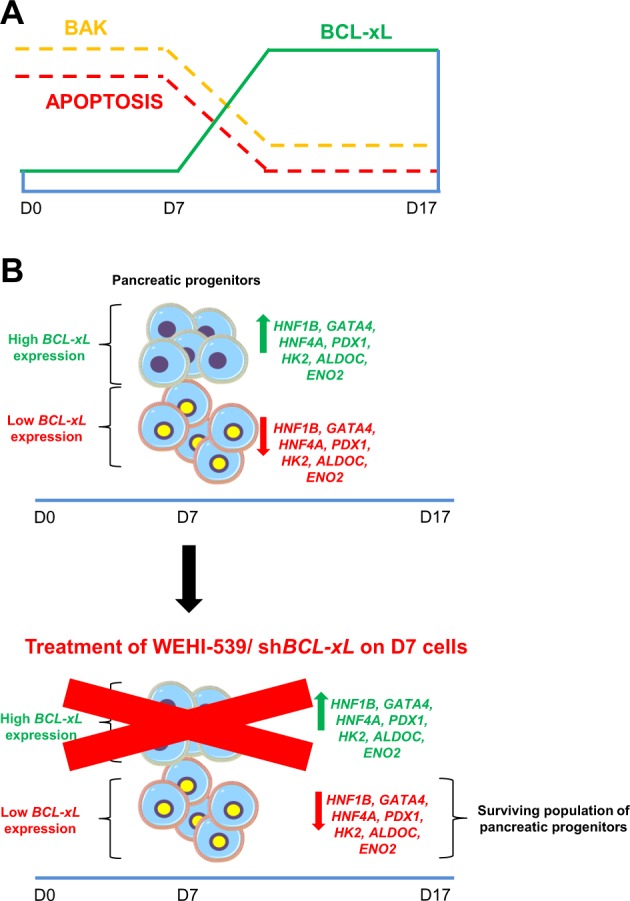
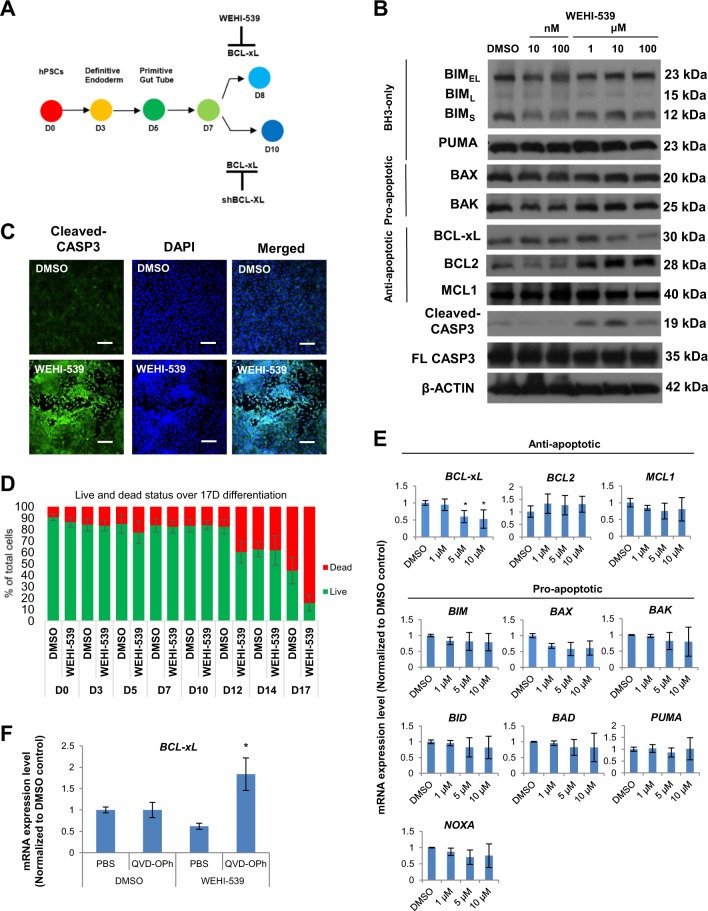
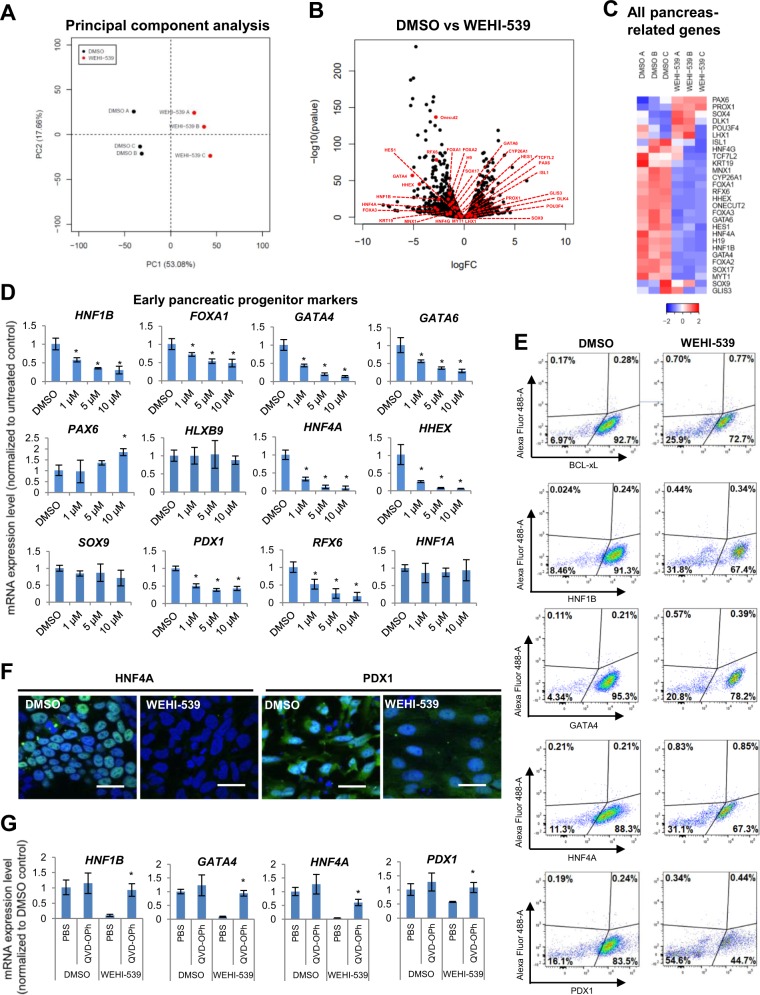
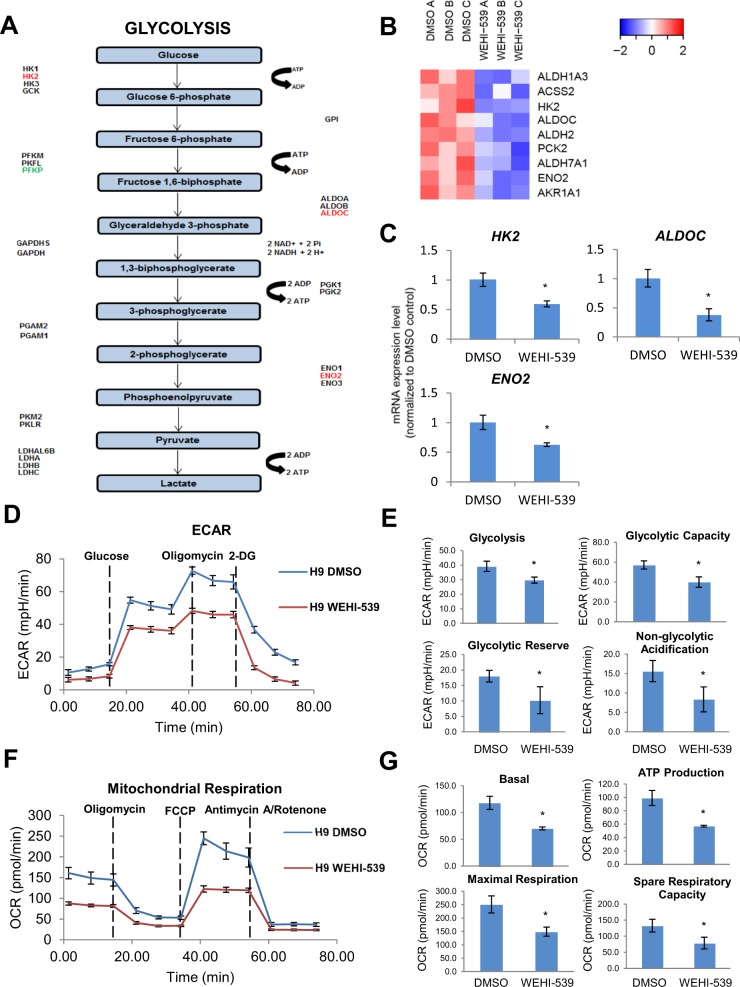
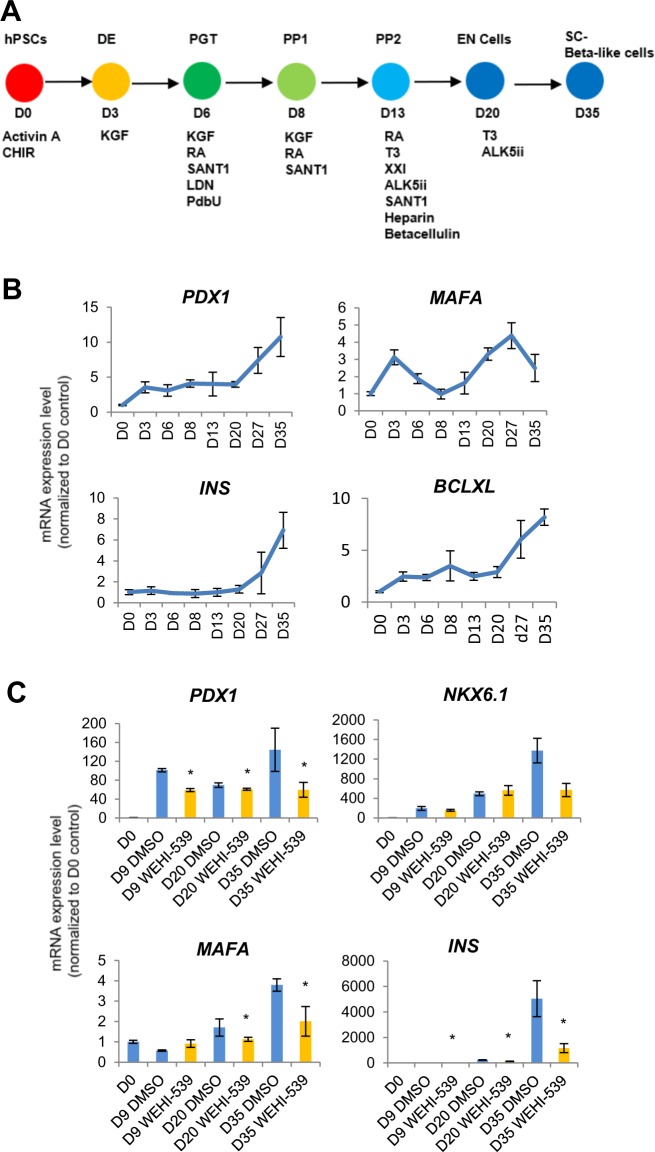
The differentiation of human pluripotent stem cells into pancreatic cells involves cellular proliferation and apoptosis during cell fate transitions. However, their implications for establishing cellular identity are unclear. Here, we profiled the expression of BCL-2 family of proteins during pancreatic specification and observed an upregulation of BCL-xL, downregulation of BAK and corresponding downregulation of cleaved CASP3 representative of apoptosis. Experimental inhibition of BCL-xL reciprocally increased apoptosis and resulted in a decreased gene expression of pancreatic markers despite a compensatory increase in anti-apoptotic protein BCL-2. RNA-Seq analyses then revealed a downregulation of multiple metabolic genes upon inhibition of BCL-xL. Follow-up bioenergetics assays revealed broad downregulation of both glycolysis and oxidative phosphorylation when BCL-xL was inhibited. Early perturbation of BCL-xL during pancreatic specification also had subsequent detrimental effects on the formation of INS pancreatic beta-like cells. In conclusion, the more differentiated pancreatic progenitors are dependent on anti-apoptotic BCL-xL for survival, whereas the less differentiated pancreatic progenitors that survived after WEHI-539 treatment would exhibit a more immature phenotype. Therefore, modulation of the expression level of BCL-xL can potentially increase the survival and robustness of pancreatic progenitors that ultimately define human pancreatic beta cell mass and function.
人多能干细胞向胰腺细胞的分化涉及细胞命运转变过程中的细胞增殖和细胞凋亡。然而,其对建立细胞特性的影响尚不清楚。在这里,我们在胰腺特化过程中对 BCL-2 家族蛋白的表达进行了分析,观察到 BCL-xL 的上调、BAK 的下调以及代表凋亡的 cleaved CASP3 的相应下调。BCL-xL 的实验抑制会反过来增加细胞凋亡,并导致胰腺标志物的基因表达减少,尽管抗凋亡蛋白 BCL-2 代偿性增加。然后,RNA-Seq 分析显示 BCL-xL 抑制后多个代谢基因下调。后续的生物能量学测定显示,当抑制 BCL-xL 时,糖酵解和氧化磷酸化都广泛下调。在胰腺特化过程中早期对 BCL-xL 的干扰也会对 INS 胰腺β样细胞的形成产生后续的不利影响。总之,分化程度更高的胰腺祖细胞依赖抗凋亡的 BCL-xL 来生存,而在 WEHI-539 处理后存活下来的分化程度较低的胰腺祖细胞则表现出更不成熟的表型。因此,调节 BCL-xL 的表达水平可能会增加最终定义人类胰腺β细胞数量和功能的胰腺祖细胞的生存能力和稳健性。