Poupon-Bejuit Laura, Rocha-Ferreira Eridan, Thornton Claire, Hagberg Henrik, Rahim Ahad A
UCL School of Pharmacy, University College London, London, United Kingdom.
Centre for Perinatal Medicine and Health, Institute of Clinical Sciences, Sahlgrenska Academy, University of Gothenburg, Gothenburg, Sweden.
Front Cell Neurosci. 2020 May 6;14:112. doi: 10.3389/fncel.2020.00112. eCollection 2020.
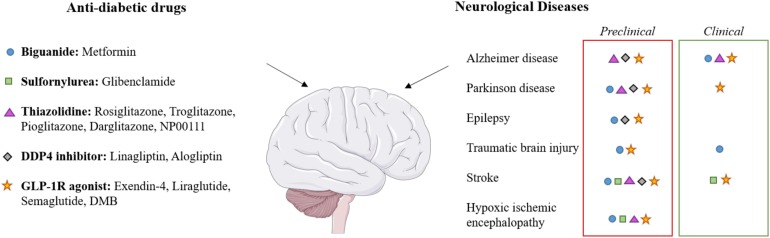
The perinatal period represents a time of great vulnerability for the developing brain. A variety of injuries can result in death or devastating injury causing profound neurocognitive deficits. Hypoxic-ischemic neonatal encephalopathy (HIE) remains the leading cause of brain injury in term infants during the perinatal period with limited options available to aid in recovery. It can result in long-term devastating consequences with neurologic complications varying from mild behavioral deficits to severe seizure, intellectual disability, and/or cerebral palsy in the newborn. Despite medical advances, the only viable option is therapeutic hypothermia which is classified as the gold standard but is not used, or may not be as effective in preterm cases, infection-associated cases or low resource settings. Therefore, alternatives or adjunct therapies are urgently needed. Ongoing research continues to advance our understanding of the mechanisms contributing to perinatal brain injury and identify new targets and treatments. Drugs used for the treatment of patients with type 2 diabetes mellitus (T2DM) have demonstrated neuroprotective properties and therapeutic efficacy from neurological sequelae following HIE insults in preclinical models, both alone, or in combination with induced hypothermia. In this short review, we have focused on recent findings on the use of diabetes drugs that provide a neuroprotective effect using and models of HIE that could be considered for clinical translation as a promising treatment.
围产期是发育中的大脑极易受到伤害的时期。多种损伤可导致死亡或造成严重损伤,引起严重的神经认知缺陷。缺氧缺血性新生儿脑病(HIE)仍然是足月儿围产期脑损伤的主要原因,且帮助恢复的选择有限。它可导致长期的严重后果,新生儿的神经并发症从轻微行为缺陷到严重癫痫、智力残疾和/或脑瘫不等。尽管医学取得了进步,但唯一可行的选择是治疗性低温,这被列为金标准,但在早产病例、感染相关病例或资源匮乏地区未被使用,或可能效果不佳。因此,迫切需要替代疗法或辅助疗法。正在进行的研究不断推进我们对围产期脑损伤机制的理解,并确定新的靶点和治疗方法。用于治疗2型糖尿病(T2DM)患者的药物已在临床前模型中单独或与诱导性低温联合使用时,显示出对HIE损伤后神经后遗症的神经保护特性和治疗效果。在这篇简短的综述中,我们重点关注了使用糖尿病药物的最新研究结果,这些药物在HIE的[具体模型1]和[具体模型2]模型中具有神经保护作用,有望作为一种有前景的治疗方法进行临床转化。