Ghafar Abdul, McGill David, Stevenson Mark A, Badar Muhammad, Kumbher Aijaz, Warriach Hassan M, Gasser Robin B, Jabbar Abdul
Department of Veterinary Biosciences, Faculty of Veterinary and Agricultural Sciences, Melbourne Veterinary School, The University of Melbourne, Werribee, VIC, Australia.
Department of Veterinary Clinical Sciences, Faculty of Veterinary and Agricultural Sciences, Melbourne Veterinary School, The University of Melbourne, Werribee, VIC, Australia.
Front Vet Sci. 2020 May 6;7:248. doi: 10.3389/fvets.2020.00248. eCollection 2020.
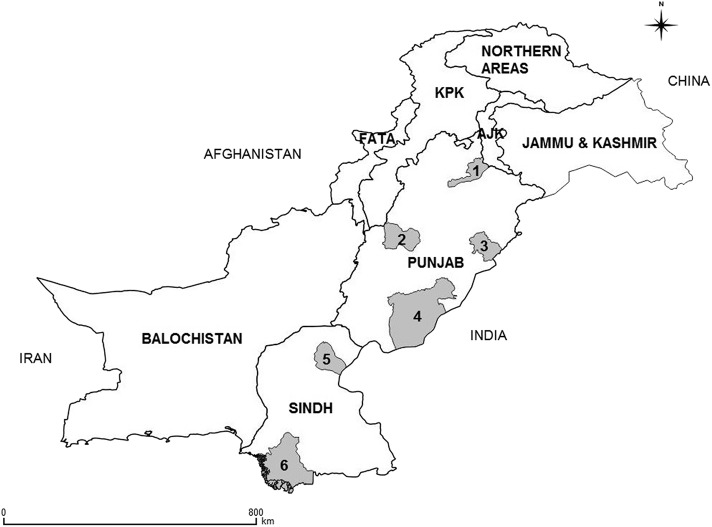
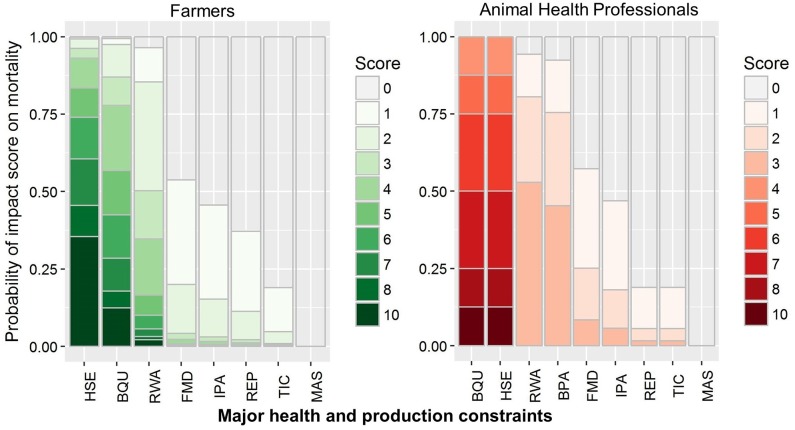
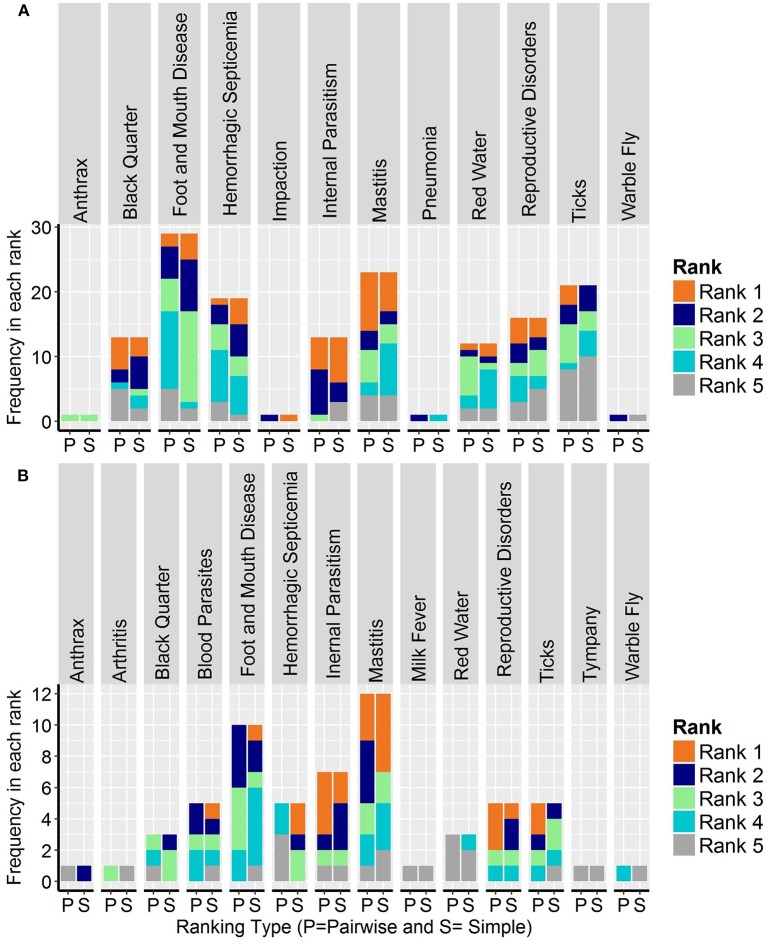
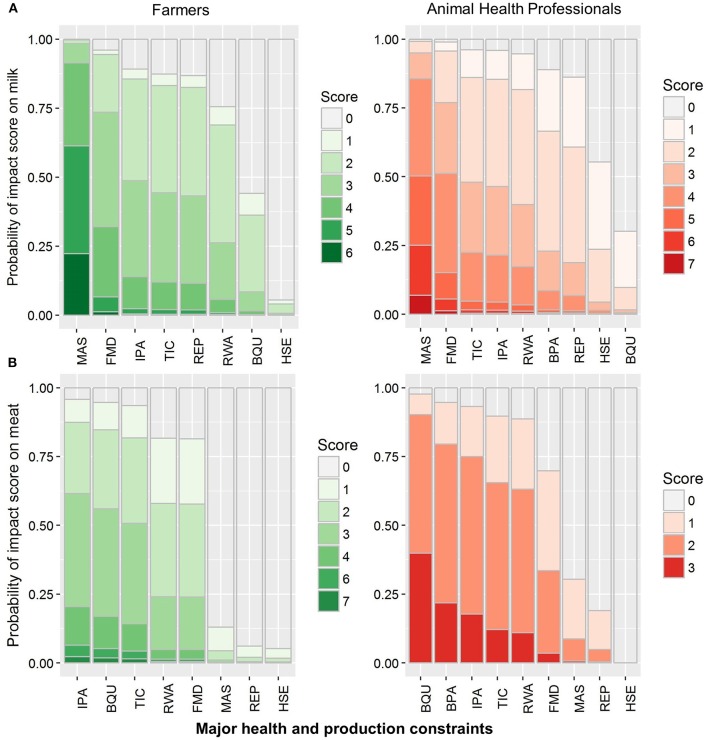
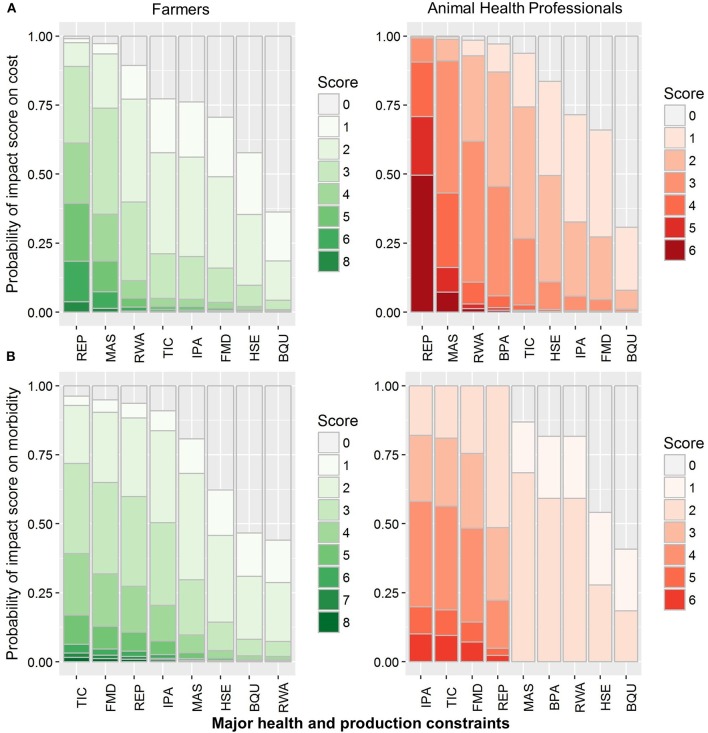
Systems to record the frequency of animal health events in Pakistan are limited. A participatory approach was used to address gaps in farmers' knowledge and understanding of bovine health and production issues in five agroecological zones (AEZs) of Pakistan. Participatory tools, including simple ranking, pairwise ranking, constraint impact scoring, and constraint profiling were used in group discussions with farmers and animal health professionals (AHPs) in six districts of two provinces, Punjab and Sindh. The results of the ranking activities showed that foot-and-mouth disease (FMD), clinical mastitis, ticks, hemorrhagic septicemia, reproductive disorders, blackleg, and endoparasites were the most important bovine health and production constraints for small-scale dairy farmers. Constraint impact scoring showed that the participants perceived that: (1) milk production was severely affected by FMD and mastitis; (2) blackleg and parasitism led to poor growth rates and reduced meat production; (3) reproductive disorders and mastitis caused major economic losses (due to the high cost of treatment); and (4) blackleg and hemorrhagic septicemia were the leading causes of mortality in cattle and buffaloes. Although there was strong agreement in responses and constraint impact scores between farmers and AHPs, farmers were more concerned about health issues that cause high mortalities, whereas AHPs emphasized the importance of disorders with a high economic impact. Despite socioeconomic differences among AEZs, farmers' knowledge about bovine health and production constraints was similar. The findings from this study revealed that farmers had limited understanding of the risk factors and routes of transmission of various infectious diseases of bovines, which emphasizes the need to develop and implement tailored extension programs in Pakistan to control contagious diseases of animals and to improve the profitability of small-scale dairy farmers.
巴基斯坦用于记录动物健康事件发生频率的系统有限。采用了一种参与式方法,以弥补巴基斯坦五个农业生态区(AEZ)的农民在牛健康和生产问题方面的知识和理解差距。在旁遮普省和信德省两个省份的六个地区,与农民和动物健康专业人员(AHP)进行小组讨论时,使用了参与式工具,包括简单排序、成对排序、约束影响评分和约束剖析。排序活动的结果表明,口蹄疫(FMD)、临床乳腺炎、蜱虫、出血性败血症、生殖障碍、黑腿病和体内寄生虫是小规模奶农面临的最重要的牛健康和生产制约因素。约束影响评分显示,参与者认为:(1)口蹄疫和乳腺炎严重影响牛奶产量;(2)黑腿病和寄生虫病导致生长速度缓慢和肉类产量下降;(3)生殖障碍和乳腺炎造成重大经济损失(由于治疗成本高昂);(4)黑腿病和出血性败血症是牛和水牛死亡的主要原因。尽管农民和动物健康专业人员在回答和约束影响评分上有很强的一致性,但农民更关注导致高死亡率的健康问题,而动物健康专业人员则强调具有高经济影响的疾病的重要性。尽管各农业生态区之间存在社会经济差异,但农民对牛健康和生产制约因素的了解相似。这项研究的结果表明,农民对牛各种传染病的风险因素和传播途径了解有限,这强调了在巴基斯坦制定和实施量身定制的推广计划以控制动物传染病并提高小规模奶农盈利能力的必要性。