Division of Biotechnology Review and Research II, U.S. Food and Drug Administration, Center for Drug Evaluation and Research, Office of Pharmaceutical Quality, Office of Biotechnology Products, Silver Spring, Maryland.
Division of Product Quality Research, U.S. Food and Drug Administration, Center for Drug Evaluation and Research, Office of Pharmaceutical Quality, Office of Testing and Research, Silver Spring, Maryland.
Biotechnol Bioeng. 2020 Sep;117(9):2802-2815. doi: 10.1002/bit.27436. Epub 2020 Jun 4.
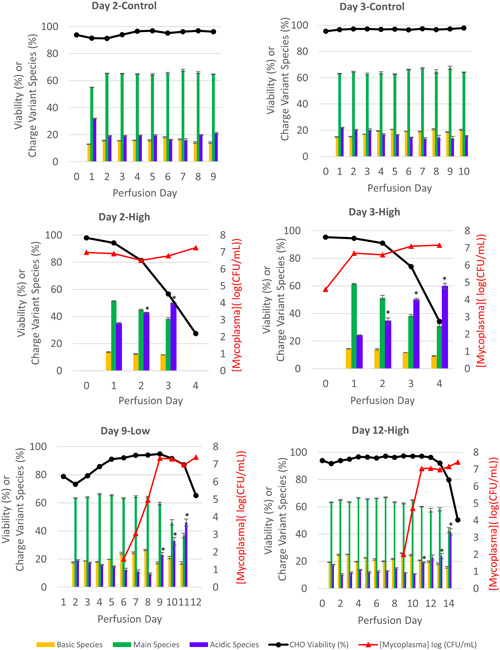
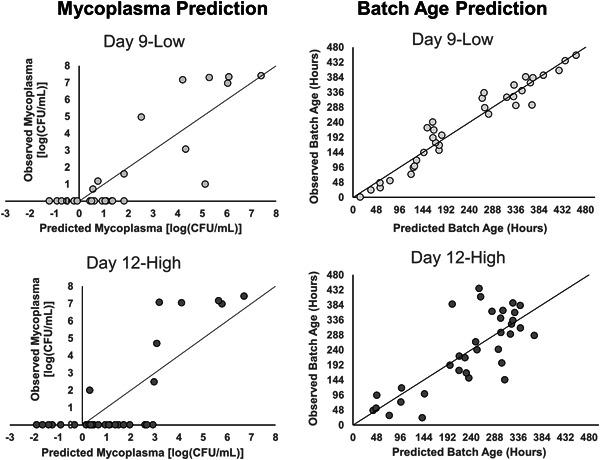
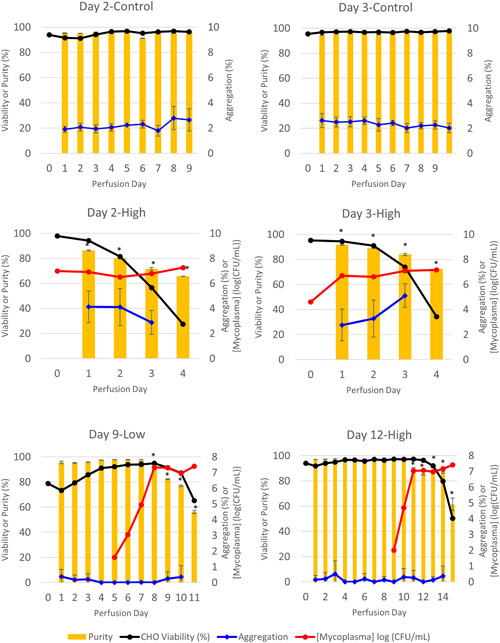
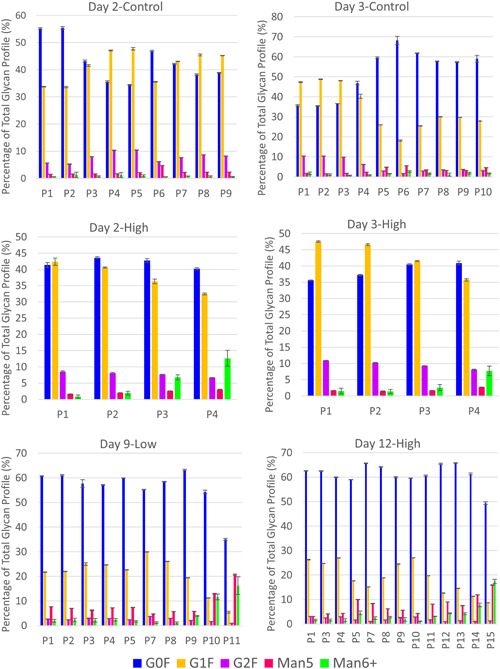
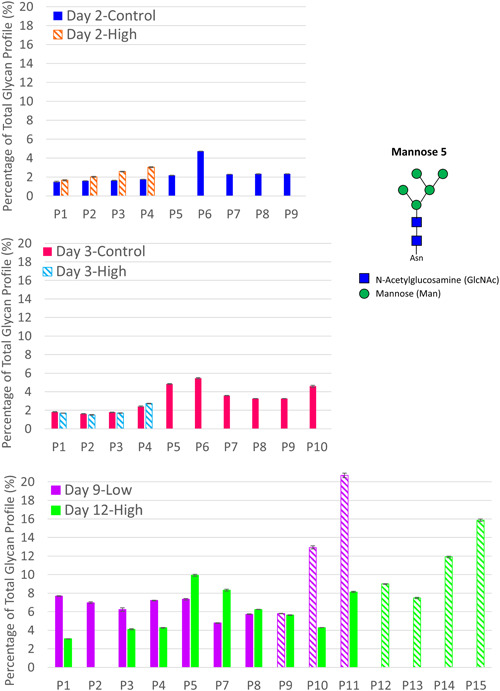
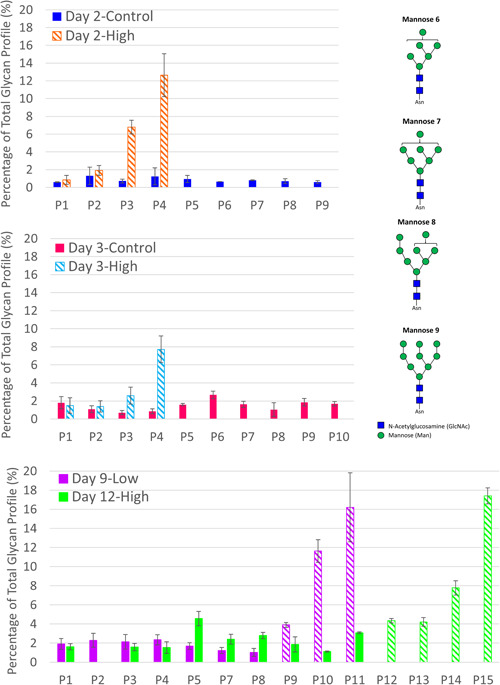
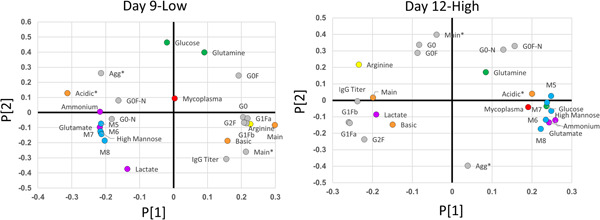
A mycoplasma contamination event in a biomanufacturing facility can result in costly cleanups and potential drug shortages. Mycoplasma may survive in mammalian cell cultures with only subtle changes to the culture and penetrate the standard 0.2-µm filters used in the clarification of harvested cell culture fluid. Previously, we reported a study regarding the ability of Mycoplasma arginini to persist in a single-use, perfusion rocking bioreactor system containing a Chinese hamster ovary (CHO) DG44 cell line expressing a model monoclonal immunoglobulin G 1 (IgG1) antibody. Our previous work showed that M. arginini affects CHO cell growth profile, viability, nutrient consumption, oxygen use, and waste production at varying timepoints after M. arginini introduction to the culture. Careful evaluation of certain identified process parameters over time may be used to indicate mycoplasma contamination in CHO cell cultures in a bioreactor before detection from a traditional method. In this report, we studied the changes in the IgG1 product quality produced by CHO cells considered to be induced by the M. arginini contamination events. We observed changes in critical quality attributes correlated with the duration of contamination, including increased acidic charge variants and high mannose species, which were further modeled using principal component analysis to explore the relationships among M. arginini contamination, CHO cell growth and metabolites, and IgG1 product quality attributes. Finally, partial least square models using NIR spectral data were used to establish predictions of high levels (≥10 colony-forming unit [CFU/ml]) of M. arginini contamination, but prediction of levels below 10 CFU/ml were not reliable. Contamination of CHO cells with M. arginini resulted in significant reduction of antibody product quality, highlighting the importance of rapid microbiological testing and mycoplasma testing during particularly long upstream bioprocesses to ensure product safety and quality.
支原体污染事件会给生物制造设施造成代价高昂的清理工作和潜在的药物短缺。支原体可能在哺乳动物细胞培养物中存活,而培养物只有细微变化,并穿透澄清收获的细胞培养液中使用的标准 0.2-µm 过滤器。此前,我们报道了一项关于精氨酸支原体在含有表达模型单克隆免疫球蛋白 G1(IgG1)抗体的中国仓鼠卵巢(CHO)DG44 细胞系的一次性使用灌注摇床生物反应器系统中持续存在的能力的研究。我们之前的工作表明,支原体会影响 CHO 细胞的生长曲线、活力、营养消耗、氧气利用和废物产生,在支原体引入培养物后的不同时间点。随着时间的推移,仔细评估某些确定的过程参数可能用于在传统方法检测到之前,指示生物反应器中 CHO 细胞培养物中的支原体污染。在本报告中,我们研究了被认为是由支原体污染事件引起的 CHO 细胞产生的 IgG1 产品质量的变化。我们观察到与污染持续时间相关的关键质量属性的变化,包括酸性电荷变异体和高甘露糖物种的增加,这些变化进一步使用主成分分析进行建模,以探索支原体污染、CHO 细胞生长和代谢物以及 IgG1 产品质量属性之间的关系。最后,使用近红外光谱数据的偏最小二乘模型用于建立高水平(≥10 菌落形成单位 [CFU/ml])支原体污染的预测,但低于 10 CFU/ml 的水平的预测不可靠。CHO 细胞被支原体污染会导致抗体产品质量显著下降,这突出了在特别长的上游生物工艺过程中快速进行微生物测试和支原体测试的重要性,以确保产品安全和质量。