Yisireyili Maimaiti, Alimujiang Aziguli, Aili Aikebaier, Li Yiliang, Yisireyili Salamaiti, Abudureyimu Kelimu
Research Institute of General and Minimally Invasive Surgery, People's Hospital of Xinjiang Uygur Autonomous Region, Urumqi, Xinjiang 830001, People's Republic of China.
Department of Minimally Invasive Surgery, Hernia, and Abdominal Wall Surgery, People's Hospital of Xinjiang Uygur Autonomous Region, Urumqi, Xinjiang 830001, People's Republic of China.
Psychol Res Behav Manag. 2020 May 4;13:383-393. doi: 10.2147/PRBM.S250945. eCollection 2020.
Although the underlying mechanisms of chronic stress are still unknown, this condition has been related to the pathophysiology of gastric mucosal inflammation, whose development is accelerated by oxidative stress. The present study investigates how chronic stress influences gastric mucosal oxidative stress and inflammation.
Eight-week-old C57BL/6J male mice were subjected to two-week intermittent restraint stress. The expressions of CD11b (a specific for monocyte/macrophage), monocyte/macrophage cell surface markers (CD68 and F4/80), NADPH oxidase-4 (Nox-4) and 8-hydroxy-2'-deoxyguanosine (8-OHdG, a sensitive biomarker of oxidative stress) were determined using immunohistochemistry, RT-PCR, and enzyme-linked immunosorbent assay, respectively. The expressions of antioxidant enzymes, such as superoxide dismutase, catalase, and glutathione peroxidase, were examined by RT-PCR and Western blotting. The expressions of proinflammatory cytokines, including monocyte chemoattractant protein-1 (MCP-1), interleukin-1β (IL-1β), and tumor necrosis factor-α (TNF-α), were determined using immunohistochemistry and RT-PCR, respectively.
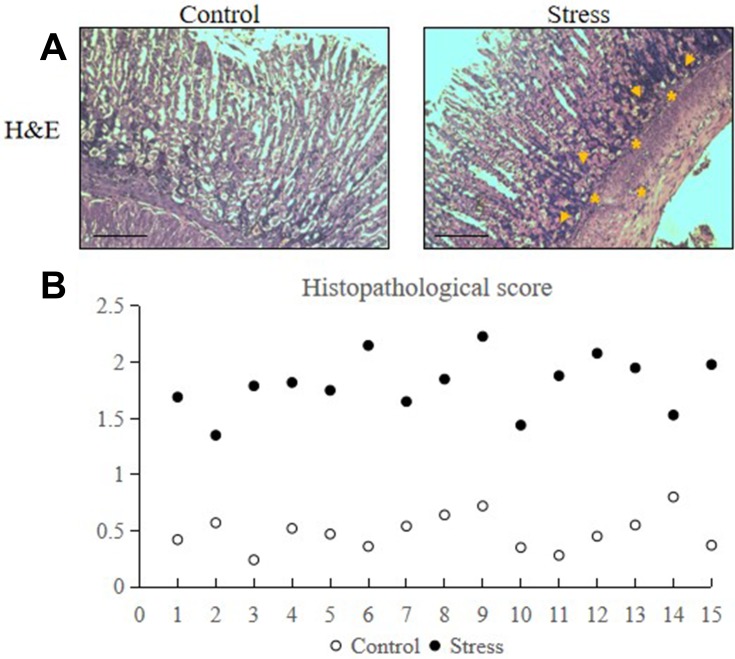
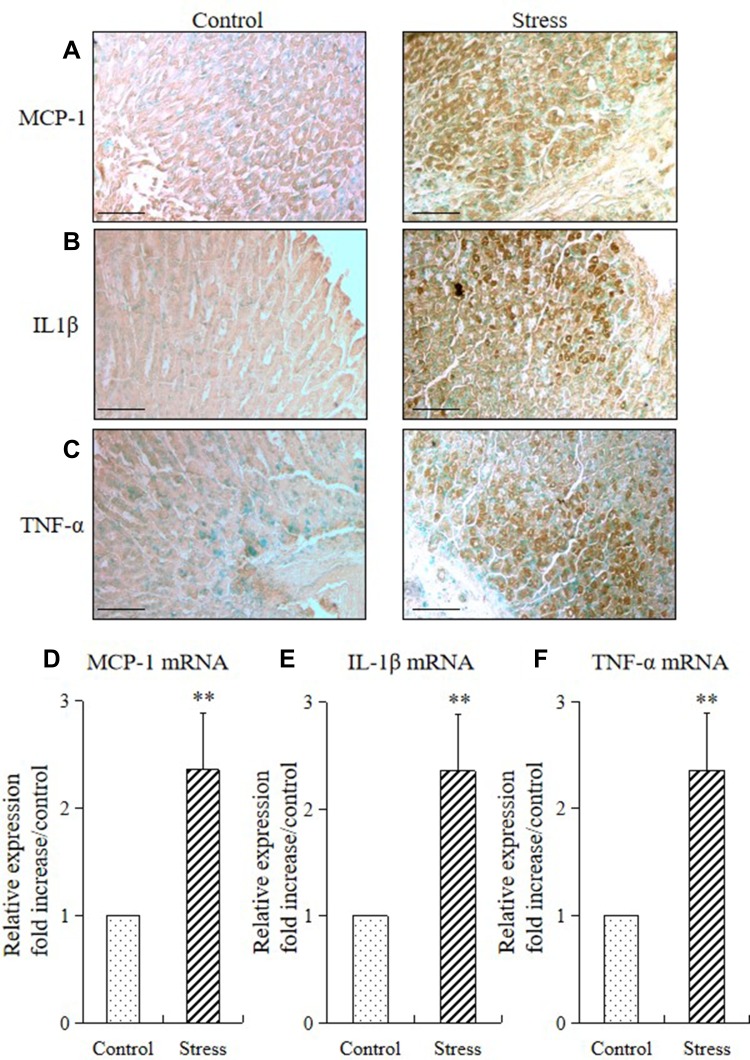
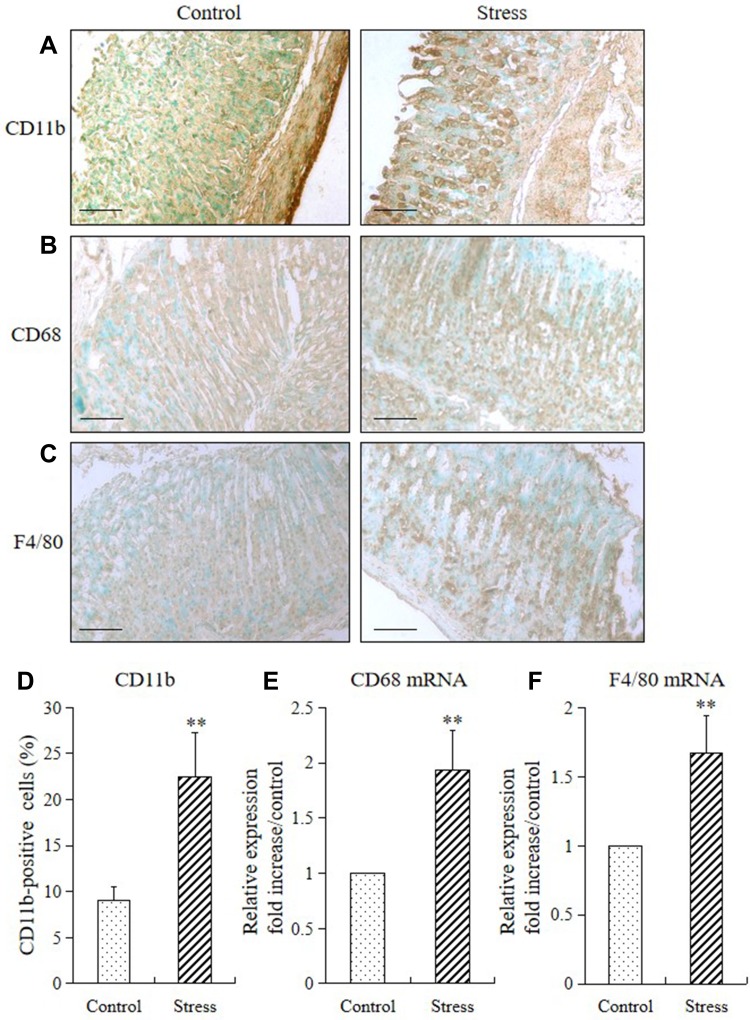
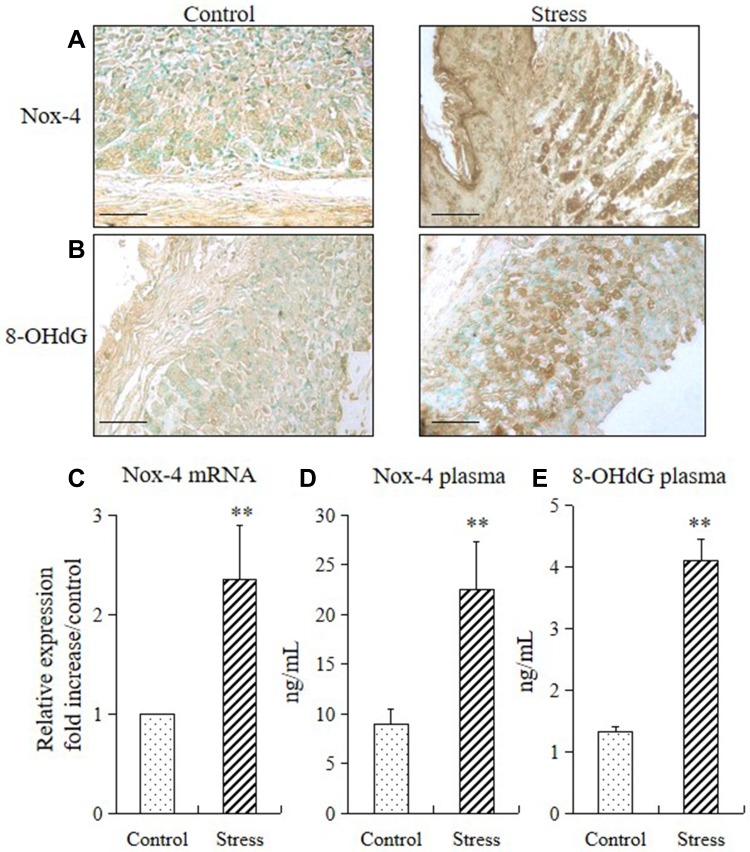
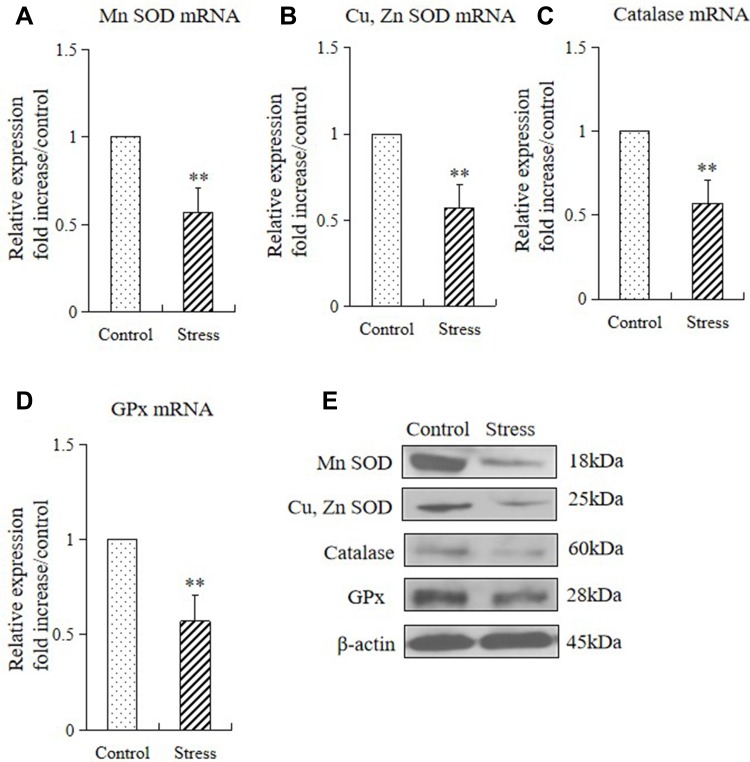
Chronic stress increased the lymphocytic infiltration and inflammation within the gastric mucosa of mice. Stress remarkably increased the expression levels of CD11b and mRNA expression levels of CD68 and F4/80 in the mucosa of the stomach of stressed mice. Stress remarkably increased both mRNA and plasma concentrations of Nox-4 and 8-OHdG; and markedly reduced gastric mRNA and protein expression levels of antioxidant enzymes such as superoxide dismutase, catalase, and glutathione peroxidase. The expressions of proinflammatory cytokines (MCP-1, IL-1β, and TNF-α) were predominantly observed in the gastric mucosal layers of the stressed mice. Furthermore, stress remarkably elevated the gastric mucosal mRNA expression levels of MCP-1, IL-1β, and TNF-α.
Two weeks of restraint stress induced gastric inflammation in the murine model with enhanced oxidative stress and reduced anti-oxidative system.
尽管慢性应激的潜在机制尚不清楚,但这种状况已与胃黏膜炎症的病理生理学相关,胃黏膜炎症的发展会因氧化应激而加速。本研究调查慢性应激如何影响胃黏膜氧化应激和炎症。
对8周龄的C57BL/6J雄性小鼠进行为期两周的间歇性束缚应激。分别使用免疫组织化学、逆转录-聚合酶链反应(RT-PCR)和酶联免疫吸附测定法测定CD11b(单核细胞/巨噬细胞特异性标志物)、单核细胞/巨噬细胞表面标志物(CD68和F4/80)、NADPH氧化酶-4(Nox-4)和8-羟基-2'-脱氧鸟苷(8-OHdG,氧化应激的敏感生物标志物)的表达。通过RT-PCR和蛋白质印迹法检测超氧化物歧化酶、过氧化氢酶和谷胱甘肽过氧化物酶等抗氧化酶的表达。分别使用免疫组织化学和RT-PCR测定促炎细胞因子的表达,包括单核细胞趋化蛋白-1(MCP-1)、白细胞介素-1β(IL-1β)和肿瘤坏死因子-α(TNF-α)。
慢性应激增加了小鼠胃黏膜内的淋巴细胞浸润和炎症。应激显著增加了应激小鼠胃黏膜中CD11b的表达水平以及CD68和F4/80的mRNA表达水平。应激显著增加了Nox-4和8-OHdG的mRNA及血浆浓度;并显著降低了超氧化物歧化酶、过氧化氢酶和谷胱甘肽过氧化物酶等抗氧化酶的胃mRNA和蛋白质表达水平。促炎细胞因子(MCP-1、IL-1β和TNF-α)的表达主要在应激小鼠的胃黏膜层中观察到。此外,应激显著提高了胃黏膜中MCP-1、IL-1β和TNF-α的mRNA表达水平。
两周的束缚应激在小鼠模型中诱导了胃炎症,伴有氧化应激增强和抗氧化系统减弱。