Dayan Erez, Ramirez Henry, Theodorou Spero
Massachusetts General Hospital, Division of Plastic and Reconstructive Surgery, Harvard Medical School, Boston, Mass.
Southern Oklahoma Women's Heath, Private Practice, Ardmore, Okla.
Plast Reconstr Surg Glob Open. 2020 Apr 22;8(4):e2418. doi: 10.1097/GOX.0000000000002418. eCollection 2020 Apr.
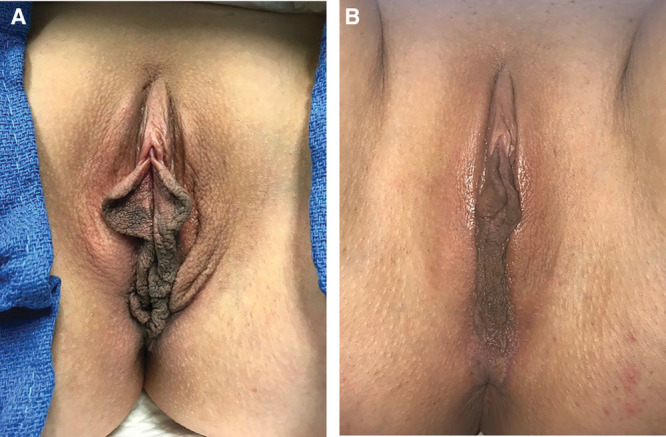
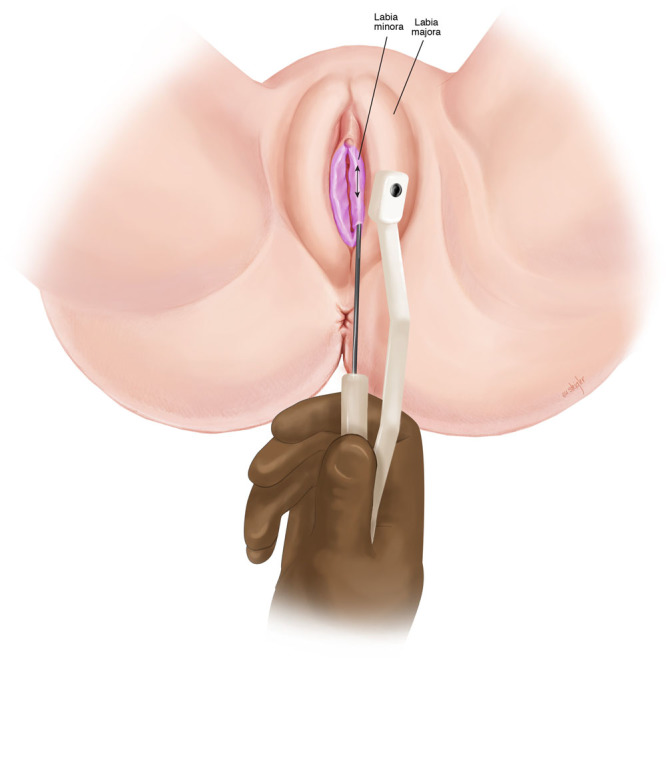
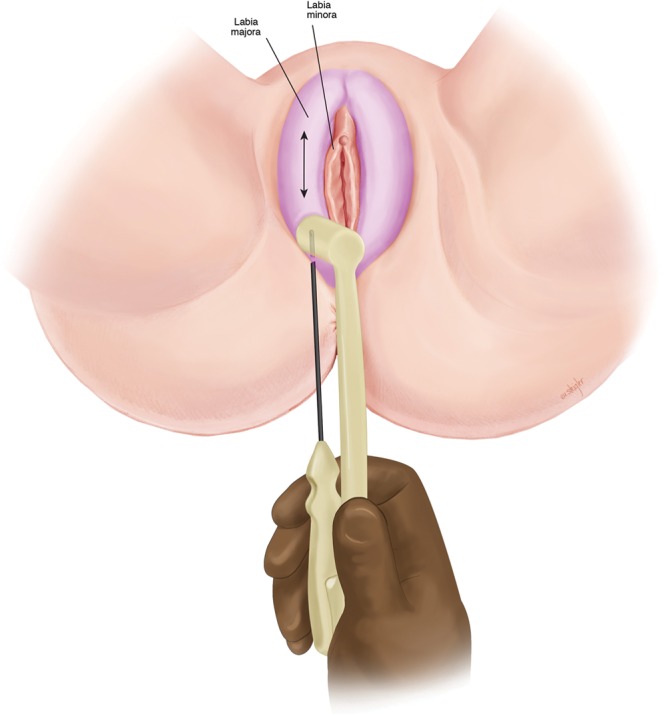
Labiaplasty has rapidly increased in popularity over the past 5 years.Traditional labiaplasty is associated with potential complications, such as dehiscence, hematoma, flap necrosis, narrowed introitus, pain, and asymmetry. Minimally invasive techniques such as radiofrequency (RF) have emerged as viable alternatives to traditional labiaplasty through a temperature-controlled bipolar mechanism to heat tissues to target temperatures of 40°C-45°C. This controlled energy delivery leads to an inflammatory cascade initiating neocollagenesis, angiogenesis, and elastogenesis over the coming 3-4 months. A single surgeon series of labia minora and majora treatment by RF (InMode, Lake Forrest, Calif.) was reviewed between April 2018-October 2018. Demographic data were collected as well grade of hypertrophy (pre/posttreatment), number of vaginal deliveries, and reason for treatment. Procedural parameters were recorded, including internal/external temperatures, total energy used, and time of treatment. All adverse events were recorded. Objective and subjective data points were obtained in the form of patient surveys and photographic evaluation by lay persons as well as plastic surgeons objective to the treatment. Ten consecutive patients were treated with bipolar RF (InMode, Lake Forrest, Calif.) between April 2018-October 2018. Mean age was 44 (29-54). Average number of pregnancies was 2 (STD 1.1). Three patients were treated for aesthetic concerns, 3 for functional complaints, and 4 desired improvement in both. Overall graded improvement in labia size/contour was +50% (STD ±15.3). Patient satisfaction scale data demonstrated 9.5/10 (±1.7). All patients (10/10) stated that they would undergo treatment again. In all cases, the surgeon observed tightening of the clitoral hood, introitus, forchett, as well as improved distribution of dark pigmentation of the labia minora. There were no significant complications and no need for additional procedures. Average recovery time was 14 days (STD 2.2). Treatment of labia hyperplasia and laxity with bipolar RF may potentially fill a treatment gap of women seeking aesthetic and functional improvements without surgical labiaplasty. A powered prospective randomized double-blinded study is needed to further elucidate the role of this technology.
在过去5年里,阴唇整形术的受欢迎程度迅速上升。传统阴唇整形术存在一些潜在并发症,如裂开、血肿、皮瓣坏死、阴道入口狭窄、疼痛和不对称。诸如射频(RF)等微创技术已成为传统阴唇整形术的可行替代方案,它通过温度控制的双极机制将组织加热到40°C - 45°C的目标温度。这种可控的能量传递会引发炎症级联反应,在接下来的3 - 4个月内启动新胶原形成、血管生成和弹性生成。回顾了2018年4月至2018年10月期间由一位外科医生使用射频(InMode,加利福尼亚州福里斯特湖)对小阴唇和大阴唇进行治疗的系列病例。收集了人口统计学数据以及肥大程度(治疗前/后)、阴道分娩次数和治疗原因。记录了手术参数,包括内部/外部温度、总能量使用量和治疗时间。记录了所有不良事件。通过患者调查以及外行人员和不参与治疗的整形外科医生的照片评估获得客观和主观数据点。在2018年4月至2018年10月期间,连续10名患者接受了双极射频(InMode,加利福尼亚州福里斯特湖)治疗。平均年龄为44岁(29 - 54岁)。平均怀孕次数为2次(标准差1.1)。3名患者因美观问题接受治疗,3名因功能问题,4名希望在两方面都得到改善。阴唇大小/轮廓的总体分级改善为 +50%(标准差±15.3)。患者满意度量表数据显示为9.5/10(±1.7)。所有患者(10/10)表示他们会再次接受治疗。在所有病例中,外科医生观察到阴蒂包皮、阴道入口、阴唇系带收紧,以及小阴唇色素沉着分布改善。没有明显并发症,也无需额外手术。平均恢复时间为14天(标准差2.2)。用双极射频治疗阴唇增生和松弛可能潜在地填补了寻求美学和功能改善但不进行手术阴唇整形术的女性的治疗空白。需要进行一项有动力的前瞻性随机双盲研究来进一步阐明这项技术的作用。