• 文献检索
  • 文档翻译
  • 深度研究
  • 学术资讯
  • Suppr Zotero 插件Zotero 插件
  • 邀请有礼
  • 套餐&价格
  • 历史记录
应用&插件
Suppr Zotero 插件Zotero 插件浏览器插件Mac 客户端Windows 客户端微信小程序
定价
高级版会员购买积分包购买API积分包
服务
文献检索文档翻译深度研究API 文档MCP 服务
关于我们
关于 Suppr公司介绍联系我们用户协议隐私条款
关注我们

Suppr 超能文献

核心技术专利:CN118964589B侵权必究
粤ICP备2023148730 号-1Suppr @ 2026

文献检索

告别复杂PubMed语法,用中文像聊天一样搜索,搜遍4000万医学文献。AI智能推荐,让科研检索更轻松。

立即免费搜索

文件翻译

保留排版,准确专业,支持PDF/Word/PPT等文件格式,支持 12+语言互译。

免费翻译文档

深度研究

AI帮你快速写综述,25分钟生成高质量综述,智能提取关键信息,辅助科研写作。

立即免费体验

在高壁面剪应力作用下将功能化纳米颗粒靶向至活化的内皮细胞。

Targeting functionalized nanoparticles to activated endothelial cells under high wall shear stress.

作者信息

Zukerman Hila, Khoury Maria, Shammay Yosi, Sznitman Josué, Lotan Noah, Korin Netanel

机构信息

Department of Biomedical Engineering Technion - Israel Institute of Technology Haifa Israel.

出版信息

Bioeng Transl Med. 2019 Dec 13;5(2):e10151. doi: 10.1002/btm2.10151. eCollection 2020 May.

DOI:10.1002/btm2.10151
PMID:32440559
原文链接:https://pmc.ncbi.nlm.nih.gov/articles/PMC7237145/
Abstract

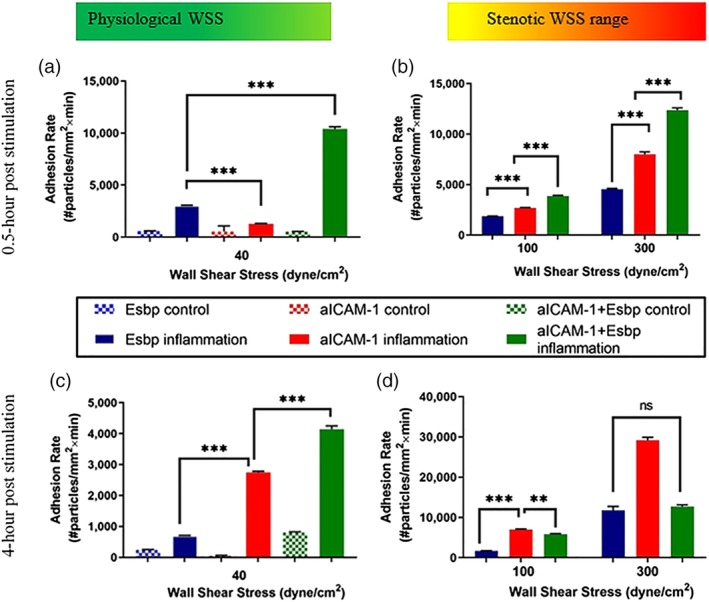
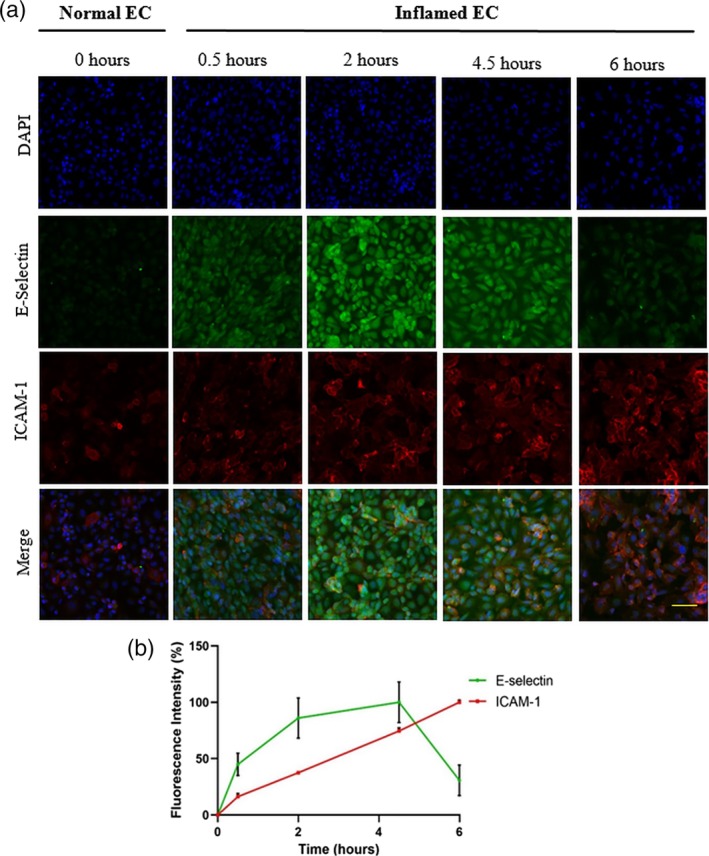
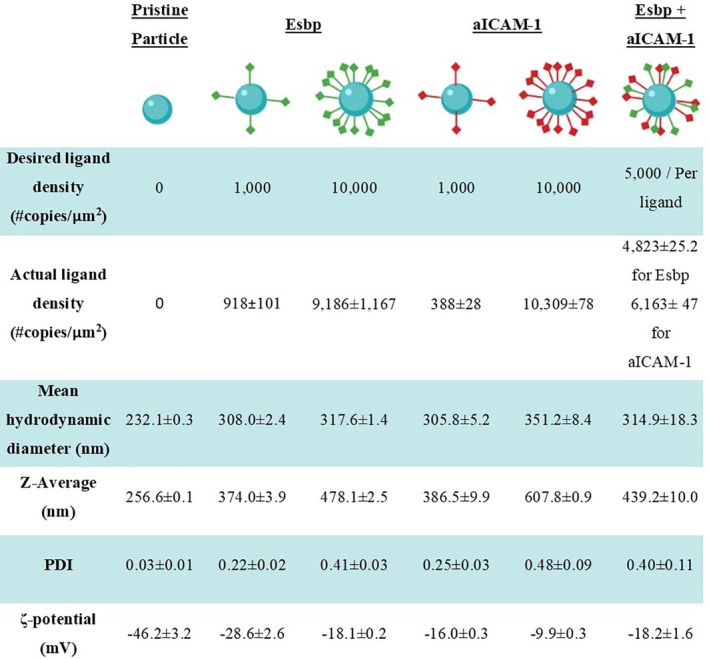
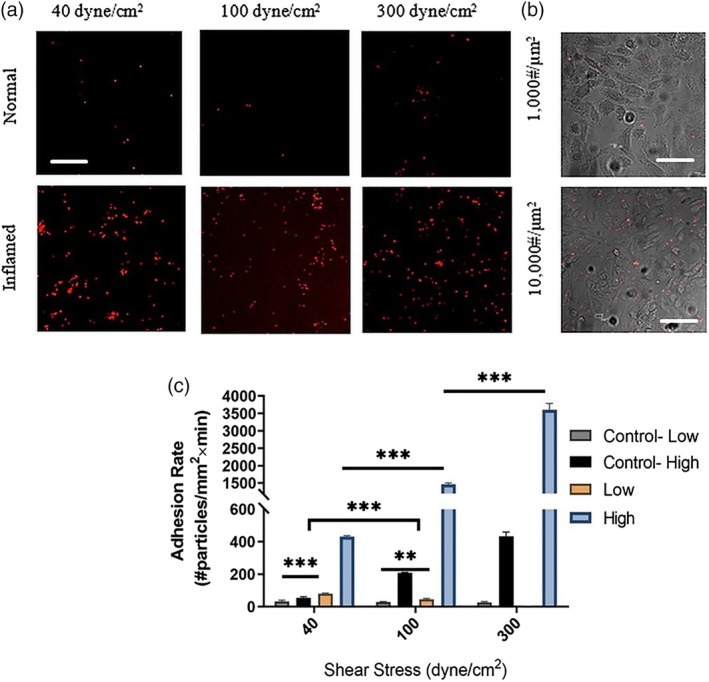
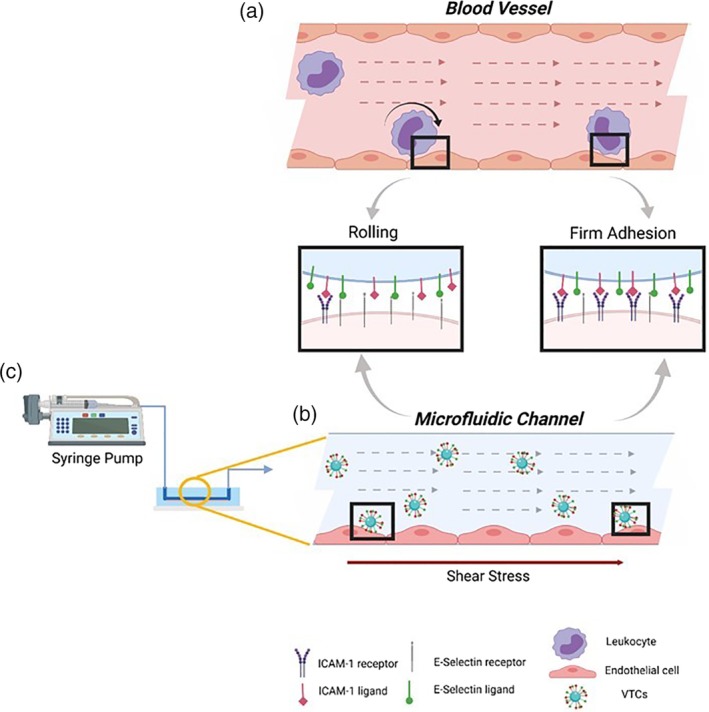
Local inflammation of the endothelium is associated with a plethora of cardiovascular diseases. Vascular-targeted carriers (VTCs) have been advocated to provide focal effective therapeutics to these disease sites. Here, we examine the design of functionalized nanoparticles (NPs) as VTCs that can specifically localize at an inflamed vessel wall under pathological levels of high shear stress, associated for example with clinical (or in vivo) conditions of vascular narrowing and arteriogenesis. To test this, carboxylated fluorescent 200 nm polystyrene particles were functionalized with ligands to activated endothelium, that is, an E-selectin binding peptide (Esbp), an anti ICAM-1 antibody, or using a combination of both. The functionalized NPs were investigated in vitro using microfluidic models lined with inflamed (TNF-α stimulated) and control endothelial cells (EC). Specifically, their adhesion was monitored under different relevant wall shear stresses (i.e., 40-300 dyne/cm) via real-time confocal microscopy. Experiments reveal a significantly higher specific adhesion of the examined functionalized NPs to activated EC for the window of examined wall shear stresses. Moreover, particle adhesion correlated with the surface coating density whereby under high surface coating (i.e., ~10,000 molecule/particle), shear-dependent particle adhesion increased significantly. Altogether, our results show that functionalized NPs can be designed to target inflamed endothelial cells under high shear stress. Such VTCs underscore the potential for attractive avenues in targeting drugs to vasoconstriction and arteriogenesis sites.

摘要

内皮细胞的局部炎症与多种心血管疾病相关。血管靶向载体(VTCs)已被提倡用于为这些疾病部位提供局部有效的治疗方法。在此,我们研究了作为VTCs的功能化纳米颗粒(NPs)的设计,这些纳米颗粒能够在高剪切应力的病理水平下特异性地定位于炎症血管壁,例如与血管狭窄和动脉生成的临床(或体内)情况相关。为了验证这一点,用与活化内皮细胞结合的配体对羧化荧光200纳米聚苯乙烯颗粒进行功能化,即E-选择素结合肽(Esbp)、抗ICAM-1抗体,或两者结合使用。使用内衬炎症(TNF-α刺激)和对照内皮细胞(EC)的微流控模型在体外研究功能化的NPs。具体而言,通过实时共聚焦显微镜在不同的相关壁面剪切应力(即40 - 300达因/平方厘米)下监测它们的粘附情况。实验表明,在所研究的壁面剪切应力范围内,所检测的功能化NPs对活化EC的特异性粘附显著更高。此外,颗粒粘附与表面涂层密度相关,在高表面涂层(即~10,000分子/颗粒)下,剪切依赖性颗粒粘附显著增加。总之,我们的结果表明,可以设计功能化的NPs在高剪切应力下靶向炎症内皮细胞。这种VTCs强调了在将药物靶向血管收缩和动脉生成部位方面具有吸引人的途径的潜力。
https://cdn.ncbi.nlm.nih.gov/pmc/blobs/3daa/7237145/1f1ecc338917/BTM2-5-e10151-g006.jpg
https://cdn.ncbi.nlm.nih.gov/pmc/blobs/3daa/7237145/d76907286771/BTM2-5-e10151-g001.jpg
https://cdn.ncbi.nlm.nih.gov/pmc/blobs/3daa/7237145/259dfaed3737/BTM2-5-e10151-g002.jpg
https://cdn.ncbi.nlm.nih.gov/pmc/blobs/3daa/7237145/4d22b6632ca7/BTM2-5-e10151-g003.jpg
https://cdn.ncbi.nlm.nih.gov/pmc/blobs/3daa/7237145/0a09a19649f7/BTM2-5-e10151-g004.jpg
https://cdn.ncbi.nlm.nih.gov/pmc/blobs/3daa/7237145/1d2f52e56224/BTM2-5-e10151-g005.jpg
https://cdn.ncbi.nlm.nih.gov/pmc/blobs/3daa/7237145/1f1ecc338917/BTM2-5-e10151-g006.jpg
https://cdn.ncbi.nlm.nih.gov/pmc/blobs/3daa/7237145/d76907286771/BTM2-5-e10151-g001.jpg
https://cdn.ncbi.nlm.nih.gov/pmc/blobs/3daa/7237145/259dfaed3737/BTM2-5-e10151-g002.jpg
https://cdn.ncbi.nlm.nih.gov/pmc/blobs/3daa/7237145/4d22b6632ca7/BTM2-5-e10151-g003.jpg
https://cdn.ncbi.nlm.nih.gov/pmc/blobs/3daa/7237145/0a09a19649f7/BTM2-5-e10151-g004.jpg
https://cdn.ncbi.nlm.nih.gov/pmc/blobs/3daa/7237145/1d2f52e56224/BTM2-5-e10151-g005.jpg
https://cdn.ncbi.nlm.nih.gov/pmc/blobs/3daa/7237145/1f1ecc338917/BTM2-5-e10151-g006.jpg

相似文献

1
Targeting functionalized nanoparticles to activated endothelial cells under high wall shear stress.在高壁面剪应力作用下将功能化纳米颗粒靶向至活化的内皮细胞。
Bioeng Transl Med. 2019 Dec 13;5(2):e10151. doi: 10.1002/btm2.10151. eCollection 2020 May.
2
Adhesive interaction of functionalized particles and endothelium in idealized microvascular networks.功能化颗粒与理想化微血管网络内皮细胞的黏附相互作用。
Microvasc Res. 2013 Sep;89:107-14. doi: 10.1016/j.mvr.2013.03.007. Epub 2013 Apr 2.
3
Dual Coating of Chitosan and Albumin Negates the Protein Corona-Induced Reduced Vascular Adhesion of Targeted PLGA Microparticles in Human Blood.壳聚糖和白蛋白的双重包衣消除了蛋白质冠层诱导的靶向聚乳酸-羟基乙酸共聚物微粒在人血液中血管黏附性降低的现象。
Pharmaceutics. 2022 May 9;14(5):1018. doi: 10.3390/pharmaceutics14051018.
4
Exploring deformable particles in vascular-targeted drug delivery: Softer is only sometimes better.探索用于血管靶向给药的可变形颗粒:并非总是越软越好。
Biomaterials. 2017 Apr;124:169-179. doi: 10.1016/j.biomaterials.2017.02.002. Epub 2017 Feb 4.
5
Combinatory interpretation of protein corona and shear stress for active cancer targeting of bioorthogonally clickable gelatin-oleic nanoparticles.组合蛋白质冠和剪切力对生物正交可点击明胶-油酸纳米粒子的主动癌症靶向作用的解释。
Mater Sci Eng C Mater Biol Appl. 2020 Jun;111:110760. doi: 10.1016/j.msec.2020.110760. Epub 2020 Feb 19.
6
Evaluation of Receptor-Ligand Mechanisms of Dual-Targeted Particles to an Inflamed Endothelium.针对炎症内皮的双靶点颗粒的受体-配体机制评估。
Bioeng Transl Med. 2016 Mar;1(1):103-115. doi: 10.1002/btm2.10008. Epub 2016 Apr 27.
7
Targeted ultrasound contrast agent for molecular imaging of inflammation in high-shear flow.用于高剪切流中炎症分子成像的靶向超声造影剂。
Contrast Media Mol Imaging. 2006 Nov-Dec;1(6):259-66. doi: 10.1002/cmmi.113.
8
Vascular deposition patterns for nanoparticles in an inflamed patient-specific arterial tree.在炎症患者特定的动脉树中,纳米颗粒的血管沉积模式。
Biomech Model Mechanobiol. 2014 Jun;13(3):585-97. doi: 10.1007/s10237-013-0520-1. Epub 2013 Aug 14.
9
Shear-regulated uptake of nanoparticles by endothelial cells and development of endothelial-targeting nanoparticles.剪切调控内皮细胞对纳米颗粒的摄取和内皮靶向纳米颗粒的开发。
J Biomed Mater Res A. 2010 Jun 1;93(3):833-42. doi: 10.1002/jbm.a.32592.
10
Adhesion of bio-functionalized ultrasound microbubbles to endothelial cells by targeting to vascular cell adhesion molecule-1 under shear flow.在切变流条件下,通过靶向血管细胞黏附分子-1,将生物功能化的超声微泡黏附到内皮细胞上。
Int J Nanomedicine. 2011;6:2043-51. doi: 10.2147/IJN.S24808. Epub 2011 Sep 21.

引用本文的文献

1
Multiscale physics-based modelling of nanocarrier-assisted intravascular drug delivery.基于多尺度物理的纳米载体辅助血管内药物递送建模
Front Drug Deliv. 2024 Mar 4;4:1362660. doi: 10.3389/fddev.2024.1362660. eCollection 2024.
2
Role of Nanotechnology in Ischemic Stroke: Advancements in Targeted Therapies and Diagnostics for Enhanced Clinical Outcomes.纳米技术在缺血性中风中的作用:靶向治疗与诊断的进展以改善临床结局
J Funct Biomater. 2025 Jan 1;16(1):8. doi: 10.3390/jfb16010008.
3
Blood vessel wall shear stress determines regions of liposome accumulation in angiogenic vasculature.

本文引用的文献

1
Endothelial Cell Metabolism.内皮细胞代谢
Physiol Rev. 2018 Jan 1;98(1):3-58. doi: 10.1152/physrev.00001.2017.
2
The effects of particle size, shape, density and flow characteristics on particle margination to vascular walls in cardiovascular diseases.粒径、形状、密度和流动特性对心血管疾病中颗粒向血管壁边缘移动的影响。
Expert Opin Drug Deliv. 2018 Jan;15(1):33-45. doi: 10.1080/17425247.2017.1316262. Epub 2017 Apr 13.
3
Shear-sensitive nanocapsule drug release for site-specific inhibition of occlusive thrombus formation.
血管壁剪切应力决定脂质体在血管生成血管中的积聚区域。
Drug Deliv Transl Res. 2024 Dec;14(12):3608-3620. doi: 10.1007/s13346-024-01671-1. Epub 2024 Jul 23.
4
CD62E- and ROS-Responsive ETS Improves Cartilage Repair by Inhibiting Endothelial Cell Activation through OPA1-Mediated Mitochondrial Homeostasis.CD62E和ROS反应性ETS通过OPA1介导的线粒体稳态抑制内皮细胞活化来改善软骨修复。
Biomater Res. 2024 Mar 4;28:0006. doi: 10.34133/bmr.0006. eCollection 2024.
5
Influence of Surface Ligand Density and Particle Size on the Penetration of the Blood-Brain Barrier by Porous Silicon Nanoparticles.表面配体密度和粒径对多孔硅纳米颗粒穿透血脑屏障的影响
Pharmaceutics. 2023 Sep 3;15(9):2271. doi: 10.3390/pharmaceutics15092271.
6
Advances in nanomaterial-based targeted drug delivery systems.基于纳米材料的靶向药物递送系统的进展。
Front Bioeng Biotechnol. 2023 Apr 13;11:1177151. doi: 10.3389/fbioe.2023.1177151. eCollection 2023.
7
Recent advances in mechanical force-responsive drug delivery systems.机械力响应药物递送系统的最新进展。
Nanoscale Adv. 2022 Jul 18;4(17):3462-3478. doi: 10.1039/d2na00420h. eCollection 2022 Aug 23.
8
A Review of Functional Analysis of Endothelial Cells in Flow Chambers.流动腔室内内皮细胞功能分析综述
J Funct Biomater. 2022 Jul 12;13(3):92. doi: 10.3390/jfb13030092.
9
Biophysical targeting of high-risk cerebral aneurysms.高危脑动脉瘤的生物物理靶向治疗
Bioeng Transl Med. 2021 Sep 16;7(1):e10251. doi: 10.1002/btm2.10251. eCollection 2022 Jan.
剪切敏感型纳米胶囊药物释放用于闭塞性血栓形成的靶向抑制。
J Thromb Haemost. 2017 May;15(5):972-982. doi: 10.1111/jth.13666. Epub 2017 Apr 9.
4
Targeting cell adhesion molecules with nanoparticles using in vivo and flow-based in vitro models of atherosclerosis.利用动脉粥样硬化的体内模型和基于流动的体外模型,用纳米颗粒靶向细胞粘附分子。
Exp Biol Med (Maywood). 2017 Apr;242(8):799-812. doi: 10.1177/1535370217693116. Epub 2017 Jan 1.
5
Evaluation of Receptor-Ligand Mechanisms of Dual-Targeted Particles to an Inflamed Endothelium.针对炎症内皮的双靶点颗粒的受体-配体机制评估。
Bioeng Transl Med. 2016 Mar;1(1):103-115. doi: 10.1002/btm2.10008. Epub 2016 Apr 27.
6
Shear targeted drug delivery to stenotic blood vessels.剪切力靶向药物递送至狭窄血管。
J Biomech. 2017 Jan 4;50:217-221. doi: 10.1016/j.jbiomech.2016.11.015. Epub 2016 Nov 11.
7
Does Nanomedicine Have a Delivery Problem?纳米医学存在递送问题吗?
ACS Cent Sci. 2016 Jul 27;2(7):434-7. doi: 10.1021/acscentsci.6b00190. Epub 2016 Jul 15.
8
Beyond peptides and mAbs--current status and future perspectives for biotherapeutics with novel constructs.超越肽类和单克隆抗体——新型结构生物治疗药物的现状与未来展望
J Clin Pharmacol. 2015 Mar;55 Suppl 3(0 3):S4-20. doi: 10.1002/jcph.407.
9
Prevention of vascular inflammation by nanoparticle targeting of adherent neutrophils.纳米颗粒靶向黏附中性粒细胞预防血管炎症。
Nat Nanotechnol. 2014 Mar;9(3):204-10. doi: 10.1038/nnano.2014.17. Epub 2014 Feb 23.
10
Reduction of nanoparticle avidity enhances the selectivity of vascular targeting and PET detection of pulmonary inflammation.降低纳米颗粒的亲合力可增强血管靶向性,并提高肺部炎症的 PET 检测的选择性。
ACS Nano. 2013 Mar 26;7(3):2461-9. doi: 10.1021/nn305773f. Epub 2013 Feb 8.