Program of Translational Medicine, The Hospital for Sick Children, Research Institute, 686 Bay Street, Toronto, ON M5G 0A4, Canada.
Departments of Paediatrics and Laboratory Medicine and Pathobiology, University of Toronto, 1 King's College Circle, Toronto, ON M5S 1A8, Canada.
Genes (Basel). 2020 May 18;11(5):565. doi: 10.3390/genes11050565.
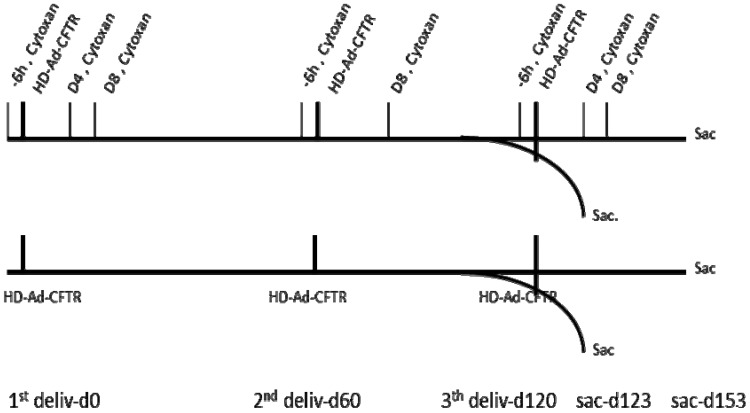
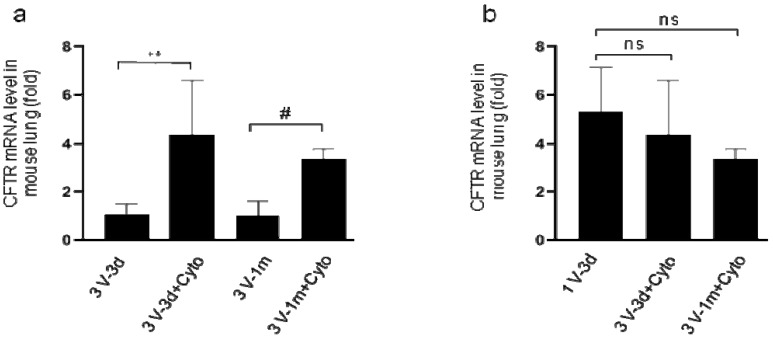
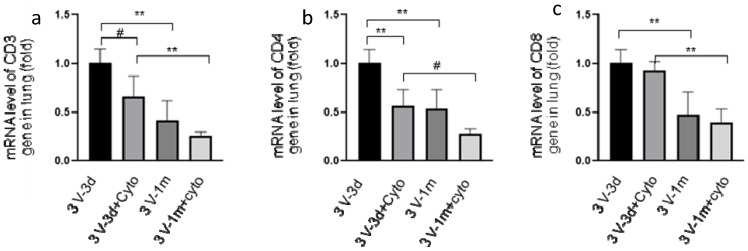
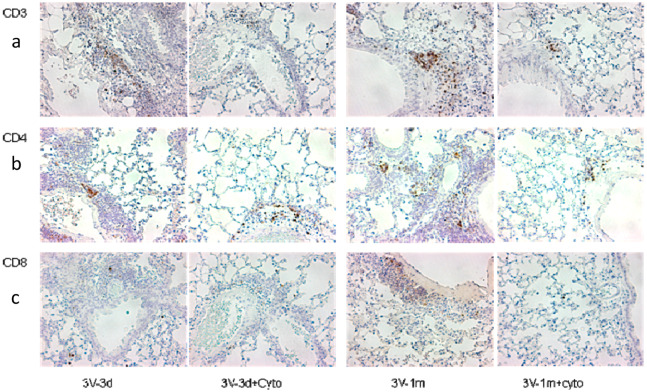
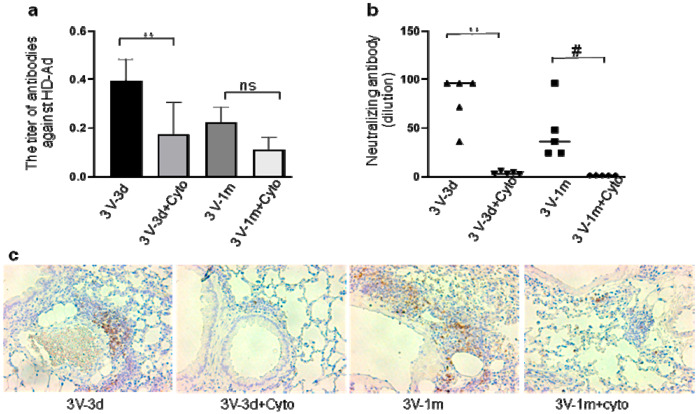
Cystic Fibrosis (CF) is caused by mutations in the cystic fibrosis transmembrane conductance regulator () gene, and CF patients require life-long treatment. Although modulators show a great potential for treating most CF patients, some individuals may not tolerate the treatment. In addition, there is no effective therapy for patients with some rare mutations, such as class I CF mutations, which lead to a lack of protein production. Therefore, other therapeutic strategies, such as gene therapy, have to be investigated. Currently, immune responses to gene therapy vectors and transgene products are a major obstacle to applying CF gene therapy to clinical applications. In this study, we examined the effects of cyclophosphamide on the modulation of host immune responses and for the improvement of the transgene expression in the repeated delivery of helper-dependent adenoviral (HD-Ad) vectors to mouse lungs. We have found that cyclophosphamide significantly decreased the expression of T cell genes, such as CD3 (cluster of differentiation 3) and CD4, and reduced their infiltration into mouse lung tissues. We have also found that the levels of the anti-adenoviral antibody and neutralizing activity as well as B-cell infiltration into the mouse lung tissues were significantly reduced with this treatment. Correspondingly, the expression of the human transgene has been significantly improved with cyclophosphamide administration compared to the group with no treatment. These data suggest that the sustained expression of the human transgene in mouse lungs through repeated vector delivery can be achieved by transient immunosuppression.
囊性纤维化(CF)是由囊性纤维化跨膜电导调节因子(CFTR)基因突变引起的,CF 患者需要终身治疗。虽然调节剂显示出治疗大多数 CF 患者的巨大潜力,但有些人可能无法耐受这种治疗。此外,对于某些罕见的 CFTR 突变患者,如 I 类 CF 突变,没有有效的治疗方法,这导致 CFTR 蛋白的产生缺失。因此,需要研究其他治疗策略,如基因治疗。目前,针对基因治疗载体和转基因产物的免疫反应是将 CF 基因治疗应用于临床的主要障碍。在这项研究中,我们研究了环磷酰胺对宿主免疫反应的调节作用,以及其对重复给予辅助依赖性腺病毒(HD-Ad)载体后提高 CFTR 转基因表达的作用。我们发现,环磷酰胺显著降低了 T 细胞基因(如 CD3 和 CD4)的表达,并减少了其向小鼠肺组织的浸润。我们还发现,这种治疗方法显著降低了抗腺病毒抗体和中和活性的水平以及 B 细胞向小鼠肺组织的浸润。相应地,与未经治疗的组相比,给予环磷酰胺后,人类 CFTR 转基因的表达显著提高。这些数据表明,通过短暂的免疫抑制可以实现通过重复载体递送来持续表达人类 CFTR 转基因。