Abeywickrama Gayathri, S Padmadas Sabu, Hinde Andrew
Department of Social Statistics and Demography, University of Southampton, Southampton, Hampshire, UK.
Global Health Research Institute, University of Southampton, Southampton, Hampshire, UK.
BMJ Open. 2020 May 25;10(5):e037223. doi: 10.1136/bmjopen-2020-037223.
To investigate social inequalities underlying low birthweight (LBW) outcomes in Sri Lanka.
Cross-sectional study.
This study used the Sri Lanka Demographic and Health Survey 2016, the first such survey to cover the entire country since the Civil War ended in 2001.
Birthweight data extracted from the child health development records available for 7713 babies born between January 2011 and the date of interview in 2016.
The main outcome variable was birth weight, classified as LBW (≤2500 g) and normal.
We applied random intercept three-level logistic regression to examine the association between LBW and maternal, socioeconomic and geographic variables. Concentration indices were estimated for different population subgroups.
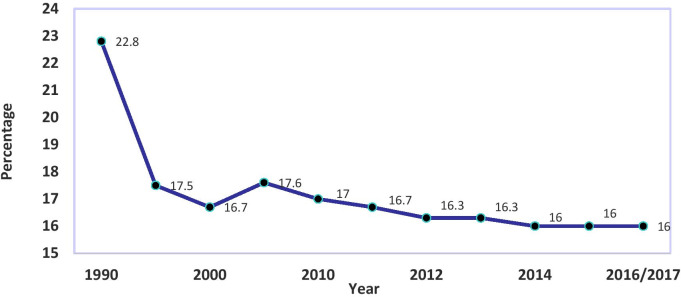
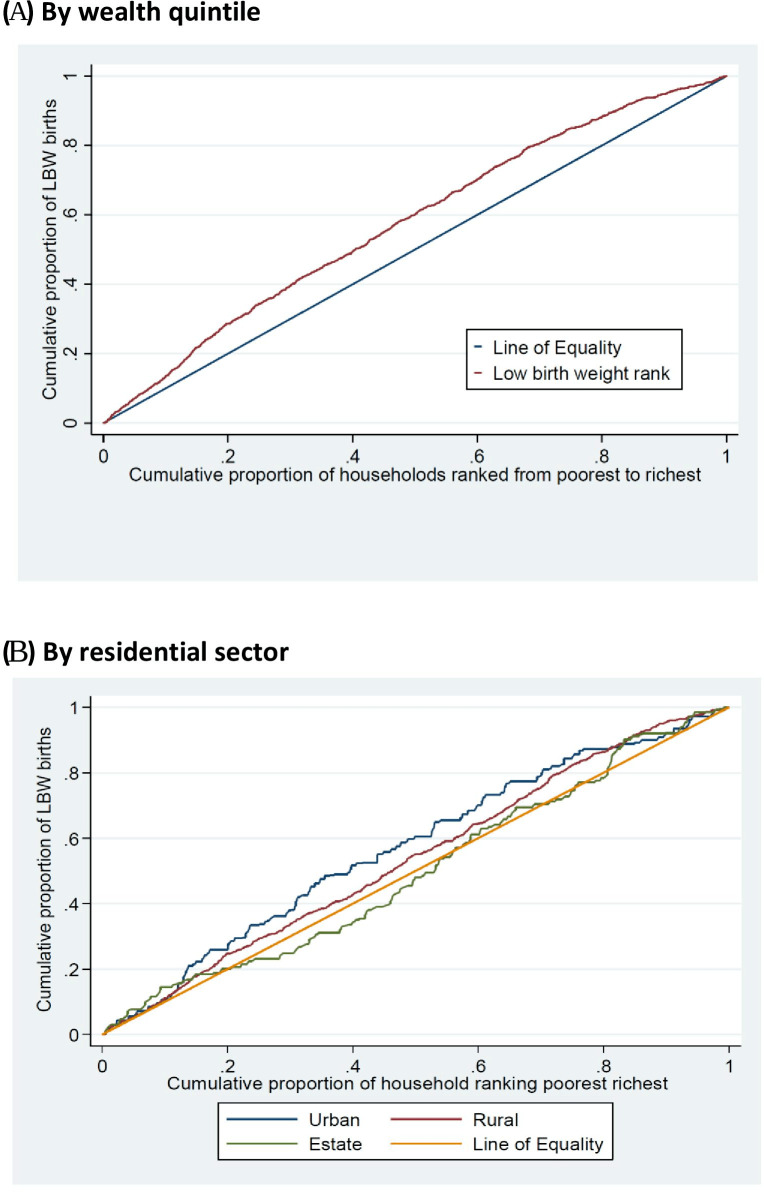
The population-level prevalence of LBW was 16.9% but was significantly higher in the estate sector (28.4%) compared with rural (16.6%) and urban (13.6%) areas. Negative concentration indices suggest a relatively higher concentration of LBW in poor households in rural areas and the estate sector. Results from fixed effects logistic regression models confirmed our hypothesis of significantly higher risk of LBW outcomes across poorer households and Indian Tamil communities (AOR 1.70, 95% CI 1.02 to 2.83, p<0.05). Results from random intercept models confirmed there was substantial unobserved variation in LBW outcomes at the mother level. The effect of maternal biological variables was larger than that of socioeconomic factors.
LBW rates are significantly higher among babies born in poorer households and Indian Tamil communities. The findings highlight the need for nutrition interventions targeting pregnant women of Indian Tamil ethnicity and those living in economically deprived households.
调查斯里兰卡低出生体重(LBW)结果背后的社会不平等现象。
横断面研究。
本研究使用了2016年斯里兰卡人口与健康调查,这是自2001年内战结束以来首次覆盖全国的此类调查。
从2011年1月至2016年访谈日期期间出生的7713名婴儿的儿童健康发展记录中提取的出生体重数据。
主要观察变量为出生体重,分为低出生体重(≤2500克)和正常。
我们应用随机截距三级逻辑回归来检验低出生体重与母亲、社会经济和地理变量之间的关联。估计了不同人群亚组的集中指数。
总体低出生体重患病率为16.9%,但种植园部门(28.4%)明显高于农村(16.6%)和城市(13.6%)地区。负集中指数表明农村地区和种植园部门贫困家庭中低出生体重的集中度相对较高。固定效应逻辑回归模型的结果证实了我们的假设,即较贫困家庭和印度泰米尔社区的低出生体重结果风险显著更高(比值比1.70,95%置信区间1.02至2.83,p<0.05)。随机截距模型的结果证实,母亲层面的低出生体重结果存在大量未观察到的变异。母亲生物学变量的影响大于社会经济因素。
贫困家庭和印度泰米尔社区出生的婴儿低出生体重率显著更高。研究结果凸显了针对印度泰米尔族孕妇和经济贫困家庭孕妇进行营养干预的必要性。