Torres Ciara A, Medina-Kirchner Christopher, O'Malley Kate Y, Hart Carl L
School of Social Work, Columbia University, New York, NY, United States.
Department of Psychology, Columbia University, New York, NY, United States.
Front Psychol. 2020 May 8;11:816. doi: 10.3389/fpsyg.2020.00816. eCollection 2020.
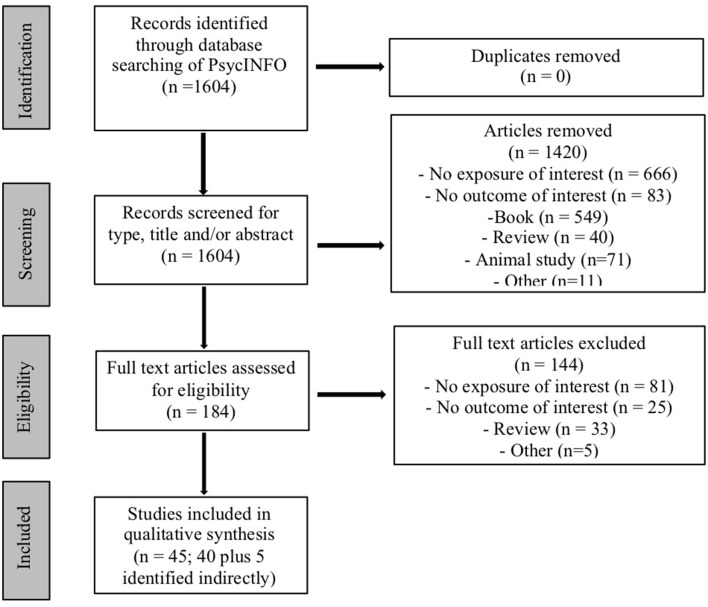
Despite limited data demonstrating pronounced negative effects of prenatal cannabis exposure, popular opinion and public policies still reflect the belief that cannabis is fetotoxic. This article provides a critical review of results from longitudinal studies examining the impact of prenatal cannabis exposure on multiple domains of cognitive functioning in individuals aged 0 to 22 years. A literature search was conducted through PsycINFO, PubMed, and Google Scholar. Articles were included if they examined the cognitive performance of offspring exposed to cannabis . An examination of the total number of statistical comparisons ( = 1,001) between groups of participants that were exposed to cannabis prenatally and non-exposed controls revealed that those exposed performed differently on a minority of cognitive outcomes (worse on <3.5 percent and better in <1 percent). The clinical significance of these findings appears to be limited because cognitive performance scores of cannabis-exposed groups overwhelmingly fell within the normal range when compared against normative data adjusted for age and education. The current evidence does not suggest that prenatal cannabis exposure alone is associated with clinically significant cognitive functioning impairments.
尽管仅有有限的数据表明产前接触大麻有明显的负面影响,但公众舆论和公共政策仍反映出认为大麻对胎儿有毒的观点。本文对纵向研究的结果进行了批判性综述,这些研究考察了产前接触大麻对0至22岁个体多个认知功能领域的影响。通过心理学文摘数据库(PsycINFO)、医学期刊数据库(PubMed)和谷歌学术进行了文献检索。如果文章研究了接触大麻的后代的认知表现,则将其纳入。对产前接触大麻的参与者组与未接触大麻的对照组之间的统计比较总数(=1001)进行检查后发现,接触大麻的参与者在少数认知结果上表现不同(不到3.5%的结果较差,不到1%的结果较好)。这些发现的临床意义似乎有限,因为与根据年龄和教育程度调整的标准数据相比,接触大麻组的认知表现分数绝大多数都在正常范围内。目前的证据并不表明仅产前接触大麻就与具有临床意义的认知功能损害有关。