Narayana Nethralaya Eye Institute, 121/C, Chord Road, Rajajinagar, Bengaluru, Karnataka, India.
Indian J Ophthalmol. 2020 Jun;68(6):981-983. doi: 10.4103/ijo.IJO_1308_20.
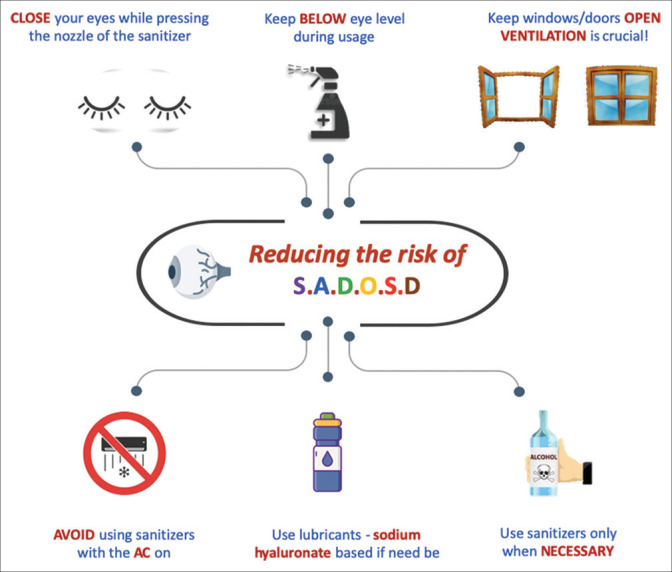
Since the onset of the COVID-19 pandemic, there has been an advisory for regular and thorough cleaning of hands besides other measures such as social distancing and self-isolation. The rationale for the same is to prevent the transfer of the virus from hands that have come in contact with fomites. While both alcohol-based hand rubs (ABHR) or washing with soap and water are claimed to have been effective, hand sanitizers have gained more popularity due to the ease of use. The increased frequency of ABHR use and the aerosols generated pose a potential threat to the skin and exposed mucosal surfaces, especially that of the eye due to the proximity of use. The adverse effects of alcohol in these sanitizers can be manifold. An allergic or inflammatory response can occur depending on the predisposing or preexisting conditions. This article describes the risks, underlying mechanisms, and preventive measures for sanitizer aerosol-driven ocular surface disease.
自 COVID-19 大流行以来,除了保持社交距离和自我隔离等措施外,还建议定期彻底清洁双手。其基本原理是防止病毒从接触污染物的手上传播。虽然据称酒精类手部消毒剂 (ABHR) 或用肥皂和水洗手都有效,但由于使用方便,手部消毒剂更受欢迎。ABHR 使用频率增加和产生的气溶胶对皮肤和暴露的黏膜表面(尤其是由于使用时的接近度而对眼睛)构成潜在威胁。这些消毒剂中的酒精可能会产生多种不良反应。根据潜在的或先前存在的条件,可能会发生过敏或炎症反应。本文描述了由消毒剂气溶胶引起的眼表面疾病的风险、潜在机制和预防措施。