Chang Chih-Hua, Kuek Elizabeth Joo Wen, Su Chun-Lin, Gean Po-Wu
Department of Pharmacology, College of Medicine, National Cheng-Kung University, Tainan 701, Taiwan; Department of Biotechnology and Bioindustry Sciences, National Cheng-Kung University, Tainan 701, Taiwan.
Department of Pharmacology, College of Medicine, National Cheng-Kung University, Tainan 701, Taiwan.
Mol Ther Nucleic Acids. 2020 Jun 5;20:812-822. doi: 10.1016/j.omtn.2020.05.001. Epub 2020 May 8.
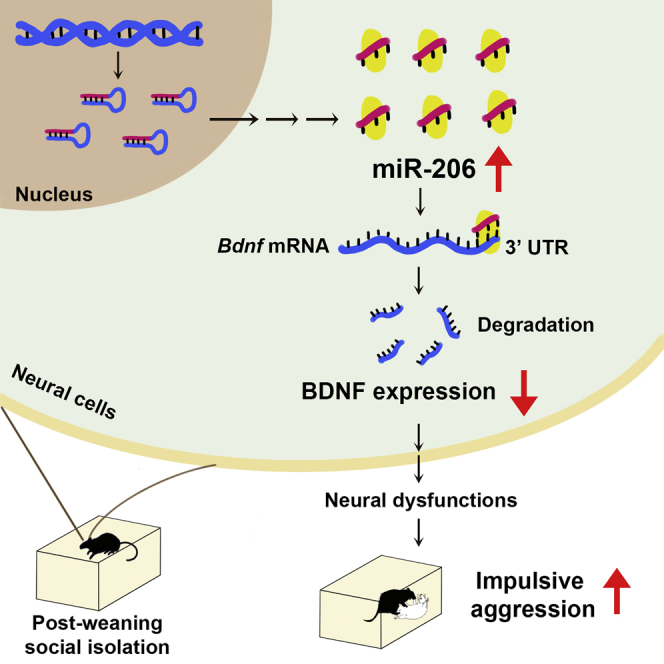
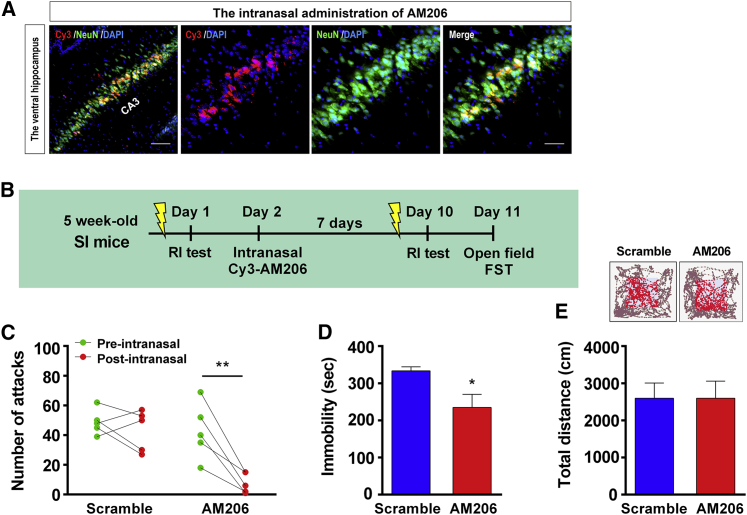
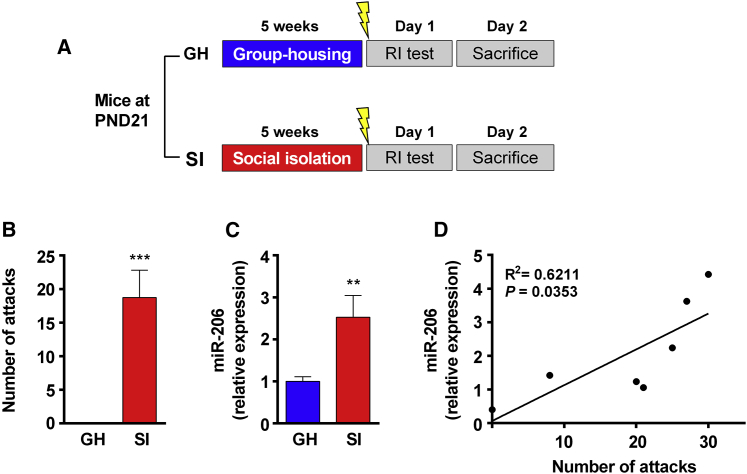
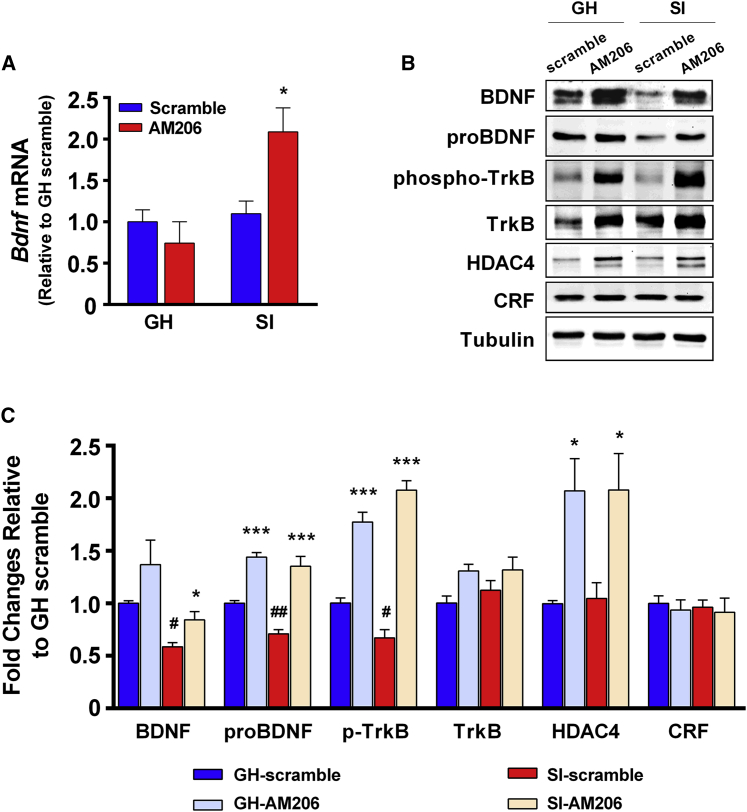
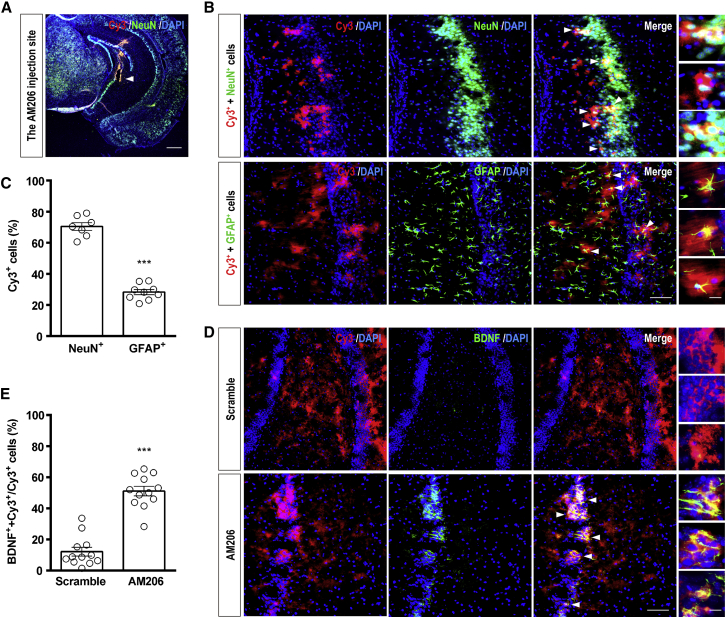
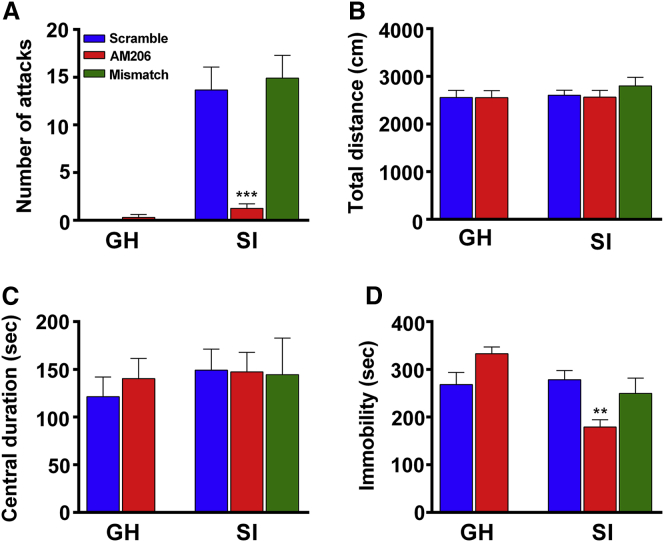
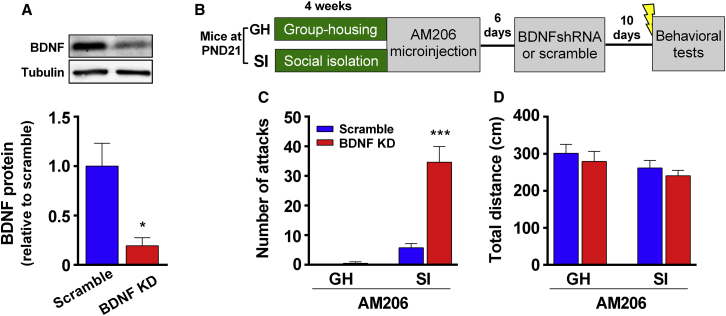
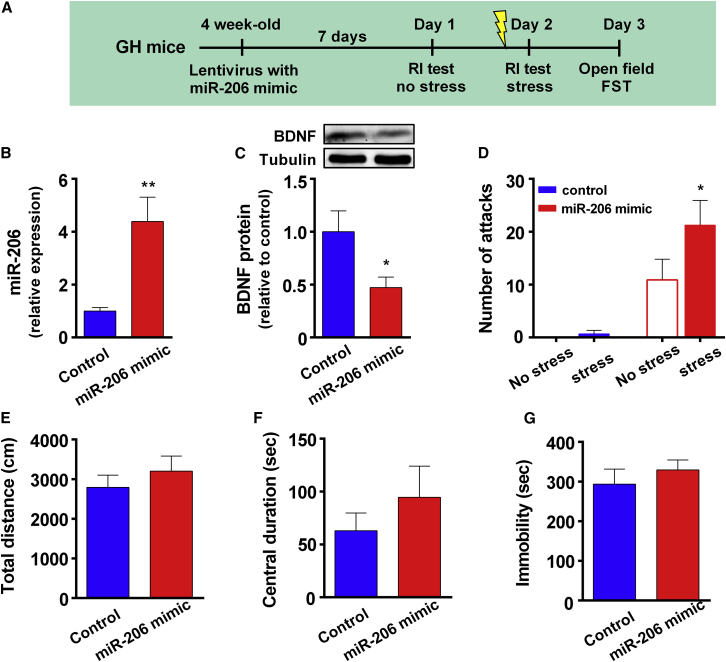
When facing stressful conditions, some people tend to be impulsively aggressive whereas others are not. However, the causes and underlying mechanisms remain elusive. It has been reported that acute stress induces outbursts of aggression in post-weaning social isolation (SI) mice but not in group housing (GH) mice. Here we report epigenetic regulation of impulsive aggression in SI mice. At post-natal day 21, mice were randomly assigned to GH or SI groups. We found that SI mice exhibited a higher level of microRNA 206 (miR-206) compared with GH mice. Intra-hippocampal injection of AM206, an antagomir of miR-206, decreased stress-induced attack behavior in SI mice and increased BDNF expression. Moreover, BDNF expression was required for AM206 effects on the reduction of aggression. On the other hand, miR-206 overexpression in GH mice induced attack behavior. Intranasal administration of AM206 rather than a scramble control significantly reduced attack behavior and depression-like behavior in SI mice. Our results suggest that miR-206 mediates development of maladaptive impulsive aggression in early life adversity and that its antagomir could potentially be a therapeutic target against stress-exacerbated aggressive behavior.
面对压力状况时,有些人容易冲动好斗,而另一些人则不然。然而,其原因和潜在机制仍不清楚。据报道,急性应激会诱发断奶后社会隔离(SI)小鼠的攻击行为爆发,但不会诱发群居(GH)小鼠的攻击行为爆发。在此,我们报告了SI小鼠冲动攻击行为的表观遗传调控。在出生后第21天,将小鼠随机分为GH组或SI组。我们发现,与GH小鼠相比,SI小鼠表现出更高水平的微小RNA 206(miR-206)。海马内注射miR-206的拮抗剂AM206可减少SI小鼠应激诱导的攻击行为,并增加脑源性神经营养因子(BDNF)的表达。此外,BDNF表达是AM206减少攻击行为作用所必需的。另一方面,GH小鼠中miR-206的过表达会诱发攻击行为。鼻内给予AM206而非随机对照物可显著减少SI小鼠的攻击行为和抑郁样行为。我们的结果表明,miR-206介导了早期生活逆境中适应不良的冲动攻击行为的发展,其拮抗剂可能是对抗应激加剧的攻击行为的潜在治疗靶点。