Enebe J T, Ilo C A, Ofor I J, Chukwubuike K E, Omeke C A, Udeozor N V, Nwankwo M N
Department of Obstetrics & Gynaecology, Enugu State University of Science and Technology College of Medicine/Teaching Hospital, Parklane, Enugu, Nigeria.
Department of Surgery, Enugu State University Teaching Hospital, College of Medicine, Nigeria.
Int J Surg Case Rep. 2020;71:168-171. doi: 10.1016/j.ijscr.2020.04.104. Epub 2020 May 19.
Gossypiboma denotes a mass of cotton retained in the body following surgery. Migration of gossypiboma from initial site is a rare entity and could pose some diagnostic difficulties. Migration of gauze sponge has been reported to occur in several organs of the body. There have been few reported cases but the true incidence may be much higher due to under reporting for fear of litigation.
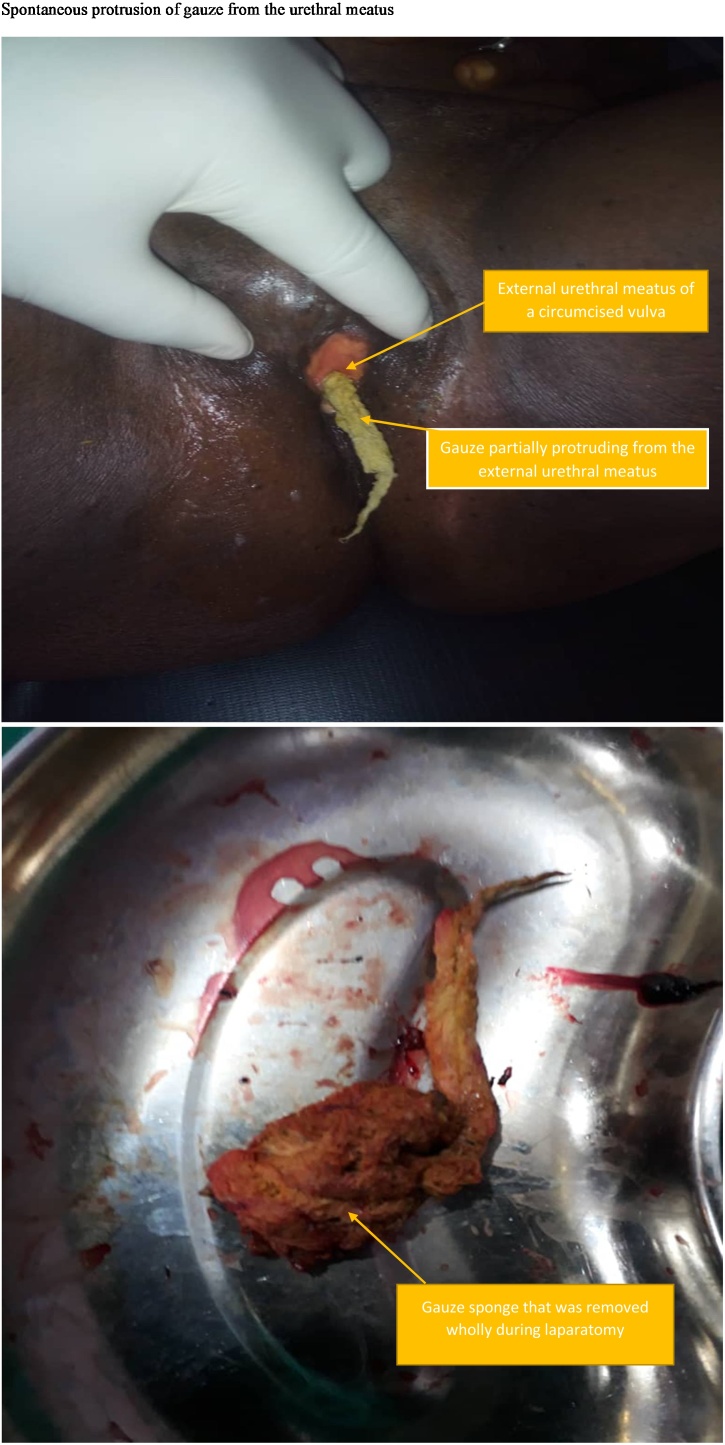
We present an unusual case of a 58-year-old grand multiparous woman who had gauze retention for 5 years following a hysterectomy and presented with acute urinary symptoms. The gauze sponge transmigrated from the peritoneal cavity to the bladder and was partially extruded through the external urethral meatus. She had laparotomy for the removal of gauze sponge with good outcome.
Retained foreign body especially surgical sponges (gossypiboma) infrequently occurs and can be a source of great concern to the surgeon and patient. Foreign bodies inside the body cavities and organs can present with several non-specific clinical features that can make diagnosis difficult. Migration of surgical sponge (gauze, mops) into the urinary bladder is uncommon when compared to other abdominal and pelvic viscus. A gossypiboma in the peritoneal cavity creates a fistulous tract through the thick wall of the urinary bladder from long period of chronic inflammation as seen in the index case where the previous surgery was performed 5 years prior to onset of symptoms. Due to the non-specific presentations of gossypiboma, especially those in the bladder, several investigative modalities need to be employed to help make a prompt diagnosis. Most long-standing cases would require laparotomy due to the dense adhesions that occur around the site of the gossypiboma. Lack of appropriate diagnosis leaves the patient with recurrence of distressful symptoms and the consequent morbidities.
Transmigration of a gauze sponge over 5 years from the peritoneal cavity into the urinary bladder and through the external urethral meatus following a hysterectomy is a rare occurrence and can present diagnostic difficulties. High index of suspicion, prompt diagnosis and management will help reduce the high morbidity that is associated with the condition as in the case reported.
棉芯瘤指手术后残留在体内的棉球团块。棉芯瘤从初始部位发生迁移是一种罕见情况,可能会带来一些诊断困难。据报道,纱布海绵会迁移至身体的多个器官。虽有少数病例报道,但由于担心诉讼而漏报,实际发生率可能更高。
我们报告一例不寻常病例,一名58岁多产妇女,子宫切除术后纱布残留5年,出现急性泌尿系统症状。纱布海绵从腹腔迁移至膀胱,并部分经尿道口挤出。她接受了剖腹手术取出纱布海绵,预后良好。
异物残留尤其是手术海绵(棉芯瘤)很少发生,会让外科医生和患者都极为担忧。体腔和器官内的异物可能呈现多种非特异性临床特征,导致诊断困难。与其他腹部和盆腔脏器相比,手术海绵(纱布、拖把)迁移至膀胱并不常见。如本例所示,腹腔内的棉芯瘤因长期慢性炎症,会通过膀胱厚壁形成瘘管,该病例中症状出现前5年曾进行过手术。由于棉芯瘤的表现不具特异性,尤其是膀胱内的棉芯瘤,需要采用多种检查手段以助于快速诊断。大多数病程较长的病例因棉芯瘤部位周围形成致密粘连,需要进行剖腹手术。缺乏恰当诊断会使患者痛苦症状复发并引发相应疾病。
子宫切除术后,纱布海绵历经5年从腹腔迁移至膀胱并经尿道口挤出是罕见情况,可能带来诊断困难。高度怀疑、及时诊断和处理将有助于减少如本病例报道中该疾病相关的高发病率。