Engineering Research Center of Biomass Conversion, Ministry of Education, Nanchang University, Nanchang 330047, China; State Key Laboratory of Food Science and Technology, Nanchang University, Nanchang 330047, China.
State Key Laboratory of Food Science and Technology, Nanchang University, Nanchang 330047, China.
Poult Sci. 2020 Jun;99(6):3144-3157. doi: 10.1016/j.psj.2020.01.020. Epub 2020 Mar 5.
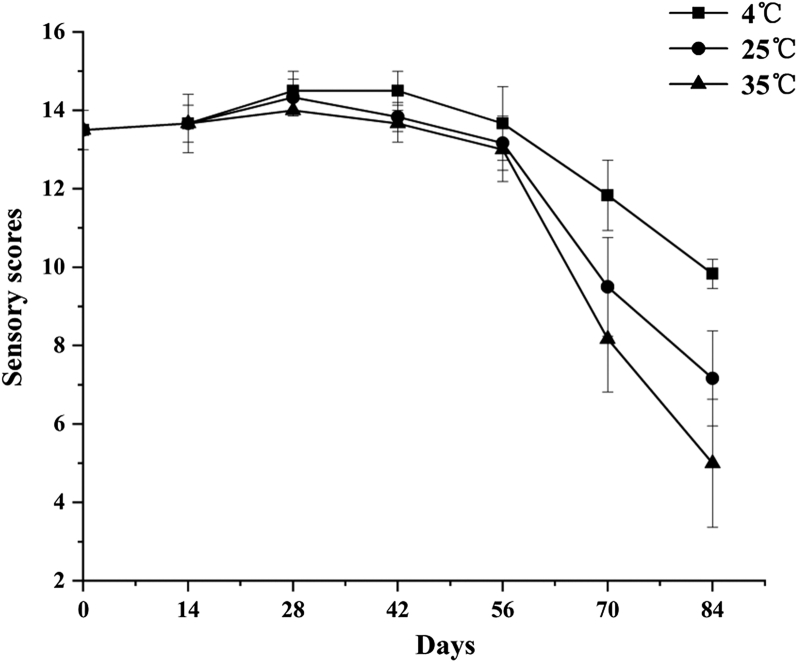
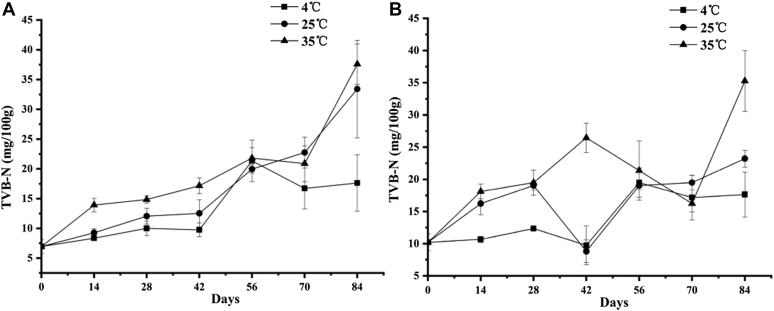
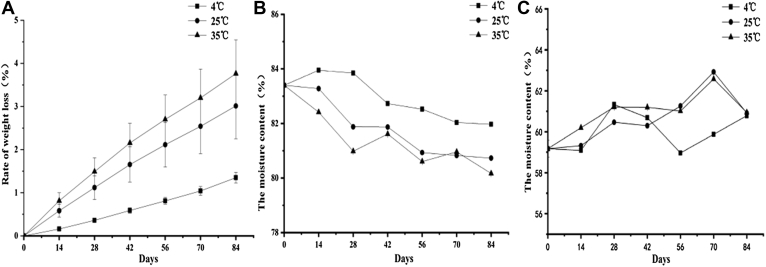
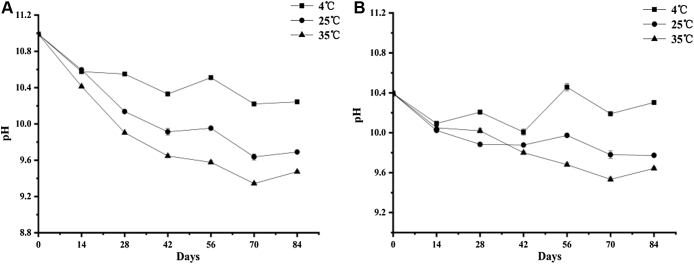
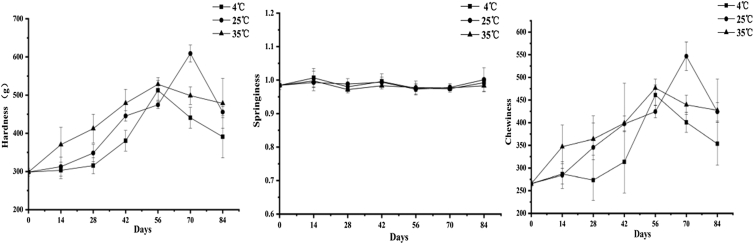
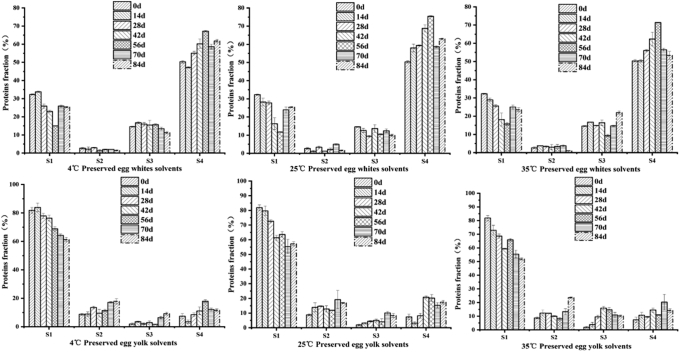
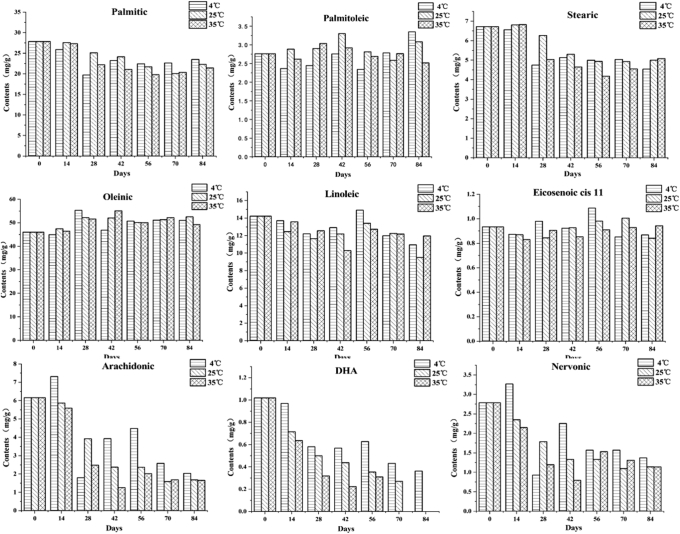
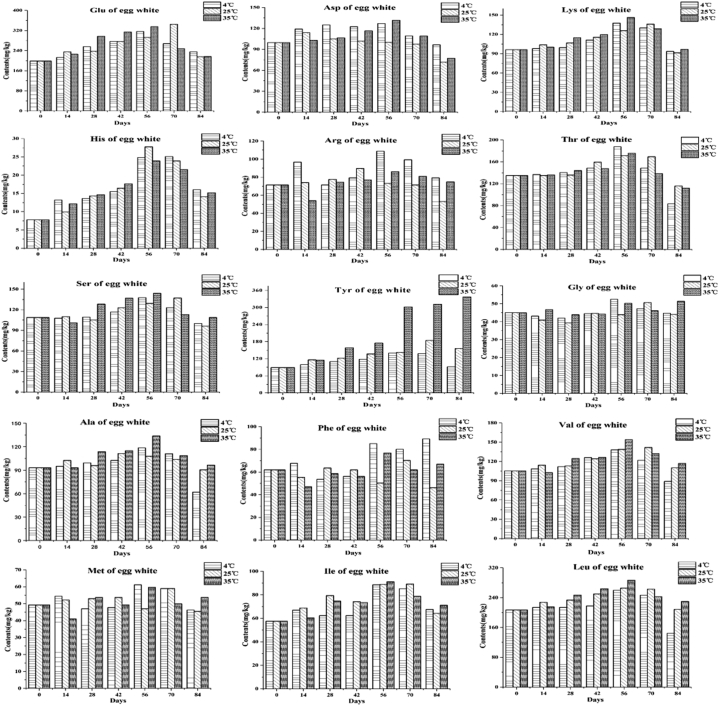
The effects of storage temperature (4°C, 25°C, and 35°C) on sensory quality, physicochemical properties, texture, molecular forces, flavor, and microbial indexes of preserved eggs were studied. The results showed that the sensory quality, weight loss rate, pH, and color of preserved eggs were significantly different at different storage temperatures (P < 0.05). Compared with high temperature and normal temperature storage, low temperature storage reduced weight loss rate by 55.15 and 64.1%, respectively, improved the sensory score (P < 0.05), inhibited the reduction of pH and the increase of total volatile base nitrogen (P < 0.05), and decreased the change of color (P < 0.05). During storage, there was no difference in the springiness of preserved egg white stored at different temperatures (P > 0.05). Hardness and chewiness at 3 different temperatures increased first and then decreased, and low temperature significantly inhibited the progress of these changes to a certain extent (P < 0.05). The content of ionic bond in egg white first decreased and then increased, and content of disulfide bond increased first and then decreased. Content of ionic bond in yolk decreased all the time, and high temperature could promote this change. Whatever the temperature was, the content of free amino acids in preserved egg white and yolk increased first and then decreased, and the total content of amino acids stored at different temperatures was significantly different (P < 0.05). The content of free fatty acids in yolk decreased. At the end of storage, no microorganisms were detected in 3 temperatures during the storage period of 84 D. The results showed that low temperature storage is more conducive for preservation of preserved eggs.
研究了储存温度(4°C、25°C 和 35°C)对皮蛋感官品质、理化性质、质构、分子力、风味和微生物指标的影响。结果表明,不同储存温度下皮蛋的感官品质、失重率、pH 值和色泽差异显著(P<0.05)。与高温和常温贮藏相比,低温贮藏分别降低了 55.15%和 64.1%的失重率,提高了感官评分(P<0.05),抑制了 pH 值和总挥发性碱基氮的降低(P<0.05),并降低了颜色的变化(P<0.05)。在贮藏过程中,不同温度贮藏的皮蛋蛋白的弹性没有差异(P>0.05)。硬度和咀嚼性在 3 种不同温度下先增加后减少,低温在一定程度上显著抑制了这些变化的进展(P<0.05)。蛋清中离子键的含量先减少后增加,二硫键的含量先增加后减少。蛋黄中离子键的含量一直减少,高温可以促进这种变化。无论温度如何,蛋清和蛋黄中游离氨基酸的含量先增加后减少,不同温度贮藏的氨基酸总量差异显著(P<0.05)。蛋黄中游离脂肪酸的含量减少。在 84d 的贮藏期内,3 种温度下均未检测到微生物。结果表明,低温贮藏更有利于皮蛋的保存。