Institute of Pharmaceutical and Medical Chemistry, Clinical Pharmacy, University of Münster, Corrensstr. 48, 48149, Münster, Germany.
Pharm Res. 2020 May 31;37(6):110. doi: 10.1007/s11095-020-02843-7.
Dose-optimization strategies for risperidone are gaining in importance, especially in the elderly. Based on the genetic polymorphism of cytochrome P 450 (CYP) 2D6 genetically and age-related changes cause differences in the pharmacokinetics of risperidone and 9-hydroxyrisperidone. The goal of the study was to develop physiologically based pharmacokinetic (PBPK) models for the elderly aged 65+ years. Additionally, CYP2D6 phenotyping using metabolic ratio were applied and different pharmacokinetic parameter for different age classes predicted.
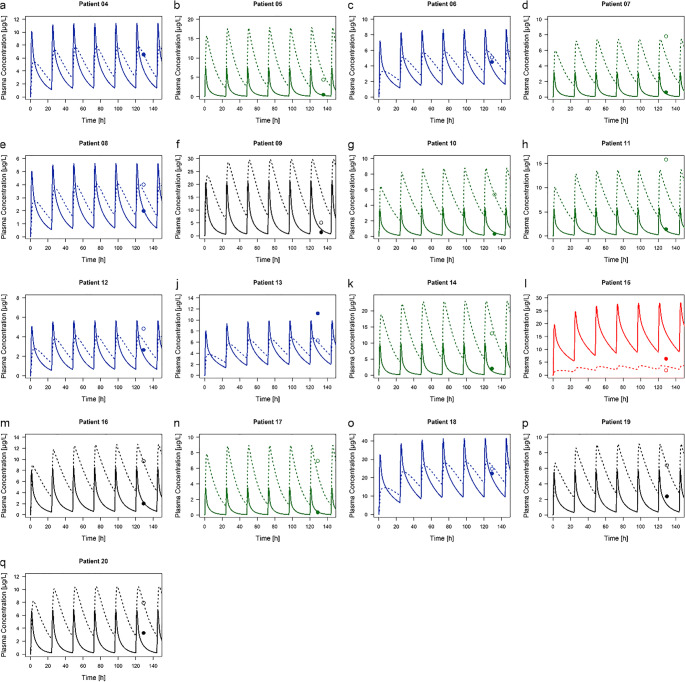
Plasma concentrations of risperidone and 9-hydroxyrisperidone were used to phenotype 17 geriatric inpatients treated under naturalistic conditions. For this purpose, PBPK models were developed to examine age-related changes in the pharmacokinetics between CYP2D6 extensive metabolizer, intermediate metabolizer, poor metabolizer, (PM) and ultra-rapid metabolizer.
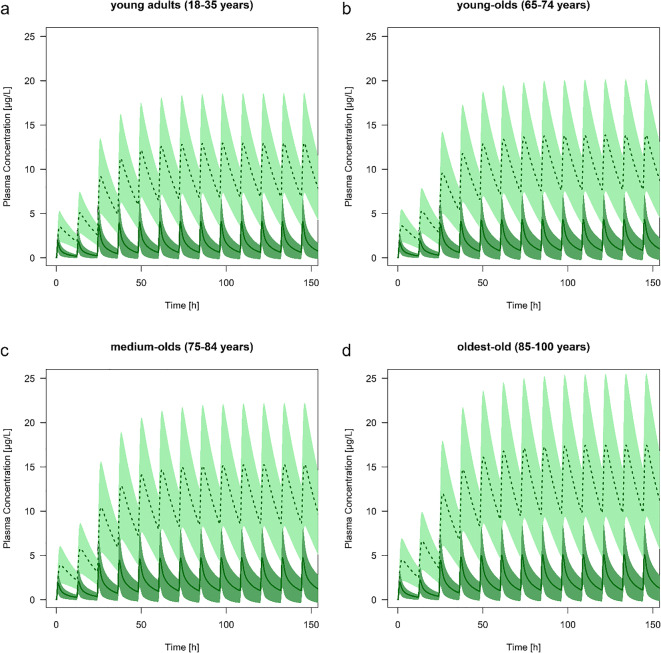
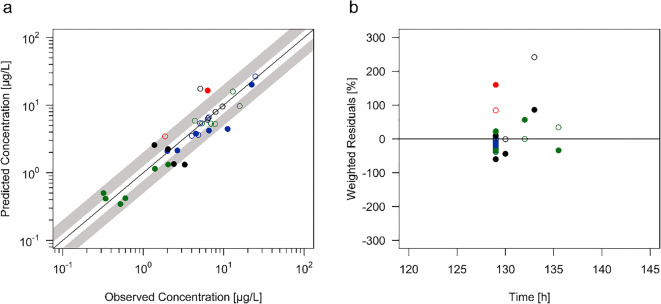
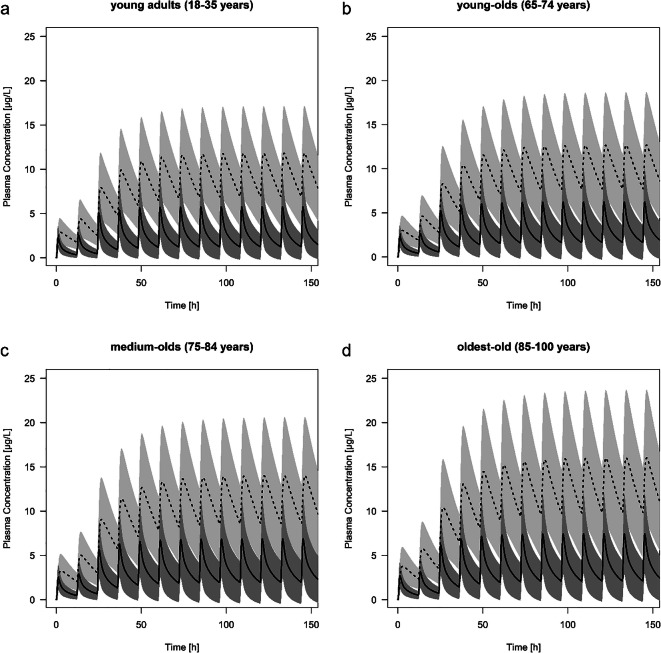
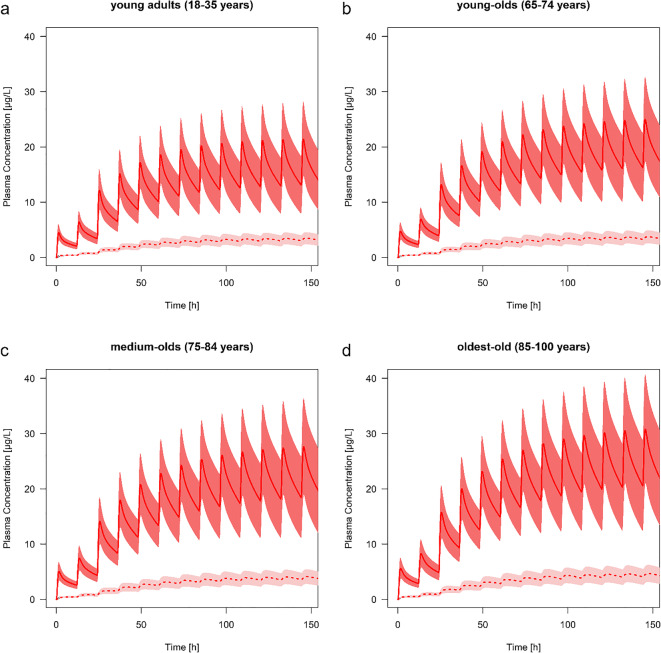
PBPK-based metabolic ratio was able to predict different CYP2D6 phenotypes during steady-state. One inpatient was identified as a potential PM, showing a metabolic ratio of 3.39. About 88.2% of all predicted plasma concentrations of the inpatients were within the 2-fold error range. Overall, age-related changes of the pharmacokinetics in the elderly were mainly observed in Cmax and AUC. Comparing a population of young adults with the oldest-old, Cmax of risperidone increased with 24-44% and for 9-hydroxyrisperidone with 35-37%.
Metabolic ratio combined with PBPK modelling can provide a powerful tool to identify potential CYP2D6 PM during therapeutic drug monitoring. Based on genetic, anatomical and physiological changes during aging, PBPK models ultimately support decision-making regarding dose-optimization strategies to ensure the best therapy for each patient over the age of 65 years.
利培酮的剂量优化策略变得越来越重要,尤其是在老年人中。基于细胞色素 P450(CYP)2D6 的遗传多态性,以及与年龄相关的变化导致利培酮和 9-羟基利培酮的药代动力学存在差异。该研究的目的是为 65 岁以上的老年人开发基于生理学的药代动力学(PBPK)模型。此外,还应用了 CYP2D6 表型代谢比,并预测了不同年龄组的不同药代动力学参数。
利用 17 名在自然状态下接受治疗的老年住院患者的血浆利培酮和 9-羟基利培酮浓度,对其进行表型分析。为此,开发了 PBPK 模型,以检查 CYP2D6 广泛代谢者、中间代谢者、弱代谢者(PM)和超快代谢者之间年龄相关的药代动力学变化。
基于 PBPK 的代谢比能够预测稳态时不同的 CYP2D6 表型。一名住院患者被鉴定为潜在的 PM,其代谢比为 3.39。所有预测的住院患者血浆浓度中,约 88.2%均在 2 倍误差范围内。总体而言,老年人药代动力学的年龄相关变化主要观察到 Cmax 和 AUC。将年轻成年人与最年长的老年人进行比较时,利培酮的 Cmax 增加了 24-44%,9-羟基利培酮增加了 35-37%。
代谢比结合 PBPK 模型可以提供一种强大的工具,用于在治疗药物监测期间识别潜在的 CYP2D6 PM。基于衰老过程中的遗传、解剖和生理变化,PBPK 模型最终支持剂量优化策略的决策,以确保每位 65 岁以上患者获得最佳治疗。