Wu Qiong, Zhang Bo, Li Ben, Cao Xiang, Chen Xinming, Xue Qun
1Department of Cardiothoracic Surgery, Affiliated Hospital of Nantong University, Nantong, China.
2Medical School of Nantong University, Nantong, China.
Cancer Cell Int. 2020 May 18;20:172. doi: 10.1186/s12935-020-01240-9. eCollection 2020.
Human polypyrimidine tract binding protein 3 (PTBP3), which belongs to the PTB family, demonstrate a significant tumorigenic capability in a variety of malignancies. However, the correlation between PTBP3 expression and pathogenesis of non-small cell lung cancer (NSCLC) remains little known. The design of the study attempts to examine the role of PTBP3 in the pathogenesis and prognosis of NSCLC.
Our study conducted an investigation on the PTBP3 expression in human NSCLC tissues and a comprehensive analysis of the associations between three factors, involving the PTBP3 expression, clinicopathological features, and patient's survival. Additionally, we also explored the role of PTBP3 expression in the proliferation and invasion of cancer cells.
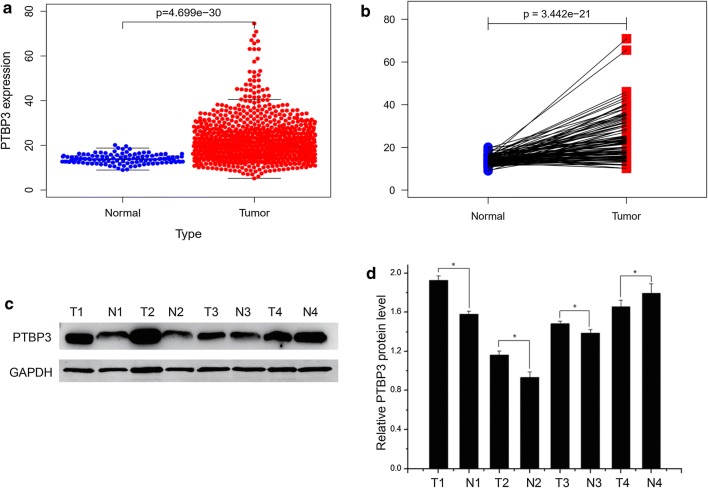
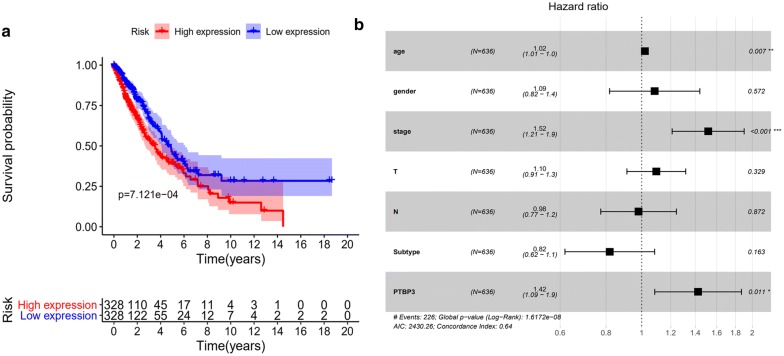
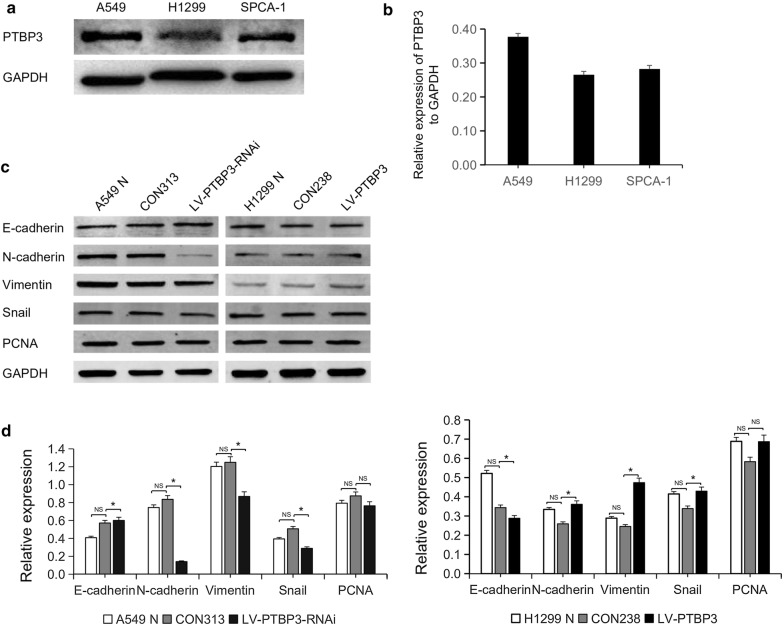
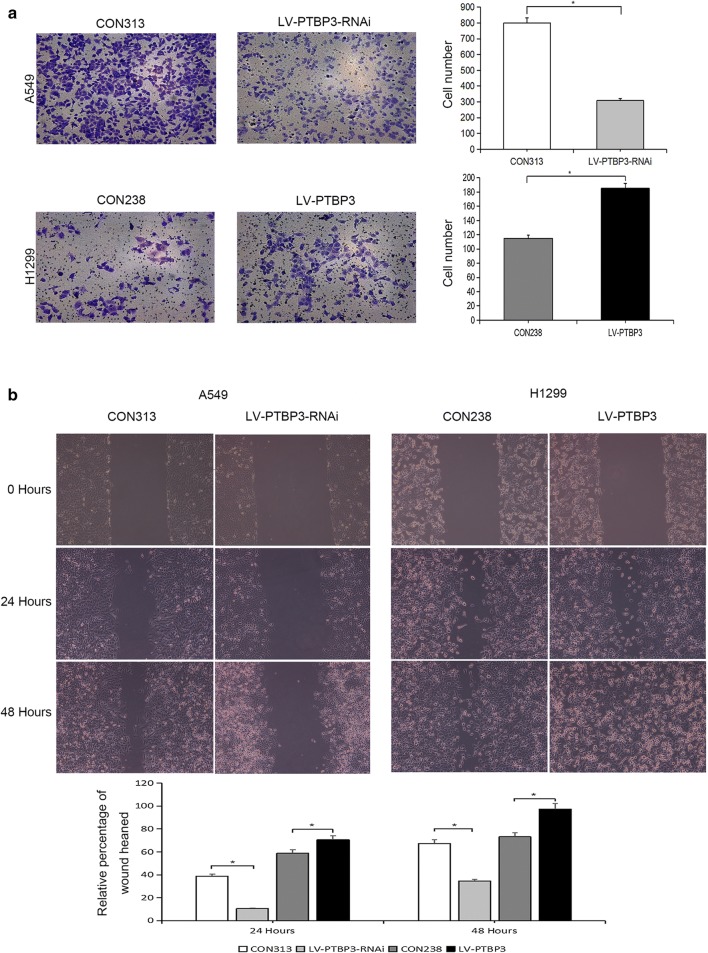
The mining of The Cancer Genome Atlas (TCGA) database, western blotting and immunohistochemistry analyses showed significantly up-regulation of PTBP3 in NSCLC tissues than in normal tissues. Although overexpress or knockdown PTBP3 expression had no significant effect on proliferation of selected cell line, it could promotes migration of NSCLC cells via regulating E-cadherin in epithelial-mesenchymal transition (EMT) signaling pathway. Moreover, in the univariate analysis, the PTBP3-high is markedly related to poor overall survival results where hazard ratio (HR): 1.55; 95% confidence interval (95% CI): 1.87-2.01; p = 0.0001. Also, according to the multivariate analysis, an independent prognostic factor among NSCLC patients is the PTBP3 with an HR of 1.42 (CI: 1.09-1.9; p = 0.011). To explore potential signaling pathways, we used the TCGA dataset and performed Gene Set Enrichment Analysis (GSEA). Moreover, its expression in NSCLC was related to Tumor differentiation, lymph node metastasis, distant metastasis status and poor prognosis. Beside, by changing the expression of PTBP3 in selected cell lines, we found that overexpress or knockdown PTBP3 expression had no significant effect on proliferation, however it regulated migration possibly by EMT signaling.
Collectively, our findings suggested that PTBP3 contributed to the progression of NSCLC and might serve as a potential target for anti-cancer therapy.
人多嘧啶序列结合蛋白3(PTBP3)属于PTB家族,在多种恶性肿瘤中显示出显著的致瘤能力。然而,PTBP3表达与非小细胞肺癌(NSCLC)发病机制之间的相关性仍鲜为人知。本研究旨在探讨PTBP3在NSCLC发病机制和预后中的作用。
我们的研究对人NSCLC组织中的PTBP3表达进行了调查,并对PTBP3表达、临床病理特征和患者生存这三个因素之间的关联进行了综合分析。此外,我们还探讨了PTBP3表达在癌细胞增殖和侵袭中的作用。
癌症基因组图谱(TCGA)数据库挖掘、蛋白质免疫印迹和免疫组化分析显示,NSCLC组织中PTBP3的表达明显高于正常组织。虽然过表达或敲低PTBP3表达对所选细胞系的增殖没有显著影响,但它可以通过调节上皮-间质转化(EMT)信号通路中的E-钙黏蛋白来促进NSCLC细胞的迁移。此外,在单因素分析中,PTBP3高表达与总体生存结果差显著相关,风险比(HR)为1.55;95%置信区间(95%CI)为1.87-2.01;p = 0.0001。同样,根据多因素分析,NSCLC患者的一个独立预后因素是PTBP3,HR为1.42(CI:1.09-1.9;p = 0.011)。为了探索潜在的信号通路,我们使用了TCGA数据集并进行了基因集富集分析(GSEA)。此外,其在NSCLC中的表达与肿瘤分化、淋巴结转移、远处转移状态及预后不良有关。此外,通过改变所选细胞系中PTBP3的表达,我们发现过表达或敲低PTBP3表达对增殖没有显著影响,但它可能通过EMT信号调节迁移。
总体而言,我们的研究结果表明PTBP3促进了NSCLC的进展,可能成为抗癌治疗的潜在靶点。