Zhao Yuxiao, Shang Pan, Wang Meijian, Xie Min, Liu Jian
Queen Mary School, Nanchang University, Nanchang, China.
Department of Endocrinology, The Second Hospital of Shandong University, Jinan, China.
Front Physiol. 2020 May 11;11:351. doi: 10.3389/fphys.2020.00351. eCollection 2020.
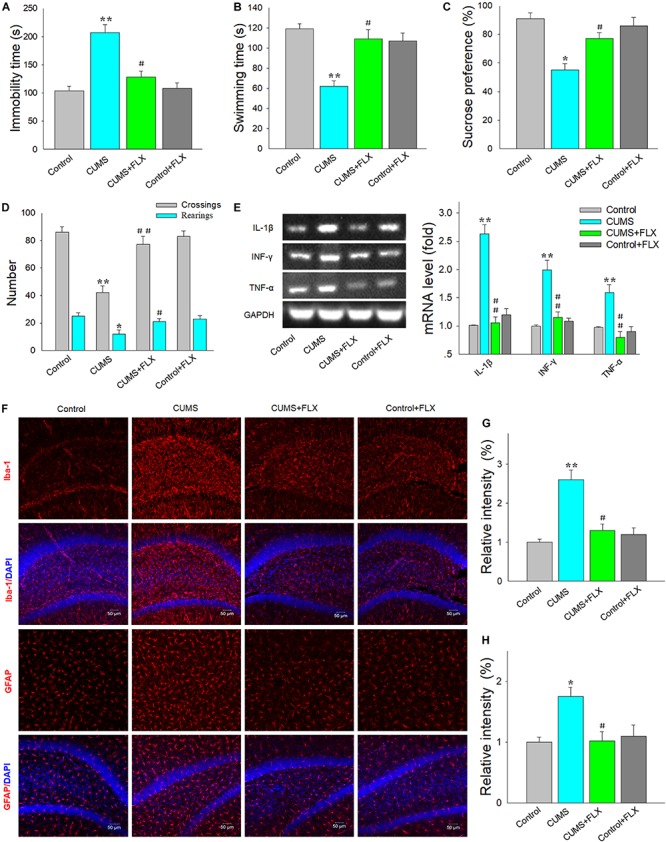
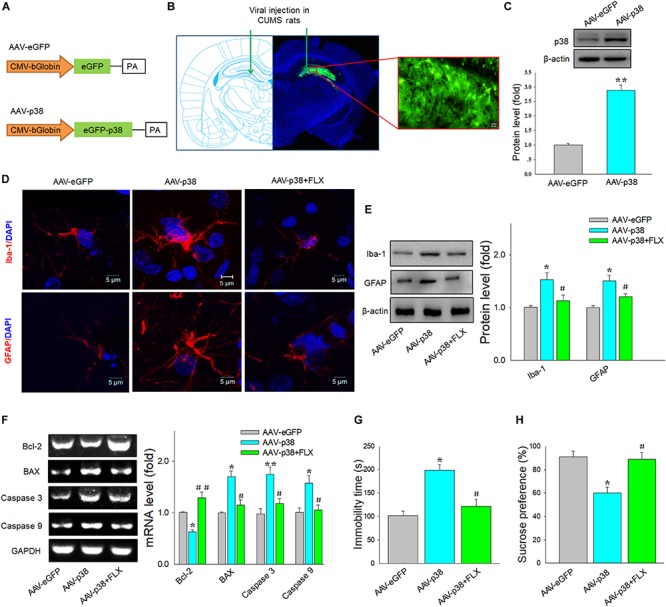
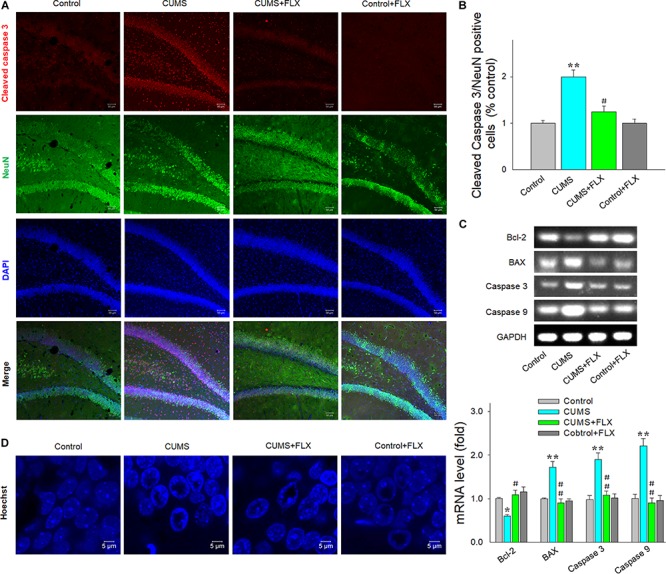
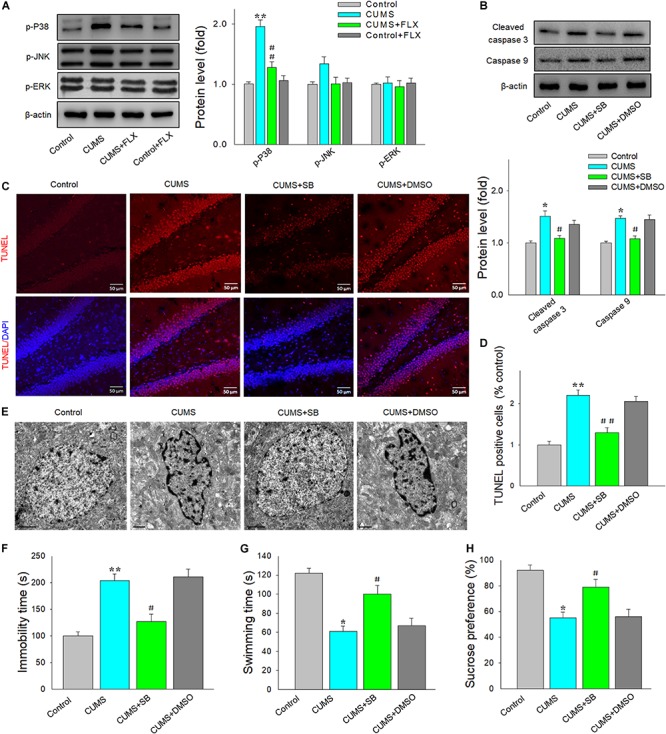
Depression is considered a widespread neuropsychiatric disease associated with neuronal injury within specific brain regions. Fluoxetine, a selective serotonin reuptake inhibitor, has been widely used in depressed patients. Recently, fluoxetine has demonstrated neuroprotective effects apart from the effect on serotonin. However, the underlying mechanism involved in this neuroprotection remains unclear, in particular, whether fluoxetine exerts antidepressant effects via protecting against neuronal injury. Here, we found that treatment with fluoxetine (10 mg/kg, i.p.) for 2 weeks ameliorated depression-like behaviors in a chronic unpredictable mild stress (CUMS)-induced rat model of depression and was accompanied with an alleviation of glia activation and inhibition of interleukin-1β (IL-1β), interferon gamma (IFN-γ), and tumor necrosis factor-α (TNF-α) expression in the hippocampal dentate gyrus (DG) region. Meanwhile, CUMS rats treated with fluoxetine showed reductions in neuronal apoptosis and a downregulation of the apoptotic protein Bax, cleaved caspase 3, and caspase 9 levels. These effects appear to involve a downregulation of p38 mitogen-activated protein kinase (MAPK) signaling within the DG hippocampus as the specific inhibitor of p38 MAPK, SB203580, significantly suppressed apoptosis, as well as ameliorated depressive behaviors resulting from CUMS exposure. Moreover, fluoxetine could rescue neuronal deterioration and depression-like phenotypes caused by overexpression of p38 in DG. This finding extends our knowledge on the antidepressant-like effects of fluoxetine, which appear to at least partially profit from neuroprotection against inflammation and neuronal apoptosis via downregulation of the p38 MAPK pathway. The neuroprotective mechanisms of fluoxetine may provide some novel therapeutic avenues for stress-related neurological diseases.
抑郁症被认为是一种广泛存在的神经精神疾病,与特定脑区的神经元损伤有关。氟西汀是一种选择性5-羟色胺再摄取抑制剂,已广泛应用于抑郁症患者。最近,氟西汀除了对5-羟色胺有作用外,还表现出神经保护作用。然而,这种神经保护作用的潜在机制仍不清楚,特别是氟西汀是否通过防止神经元损伤发挥抗抑郁作用。在此,我们发现,用氟西汀(10mg/kg,腹腔注射)治疗2周可改善慢性不可预测轻度应激(CUMS)诱导的大鼠抑郁模型中的抑郁样行为,并伴有海马齿状回(DG)区胶质细胞激活的减轻以及白细胞介素-1β(IL-1β)、干扰素-γ(IFN-γ)和肿瘤坏死因子-α(TNF-α)表达的抑制。同时,用氟西汀治疗的CUMS大鼠神经元凋亡减少,凋亡蛋白Bax、裂解的半胱天冬酶3和半胱天冬酶9水平下调。这些作用似乎涉及DG海马内p38丝裂原活化蛋白激酶(MAPK)信号的下调,因为p38 MAPK的特异性抑制剂SB203580可显著抑制凋亡,并改善由CUMS暴露导致的抑郁行为。此外,氟西汀可挽救由DG中p38过表达引起的神经元退化和抑郁样表型。这一发现扩展了我们对氟西汀抗抑郁样作用的认识,其似乎至少部分得益于通过下调p38 MAPK途径对炎症和神经元凋亡的神经保护作用。氟西汀的神经保护机制可能为应激相关神经疾病提供一些新的治疗途径。