Division of Cardiovascular Medicine, Department of Medicine (S.S., K.B.M.), Perelman School of Medicine, University of Pennsylvania, Philadelphia.
Cardiovascular Institute and Department of Medicine (D.P.K., K.B.M.), Perelman School of Medicine, University of Pennsylvania, Philadelphia.
Circulation. 2020 Jun 2;141(22):1800-1812. doi: 10.1161/CIRCULATIONAHA.119.045033. Epub 2020 Jun 1.
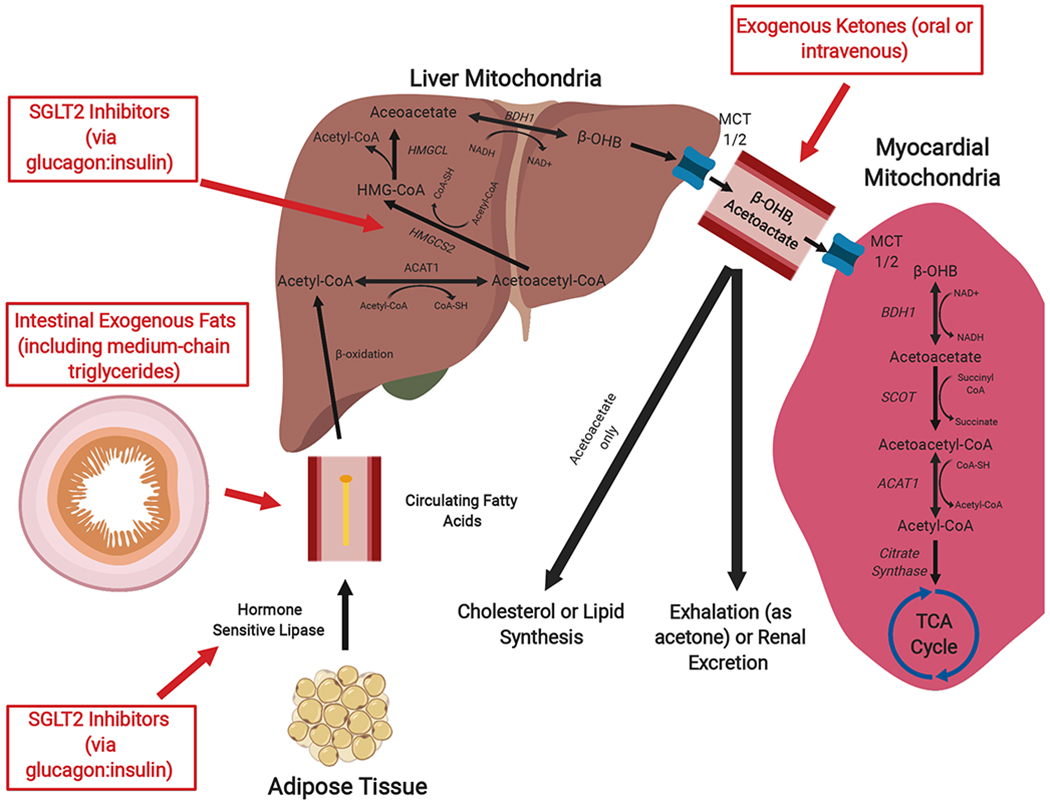
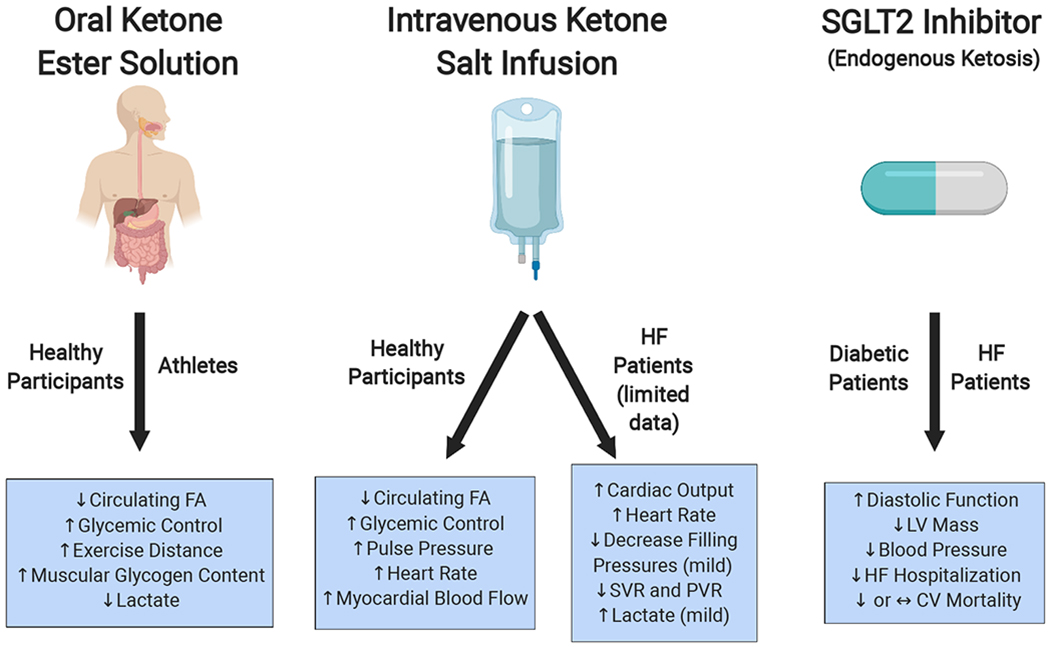
Despite existing therapy, patients with heart failure (HF) experience substantial morbidity and mortality, highlighting the urgent need to identify novel pathophysiological mechanisms and therapies, as well. Traditional models for pharmacological intervention have targeted neurohormonal axes and hemodynamic disturbances in HF. However, several studies have now highlighted the potential for ketone metabolic modulation as a promising treatment paradigm. During the pathophysiological progression of HF, the failing heart reduces fatty acid and glucose oxidation, with associated increases in ketone metabolism. Recent studies indicate that enhanced myocardial ketone use is adaptive in HF, and limited data demonstrate beneficial effects of exogenous ketone therapy in studies of animal models and humans with HF. This review will summarize current evidence supporting a salutary role for ketones in HF including (1) normal myocardial ketone use, (2) alterations in ketone metabolism in the failing heart, (3) effects of therapeutic ketosis in animals and humans with HF, and (4) the potential significance of ketosis associated with sodium-glucose cotransporter 2 inhibitors. Although a number of important questions remain regarding the use of therapeutic ketosis and mechanism of action in HF, current evidence suggests potential benefit, in particular, in HF with reduced ejection fraction, with theoretical rationale for its use in HF with preserved ejection fraction. Although it is early in its study and development, therapeutic ketosis across the spectrum of HF holds significant promise.
尽管存在治疗方法,心力衰竭(HF)患者仍经历着大量的发病率和死亡率,这突显了迫切需要识别新的病理生理机制和治疗方法。传统的药理学干预模型针对的是心力衰竭中的神经激素轴和血液动力学紊乱。然而,现在有几项研究强调了酮代谢调节作为一种有前途的治疗范例的潜力。在心力衰竭的病理生理进展过程中,衰竭的心脏减少脂肪酸和葡萄糖的氧化,同时伴随着酮代谢的增加。最近的研究表明,增强心肌酮的利用在心力衰竭中是适应性的,并且有限的数据表明外源性酮治疗在心力衰竭动物模型和人类中的研究具有有益的效果。这篇综述将总结目前支持酮在心力衰竭中的有益作用的证据,包括(1)正常心肌酮的利用,(2)心力衰竭中心脏酮代谢的改变,(3)治疗性酮症在心力衰竭动物和人类中的影响,以及(4)与钠-葡萄糖共转运蛋白 2 抑制剂相关的酮症的潜在意义。尽管关于治疗性酮症的使用和心力衰竭中的作用机制仍有许多重要问题有待解决,但目前的证据表明其具有潜在的益处,特别是在射血分数降低的心力衰竭中,理论上也适用于射血分数保留的心力衰竭。尽管它的研究和发展还处于早期阶段,但治疗性酮症在心力衰竭的各个方面都具有重要的前景。