Game and Livestock Resources Unit, University of Castilla-La Mancha, IDR, IREC, Albacete, Spain.
PLoS One. 2020 Jun 1;15(6):e0233809. doi: 10.1371/journal.pone.0233809. eCollection 2020.
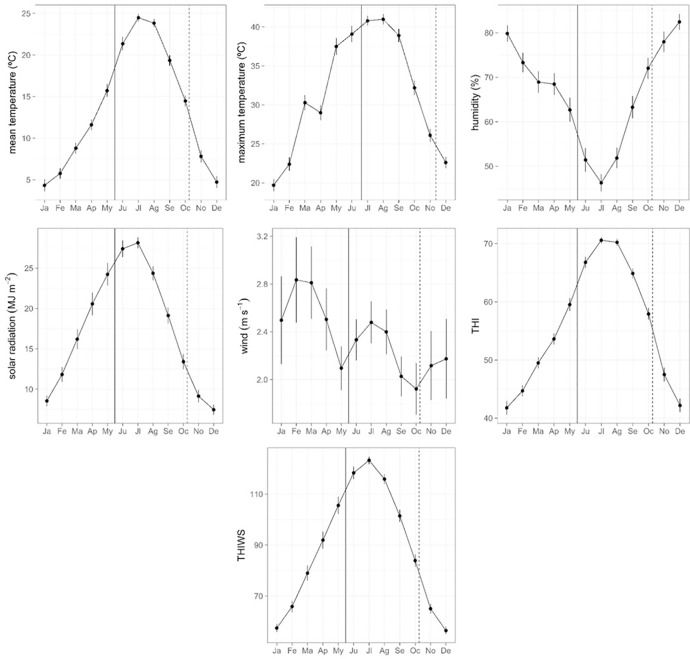
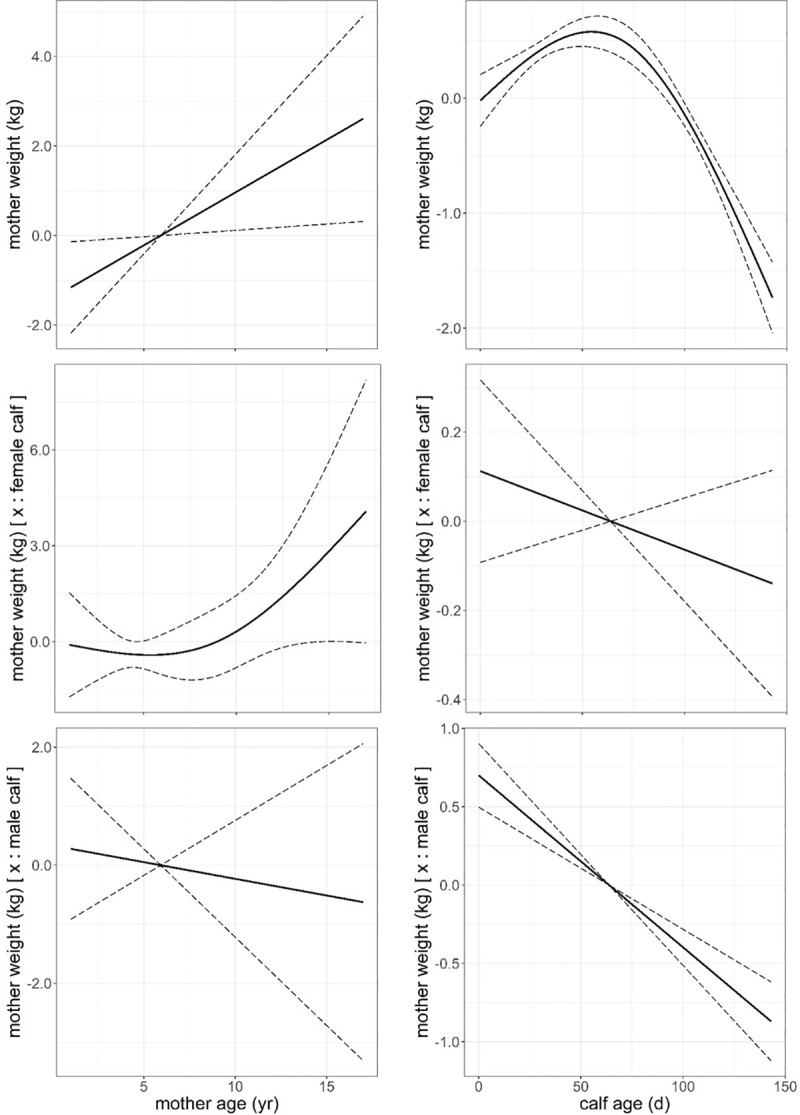
Climate models agree in predicting scenarios of global warming. In endothermic species heat stress takes place when they are upper their thermal neutral zone. Any physiological or behavioural mechanism to mitigate heat stress is at the cost of diverting energy from other physiological functions, with negative repercussions for individual fitness. Tolerance to heat stress differs between species, age classes and sexes, those with the highest metabolic rates being the most sensitive to stressing thermal environments. This is especially important during the first months of life, when most growth takes place. Red deer (Cervus elaphus) is supposedly well adapted to a wide range of thermal environments, based on its worldwide distribution range, but little is known about the direct effect that heat stress may have on calf growth. We assessed the effect that heat stress, measured by heat stress indices and physical environment variables (air temperature, relative air humidity, wind speed and solar radiation), have on calf and mother body weights from calf´s birth to weaning. We used 9265 longitudinal weekly body weight records of calf and mother across 19 years in captive Iberian red deer. We hypothesised that (i) heat stress in hot environments has a negative effect on calf growth, especially in males, as they are more energetically demanding to produce than females; and that (ii) the body weight of the mother through lactation should be negatively affected by heat stress. Our results supported hypothesis (i) but not so clearly hypothesis (ii). By weaning (day 143) calves growing under low heat stress environment grew up to 1.2 kg heavier than those growing in high heat stress environment, and males were more affected by heat stress than females. The results have implications in animal welfare, geographical clines in body size and adaptation to climate change.
气候模型一致预测了全球变暖的情景。在吸热物种中,当它们处于热中性区之上时,就会发生热应激。任何减轻热应激的生理或行为机制都要以牺牲其他生理功能的能量为代价,这对个体适应性产生负面影响。物种之间、年龄组和性别之间对热应激的耐受性不同,代谢率最高的物种对压力环境的热应激最为敏感。这在生命的头几个月尤其重要,因为大多数生长都发生在这个阶段。赤鹿(Cervus elaphus)据称能够很好地适应广泛的热环境,这基于其全球分布范围,但对热应激可能对幼鹿生长产生的直接影响知之甚少。我们评估了热应激(通过热应激指数和物理环境变量(空气温度、相对空气湿度、风速和太阳辐射)来衡量)对幼鹿和母鹿从出生到断奶期间体重的影响。我们使用了 19 年来在圈养伊比利亚赤鹿身上收集的 9265 份幼鹿和母鹿的纵向每周体重记录。我们假设(i)热应激在炎热环境中对幼鹿生长有负面影响,特别是在雄性身上,因为它们的能量需求比雌性更高;(ii)哺乳期母鹿的体重应该受到热应激的负面影响。我们的结果支持假设(i),但不那么支持假设(ii)。在断奶(第 143 天)时,在低热应激环境中生长的幼鹿比在高热应激环境中生长的幼鹿重 1.2 公斤,雄性比雌性更容易受到热应激的影响。这些结果对动物福利、体型的地理梯度和对气候变化的适应具有重要意义。