Center for Bioinformatics and Computational Biology, Houston Methodist Research Institute, Houston, TX, USA.
Center for Cardiovascular Regeneration, Department of Cardiovascular Sciences, Houston Methodist Research Institute, Houston, TX, USA.
Nat Commun. 2020 Jun 1;11(1):2696. doi: 10.1038/s41467-020-16539-4.
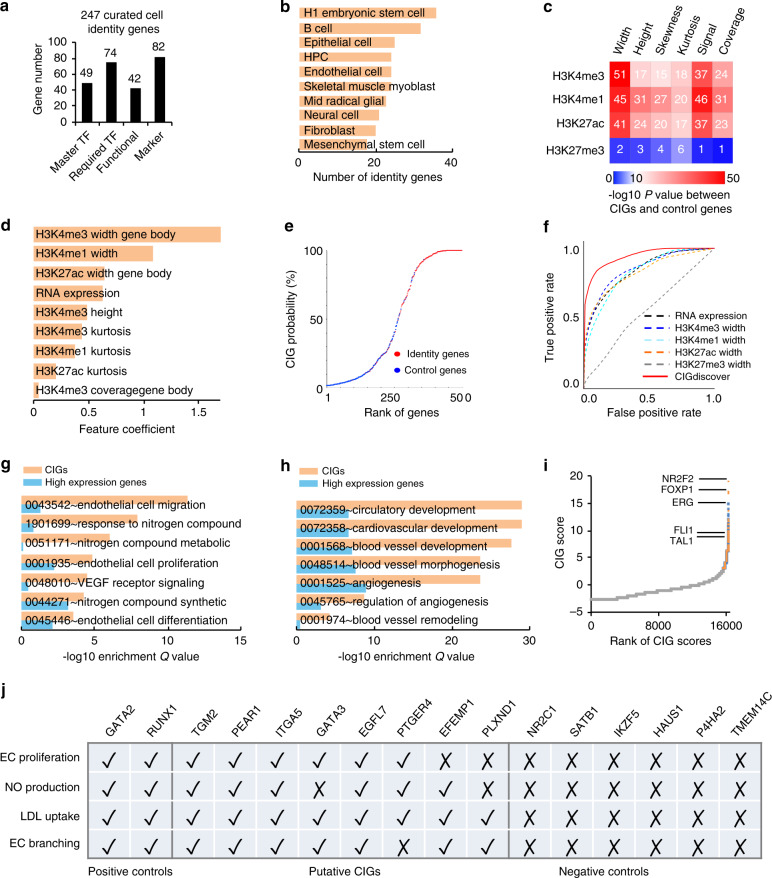
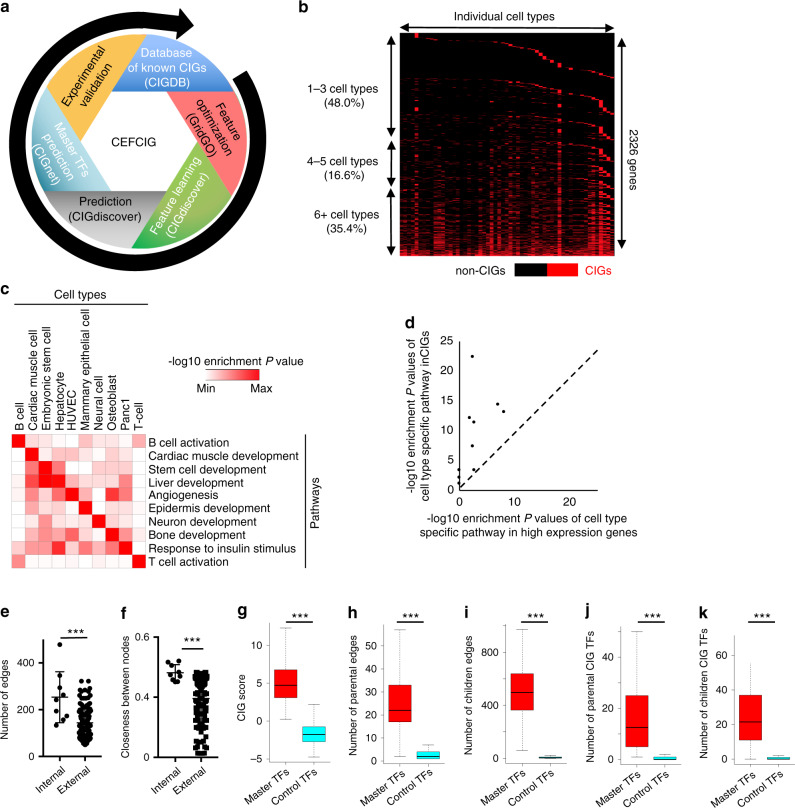
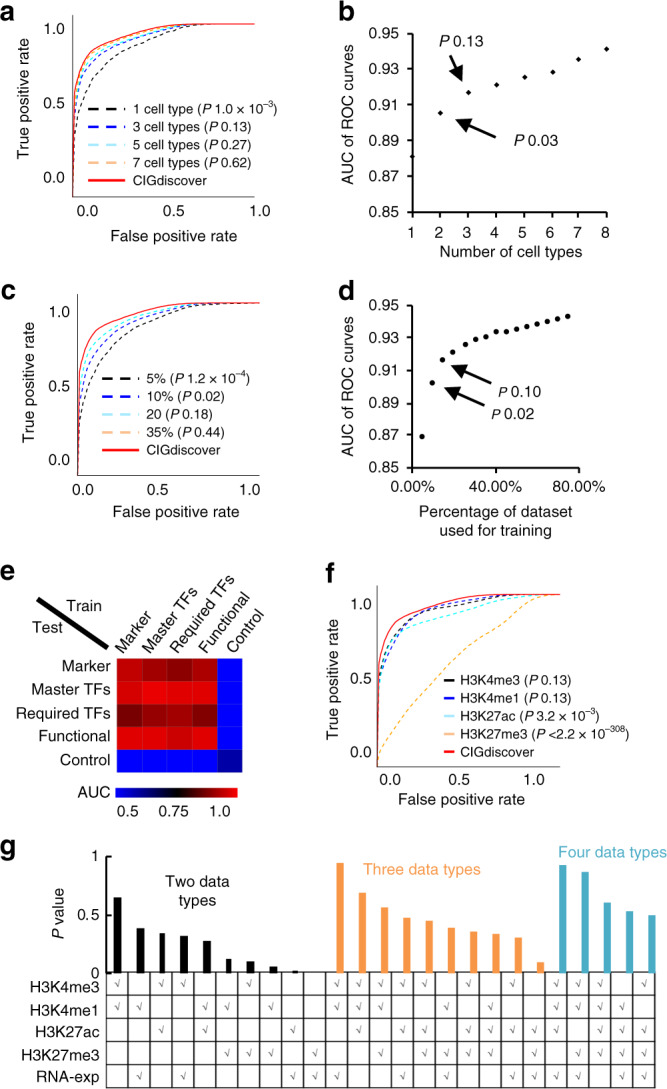
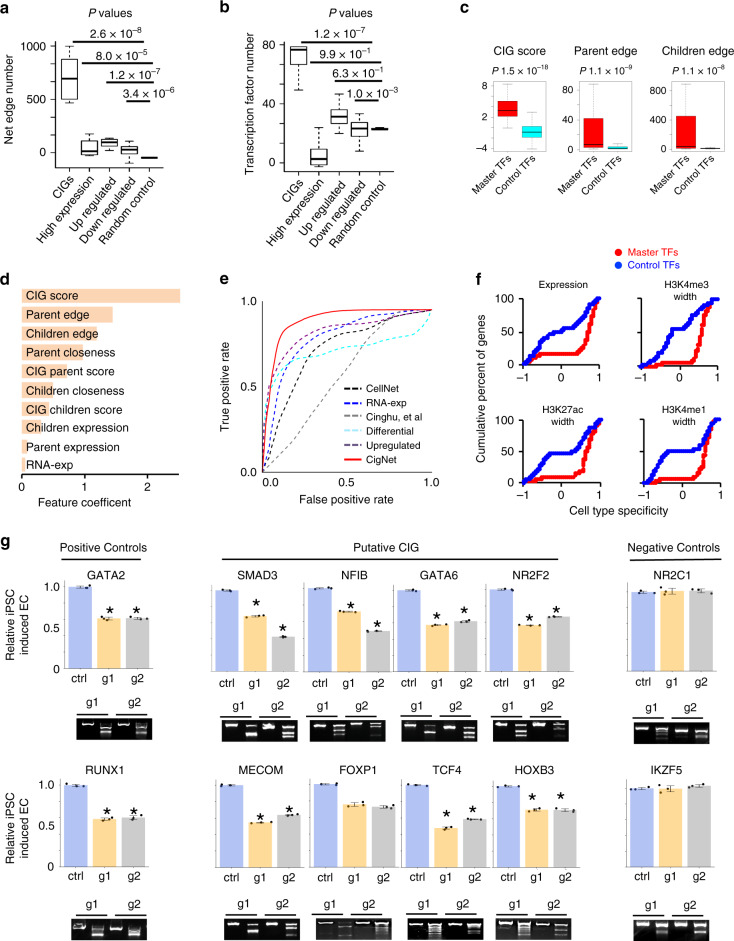
Conversion between cell types, e.g., by induced expression of master transcription factors, holds great promise for cellular therapy. Our ability to manipulate cell identity is constrained by incomplete information on cell identity genes (CIGs) and their expression regulation. Here, we develop CEFCIG, an artificial intelligent framework to uncover CIGs and further define their master regulators. On the basis of machine learning, CEFCIG reveals unique histone codes for transcriptional regulation of reported CIGs, and utilizes these codes to predict CIGs and their master regulators with high accuracy. Applying CEFCIG to 1,005 epigenetic profiles, our analysis uncovers the landscape of regulation network for identity genes in individual cell or tissue types. Together, this work provides insights into cell identity regulation, and delivers a powerful technique to facilitate regenerative medicine.
细胞类型的转换,例如通过诱导表达主转录因子,为细胞治疗带来了巨大的希望。我们操纵细胞特性的能力受到细胞特性基因(CIGs)及其表达调控信息不完全的限制。在这里,我们开发了 CEFCIG,这是一种人工智能框架,用于发现 CIGs 并进一步定义它们的主调控因子。基于机器学习,CEFCIG 揭示了报道的 CIGs 转录调控的独特组蛋白密码,并利用这些密码来高精度地预测 CIGs 和它们的主调控因子。将 CEFCIG 应用于 1005 种表观遗传谱,我们的分析揭示了单个细胞或组织类型中身份基因调控网络的全景。总之,这项工作为细胞特性的调控提供了深入的见解,并提供了一种强大的技术来促进再生医学。