Department of Chemistry and Institute for Drug Discovery, Purdue University, West Lafayette, Indiana 47907, United States.
Theranostics. 2020 Apr 27;10(13):5778-5789. doi: 10.7150/thno.41409. eCollection 2020.
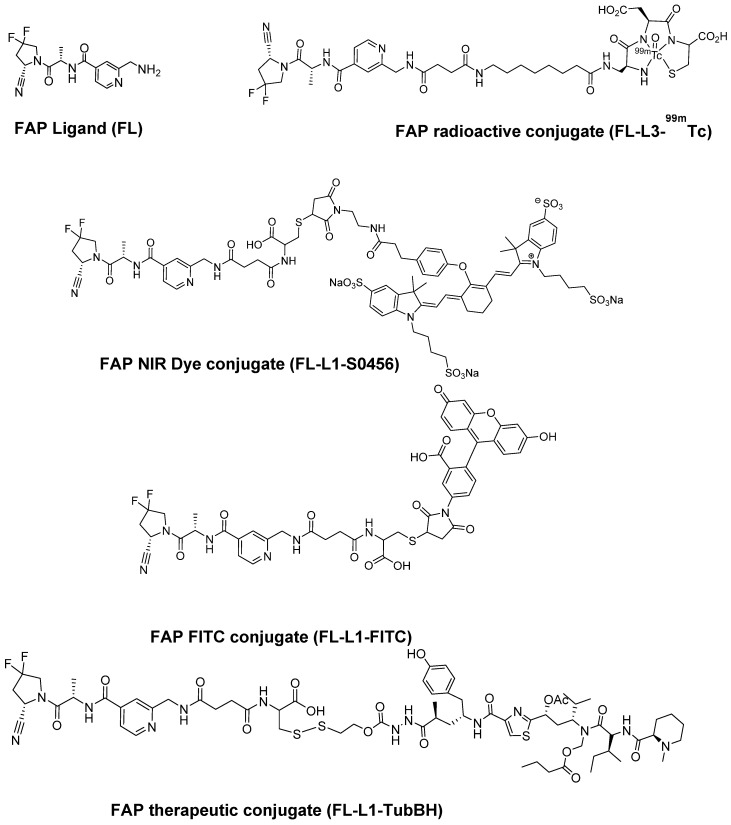
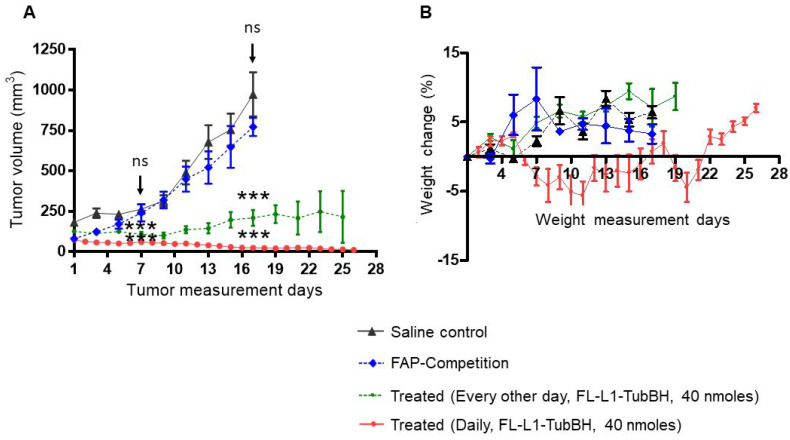
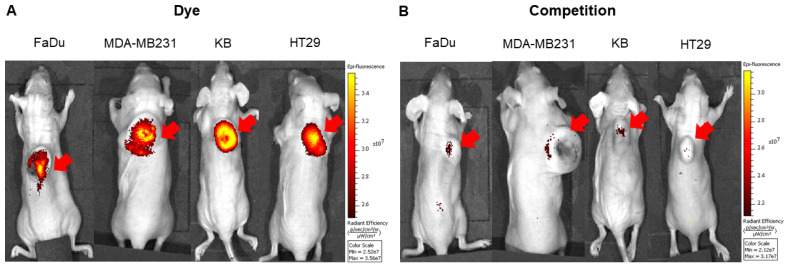
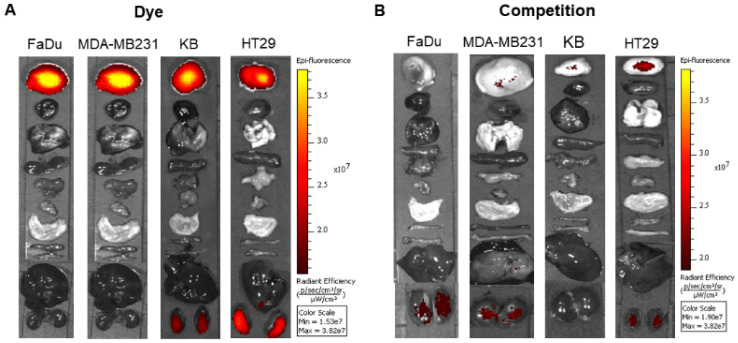
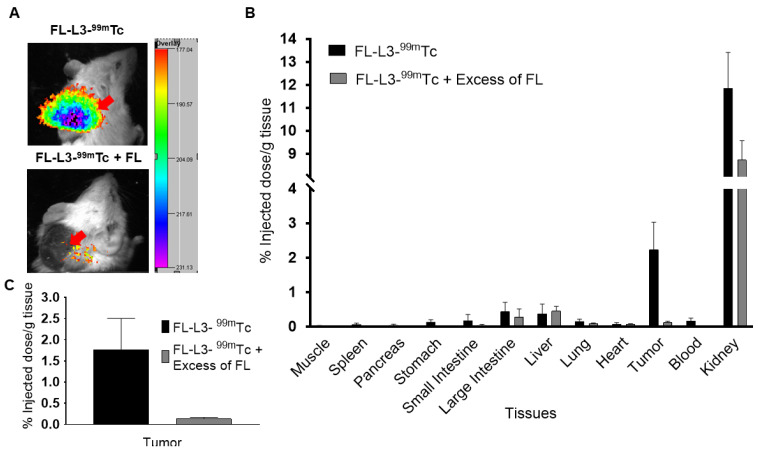
: Cancer-associated fibroblasts (CAFs) comprise a major cell type in the tumor microenvironment where they support tumor growth and survival by producing extracellular matrix, secreting immunosuppressive cytokines, releasing growth factors, and facilitating metastases. Because tumors with elevated CAFs are characterized by poorer prognosis, considerable effort is focused on developing methods to quantitate, suppress and/or eliminate CAFs. We exploit the elevated expression of fibroblast activation protein (FAP) on CAFs to target imaging and therapeutic agents selectively to these fibroblasts in solid tumors. : FAP-targeted optical imaging, radioimaging, and chemotherapeutic agents were synthesized by conjugating FAP ligand (FL) to either a fluorescent dye, technetium-99m, or tubulysin B hydrazide. In vitro and in vivo studies were performed to determine the specificity and selectivity of each conjugate for FAP in vitro and in vivo. : FAP-targeted imaging and therapeutic conjugates showed high binding specificity and affinity in the low nanomolar range. Injection of FAP-targeted Tc into tumor-bearing mice enabled facile detection of tumor xenografts with little off-target uptake. Optical imaging of malignant lesions was also readily achieved following intravenous injection of FAP-targeted near-infrared fluorescent dye. Finally, systemic administration of a tubulysin B conjugate of FL promoted complete eradication of solid tumors with no evidence of gross toxicity to the animals. : In view of the near absence of FAP on healthy cells, we conclude that targeting of FAP on cancer-associated fibroblasts can enable highly specific imaging and therapy of solid tumors.
癌症相关成纤维细胞(CAFs)是肿瘤微环境中的主要细胞类型,它们通过产生细胞外基质、分泌免疫抑制细胞因子、释放生长因子和促进转移来支持肿瘤生长和存活。由于高 CAFs 肿瘤的预后较差,因此人们致力于开发定量、抑制和/或消除 CAFs 的方法。我们利用 CAFs 中纤维母细胞激活蛋白(FAP)的高表达,将成像和治疗剂选择性地靶向这些成纤维细胞,用于实体瘤。我们将 FAP 配体(FL)与荧光染料、锝-99m 或 tubulysin B 酰肼缀合,合成了 FAP 靶向的光学成像、放射成像和化疗药物。进行了体外和体内研究,以确定每种缀合物在体外和体内对 FAP 的特异性和选择性。FAP 靶向的成像和治疗性缀合物在低纳摩尔范围内表现出高结合特异性和亲和力。向荷瘤小鼠注射 FAP 靶向的 Tc 能够轻松检测到肿瘤异种移植物,而几乎没有非靶标摄取。静脉注射 FAP 靶向的近红外荧光染料也很容易实现对恶性病变的光学成像。最后,FL 的 tubulysin B 缀合物的全身给药促进了实体瘤的完全消除,而对动物没有明显的毒性。鉴于健康细胞中几乎不存在 FAP,我们得出结论,针对癌症相关成纤维细胞上的 FAP 可以实现实体瘤的高度特异性成像和治疗。