Cell Therapy and Tissue Engineering Center, Yonsei University Wonju College of Medicine, Wonju, Gangwon-do 26426, Korea.
Regeneration Medicine Research Center, Yonsei University Wonju College of Medicine, Wonju, Gangwon-do 26426, Korea.
Int J Mol Sci. 2020 May 29;21(11):3887. doi: 10.3390/ijms21113887.
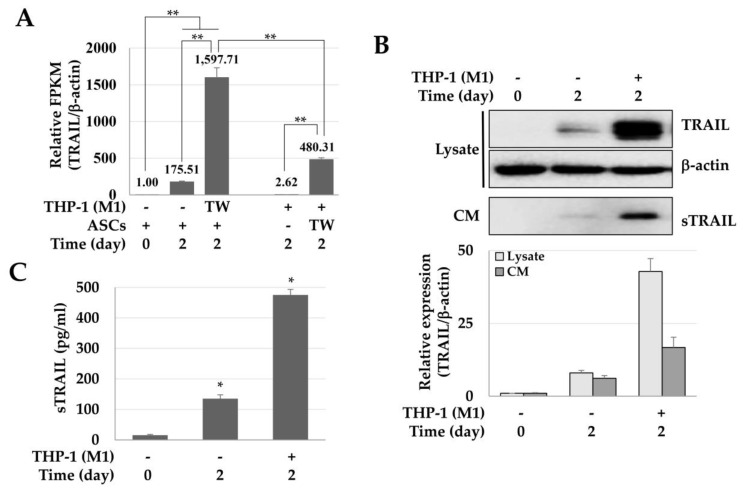
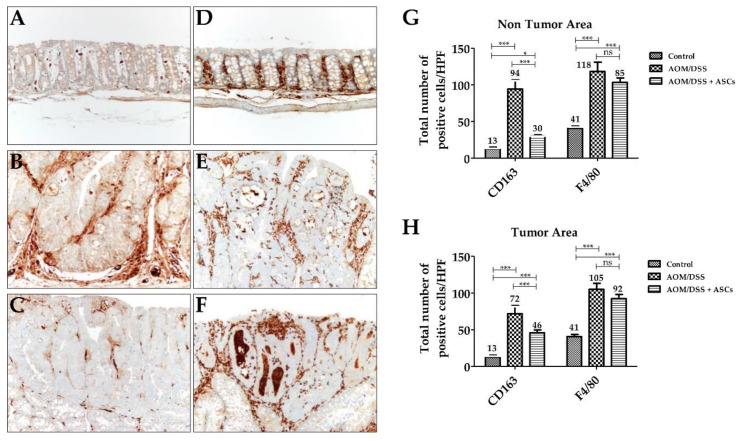
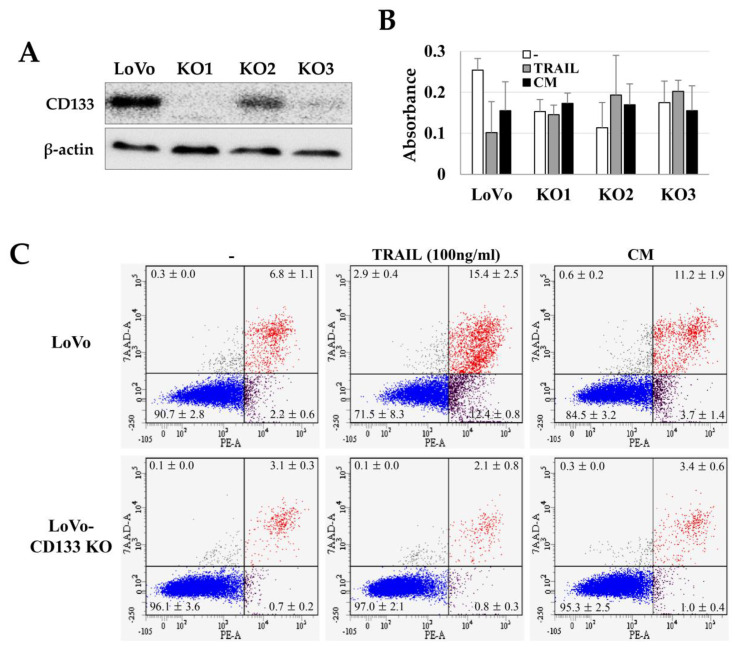
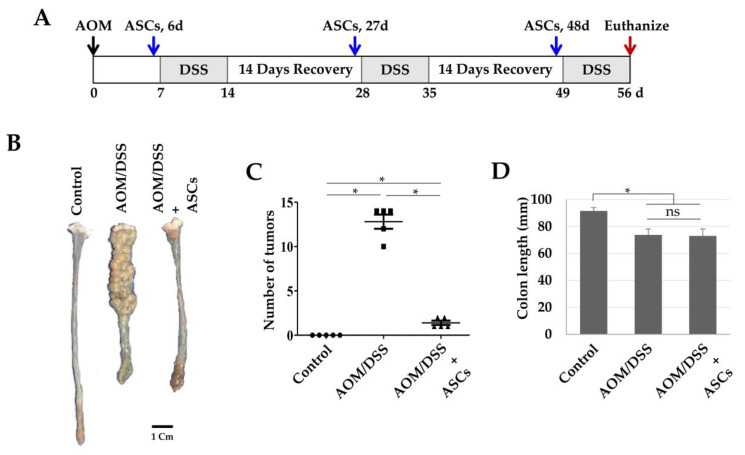
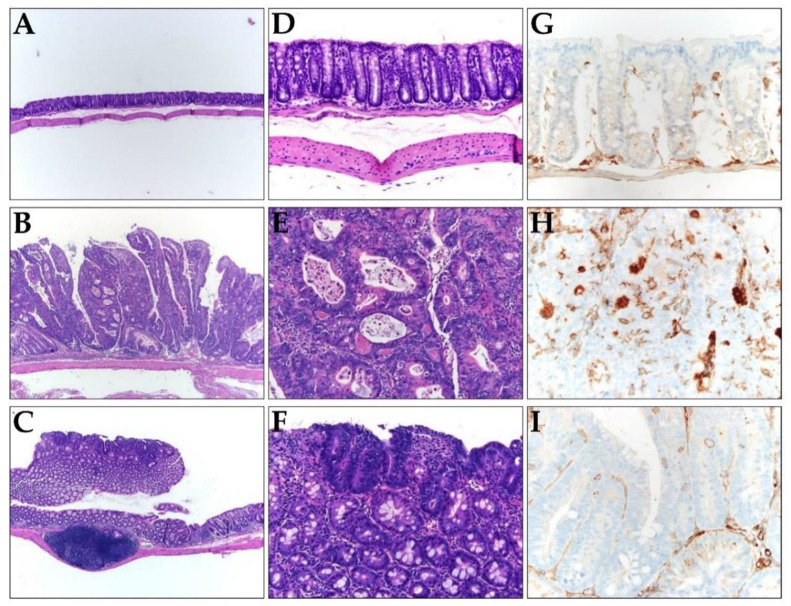
We have previously reported that adipose tissue-derived stem cells (ASCs) cultured at high cell density can induce cancer cell death through the expression of type I interferons and tumor necrosis factor (TNF)-related apoptosis-inducing ligands (TRAIL). Here, we investigated whether TRAIL-expressing ASCs induced by M1 macrophages can alleviate colitis-associated cancer in an azoxymethane (AOM)/dextran sodium sulfate (DSS) animal model. M1 macrophages significantly increased the TRAIL expression in ASCs, which induced the apoptosis of LoVo cells in a TRAIL-dependent manner. However, CD133 LoVo cells, generated using the CRISPR-Cas9 gene-editing system, were resistant to TRAIL. In the AOM/DSS-induced colitis-associated cancer model, the intraperitoneal transplantation of TRAIL-expressing ASCs significantly suppressed colon cancer development. Moreover, immunohistochemical staining revealed a low CD133 expression in tumors from the AOM/DSS + ASCs group when compared with tumors from the untreated group. Additionally, the ASC treatment selectively reduced the number of M2 macrophages in tumoral (45.7 ± 4.2) and non-tumoral mucosa (30.3 ± 1.5) in AOM/DSS + ASCs-treated animals relative to those in the untreated group (tumor 71.7 ± 11.2, non-tumor 94.3 ± 12.5; < 0.001). Thus, TRAIL-expressing ASCs are promising agents for anti-tumor therapy, particularly to alleviate colon cancer by inducing the apoptosis of CD133 cancer stem cells and decreasing the M2 macrophage population.
我们之前曾报道过,在高细胞密度下培养的脂肪组织来源的干细胞(ASCs)可通过表达 I 型干扰素和肿瘤坏死因子(TNF)相关凋亡诱导配体(TRAIL)诱导癌细胞死亡。在这里,我们研究了 M1 巨噬细胞诱导的表达 TRAIL 的 ASCs 是否可以在氧化偶氮甲烷(AOM)/葡聚糖硫酸钠(DSS)动物模型中缓解结肠炎相关癌症。M1 巨噬细胞可显著增加 ASCs 中的 TRAIL 表达,从而以 TRAIL 依赖性方式诱导 LoVo 细胞凋亡。然而,使用 CRISPR-Cas9 基因编辑系统生成的 CD133 LoVo 细胞对 TRAIL 具有抗性。在 AOM/DSS 诱导的结肠炎相关癌症模型中,腹腔内移植表达 TRAIL 的 ASCs 可显著抑制结肠癌的发展。此外,免疫组织化学染色显示,与未处理组相比,AOM/DSS+ASCs 组的肿瘤中 CD133 的表达较低。此外,与未处理组相比,ASCs 处理可选择性地减少 AOM/DSS+ASCs 处理动物肿瘤(45.7±4.2)和非肿瘤黏膜(30.3±1.5)中的 M2 巨噬细胞数量(肿瘤 71.7±11.2,非肿瘤 94.3±12.5;<0.001)。因此,表达 TRAIL 的 ASCs 是一种很有前途的抗肿瘤治疗药物,特别是通过诱导 CD133 癌症干细胞凋亡和减少 M2 巨噬细胞数量来缓解结肠癌。