• 文献检索
  • 文档翻译
  • 深度研究
  • 学术资讯
  • Suppr Zotero 插件Zotero 插件
  • 邀请有礼
  • 套餐&价格
  • 历史记录
应用&插件
Suppr Zotero 插件Zotero 插件浏览器插件Mac 客户端Windows 客户端微信小程序
定价
高级版会员购买积分包购买API积分包
服务
文献检索文档翻译深度研究API 文档MCP 服务
关于我们
关于 Suppr公司介绍联系我们用户协议隐私条款
关注我们

Suppr 超能文献

核心技术专利:CN118964589B侵权必究
粤ICP备2023148730 号-1Suppr @ 2026

文献检索

告别复杂PubMed语法,用中文像聊天一样搜索,搜遍4000万医学文献。AI智能推荐,让科研检索更轻松。

立即免费搜索

文件翻译

保留排版,准确专业,支持PDF/Word/PPT等文件格式,支持 12+语言互译。

免费翻译文档

深度研究

AI帮你快速写综述,25分钟生成高质量综述,智能提取关键信息,辅助科研写作。

立即免费体验

德国帕金森病患者在新冠疫情期间的知识、态度、行为及负担

Knowledge, Attitudes, Practices, and Burden During the COVID-19 Pandemic in People with Parkinson's Disease in Germany.

作者信息

Zipprich Hannah M, Teschner Ulrike, Witte Otto W, Schönenberg Aline, Prell Tino

机构信息

Department of Neurology, Jena University Hospital, 07743 Jena, Germany.

Center for Healthy Ageing, Jena University Hospital, 07743 Jena, Germany.

出版信息

J Clin Med. 2020 May 29;9(6):1643. doi: 10.3390/jcm9061643.

DOI:10.3390/jcm9061643
PMID:32486074
原文链接:https://pmc.ncbi.nlm.nih.gov/articles/PMC7355903/
Abstract

: Adherence to measures that have been adopted during the COVID-19 pandemic is crucial to control the spread of the coronavirus. : Semi-structured telephone interviews were performed with 99 patients with Parkinson's disease (PD) and 21 controls to explore knowledge, attitudes, practices, and burden in order to elucidate nonadherence to preventive measures. : The majority of patients understood the preventive measures and felt sufficiently informed. Analysis of qualitative answers, however, showed that about 30% of patients had an insufficient level of knowledge, which was not associated with educational level, cognitive disorders, or depression. Changes in behaviour were reported by 73 patients (99% performed at least one specific preventive behavior, and 86.9% have reduced social contacts and stayed home). A closer analysis of qualitative answers showed that 27.3% of patients continued to meet relatives face-to-face almost daily. Anxiety and worries about the current situation were reported by 58.6% of patients; 31.3% complained about a decrease in their mobility since the beginning of the restrictions, mainly because of worsening of PD and because regular therapies (e.g., physiotherapy) were canceled. : About 30% of PD patients are nonadherent to preventive measures. Use of simple dichotomous questions overestimates adherence to preventive measures in patients with PD.

摘要

遵守在新冠疫情期间所采取的措施对于控制冠状病毒的传播至关重要。对99名帕金森病(PD)患者和21名对照者进行了半结构化电话访谈,以探究知识、态度、行为及负担情况,从而阐明不遵守预防措施的原因。大多数患者理解预防措施并觉得已充分了解相关信息。然而,对定性回答的分析表明,约30%的患者知识水平不足,这与教育程度、认知障碍或抑郁无关。73名患者报告了行为变化(99%至少进行了一种特定的预防行为,86.9%减少了社交接触并居家)。对定性回答的进一步分析表明,27.3%的患者几乎每天都继续与亲属面对面接触。58.6%的患者报告了对当前形势的焦虑和担忧;31.3%的患者抱怨自限制措施开始以来行动能力下降,主要原因是帕金森病恶化以及常规治疗(如物理治疗)被取消。约30%的帕金森病患者不遵守预防措施。使用简单的二分法问题高估了帕金森病患者对预防措施的遵守情况。
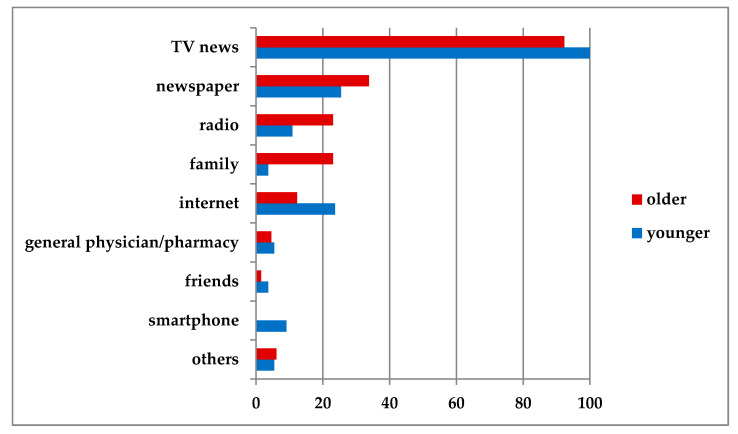
https://cdn.ncbi.nlm.nih.gov/pmc/blobs/521f/7355903/eeb179cfa0b6/jcm-09-01643-g002.jpg
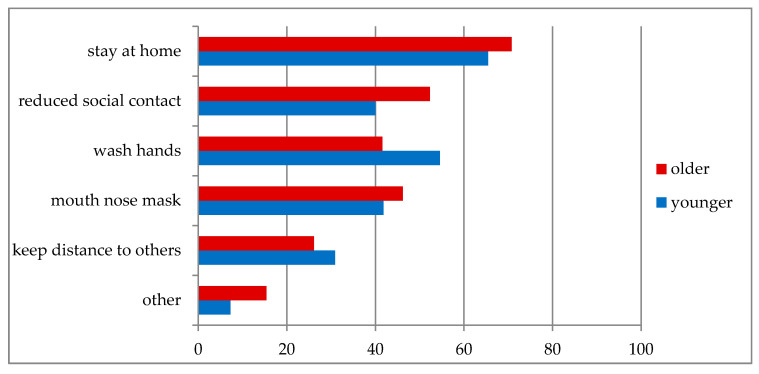
https://cdn.ncbi.nlm.nih.gov/pmc/blobs/521f/7355903/0845fd044bf6/jcm-09-01643-g001.jpg
https://cdn.ncbi.nlm.nih.gov/pmc/blobs/521f/7355903/eeb179cfa0b6/jcm-09-01643-g002.jpg
https://cdn.ncbi.nlm.nih.gov/pmc/blobs/521f/7355903/0845fd044bf6/jcm-09-01643-g001.jpg
https://cdn.ncbi.nlm.nih.gov/pmc/blobs/521f/7355903/eeb179cfa0b6/jcm-09-01643-g002.jpg

相似文献

1
Knowledge, Attitudes, Practices, and Burden During the COVID-19 Pandemic in People with Parkinson's Disease in Germany.德国帕金森病患者在新冠疫情期间的知识、态度、行为及负担
J Clin Med. 2020 May 29;9(6):1643. doi: 10.3390/jcm9061643.
2
3
Isolation Related to the COVID-19 Pandemic in People Suffering from Parkinson's Disease and Activity, Self-Assessment of Physical Fitness and the Level of Affective Disorders.帕金森病患者与新冠疫情相关的隔离情况、活动、体能自我评估及情感障碍水平
Healthcare (Basel). 2021 Nov 17;9(11):1562. doi: 10.3390/healthcare9111562.
4
Psychological and Behavioral Response to the Coronavirus (COVID-19) Pandemic.对冠状病毒(COVID-19)大流行的心理和行为反应。
Cureus. 2020 May 2;12(5):e7923. doi: 10.7759/cureus.7923.
5
What Predicts Different Kinds of Nonadherent Behavior in Elderly People With Parkinson's Disease?是什么预测了帕金森病老年患者的不同类型的不依从行为?
Front Med (Lausanne). 2020 Mar 25;7:103. doi: 10.3389/fmed.2020.00103. eCollection 2020.
6
On dogs, people, and a rabies epidemic: results from a sociocultural study in Bali, Indonesia.关于狗、人类与狂犬病疫情:印度尼西亚巴厘岛一项社会文化研究的结果
Infect Dis Poverty. 2015 Jun 30;4:30. doi: 10.1186/s40249-015-0061-1. eCollection 2015.
7
Panic During COVID-19 Pandemic! A Qualitative Investigation Into the Psychosocial Experiences of a Sample of Indian People.新冠疫情期间的恐慌!对一群印度人的社会心理体验的定性调查。
Front Psychol. 2020 Oct 15;11:575491. doi: 10.3389/fpsyg.2020.575491. eCollection 2020.
8
An Italian Neurology Outpatient Clinic Facing SARS-CoV-2 Pandemic: Data From 2,167 Patients.一家面临新冠疫情的意大利神经科门诊诊所:来自2167名患者的数据。
Front Neurol. 2020 May 29;11:564. doi: 10.3389/fneur.2020.00564. eCollection 2020.
9
Adherence to antiparkinsonian medication: an in-depth qualitative study.抗帕金森病药物的依从性:一项深入的定性研究。
Int J Nurs Stud. 2012 Jul;49(7):863-71. doi: 10.1016/j.ijnurstu.2012.01.012. Epub 2012 Feb 18.
10
Knowledge, attitudes, and practices of Hong Kong population towards human A/H7N9 influenza pandemic preparedness, China, 2014.2014年中国香港居民对甲型H7N9流感大流行防范的知识、态度和行为
BMC Public Health. 2015 Sep 22;15:943. doi: 10.1186/s12889-015-2245-9.

引用本文的文献

1
Social deprivation and exclusion in Parkinson's disease: a cross-sectional and longitudinal study.帕金森病中的社会剥夺和排斥:一项横断面和纵向研究。
BMJ Open. 2023 Dec 30;13(12):e074618. doi: 10.1136/bmjopen-2023-074618.
2
Survey on the Impact of the COVID-19 Pandemic on Patients with Parkinson's Disease and Their Caregivers in Japan.关于新冠疫情对日本帕金森病患者及其照料者影响的调查
Patient Prefer Adherence. 2023 May 8;17:1221-1235. doi: 10.2147/PPA.S402193. eCollection 2023.
3
Impact of the COVID-19 pandemic on perceived access and quality of care in German people with parkinsonism.

本文引用的文献

1
Parkinson's Disease and COVID-19: Perceptions and Implications in Patients and Caregivers.帕金森病与2019冠状病毒病:患者及照料者的认知与影响
Mov Disord. 2020 Jun;35(6):912-914. doi: 10.1002/mds.28088. Epub 2020 May 8.
2
COVID-19 and Older Adults: What We Know.COVID-19 与老年人:我们已知的情况。
J Am Geriatr Soc. 2020 May;68(5):926-929. doi: 10.1111/jgs.16472. Epub 2020 Apr 20.
3
The Impact of the COVID-19 Pandemic on Parkinson's Disease: Hidden Sorrows and Emerging Opportunities.新冠疫情对帕金森病的影响:隐藏的困境与新出现的机遇
新冠疫情对德国帕金森病患者感知的就诊机会和医疗质量的影响。
Front Public Health. 2023 Apr 14;11:1091737. doi: 10.3389/fpubh.2023.1091737. eCollection 2023.
4
Can COVID-19 pandemic worsen previous neurological/psychiatric diseases?新冠疫情会使先前的神经/精神疾病恶化吗?
Neurol Perspect. 2022 Jul-Sep;2(3):143-150. doi: 10.1016/j.neurop.2022.06.002. Epub 2022 Jun 27.
5
Prevalence and outcomes of Covid-19 in Parkinson's disease: Acute settings and hospital.帕金森病患者中 COVID-19 的患病率和结局:急症环境和医院。
Int Rev Neurobiol. 2022;165:35-62. doi: 10.1016/bs.irn.2022.03.001. Epub 2022 Apr 20.
6
Parkinson's disease and Covid-19: The effect and use of telemedicine.帕金森病与新冠病毒肺炎:远程医疗的效果与应用。
Int Rev Neurobiol. 2022;165:263-281. doi: 10.1016/bs.irn.2022.04.002. Epub 2022 Jul 14.
7
Social isolation, loneliness and mental health sequelae of the Covid-19 pandemic in Parkinson's disease.新冠疫情对帕金森病患者的社会隔离、孤独感和心理健康后遗症的影响。
Int Rev Neurobiol. 2022;165:197-227. doi: 10.1016/bs.irn.2022.03.003. Epub 2022 Apr 23.
8
Spotlight on non-motor symptoms and Covid-19.聚焦非运动症状和新冠病毒。
Int Rev Neurobiol. 2022;165:103-133. doi: 10.1016/bs.irn.2022.04.001. Epub 2022 Jul 9.
9
Impact of COVID-19 pandemic on patients with Parkinson's disease: A meta-analysis of 13,878 patients.新冠疫情对帕金森病患者的影响:一项包含 13878 名患者的荟萃分析。
Ann Clin Transl Neurol. 2022 Oct;9(10):1504-1513. doi: 10.1002/acn3.51616. Epub 2022 Sep 6.
10
COVID-19 outcomes in hospitalized Parkinson's disease patients in two pandemic waves in 2020: a nationwide cross-sectional study from Germany.2020年两波疫情期间德国住院帕金森病患者的新冠病毒病结局:一项全国性横断面研究
Neurol Res Pract. 2022 Jul 11;4(1):27. doi: 10.1186/s42466-022-00192-x.
J Parkinsons Dis. 2020;10(2):351-354. doi: 10.3233/JPD-202038.
4
Novel Coronavirus Infection (COVID-19) in Humans: A Scoping Review and Meta-Analysis.人类新型冠状病毒感染(COVID-19):一项范围综述与荟萃分析
J Clin Med. 2020 Mar 30;9(4):941. doi: 10.3390/jcm9040941.
5
Knowledge, attitudes, and practices towards COVID-19 among Chinese residents during the rapid rise period of the COVID-19 outbreak: a quick online cross-sectional survey.中国居民在 COVID-19 疫情快速上升期对 COVID-19 的认知、态度和实践:一项快速在线横断面调查。
Int J Biol Sci. 2020 Mar 15;16(10):1745-1752. doi: 10.7150/ijbs.45221. eCollection 2020.
6
The effect of control strategies to reduce social mixing on outcomes of the COVID-19 epidemic in Wuhan, China: a modelling study.控制策略对减少社交接触以控制中国武汉 COVID-19 疫情的效果:建模研究。
Lancet Public Health. 2020 May;5(5):e261-e270. doi: 10.1016/S2468-2667(20)30073-6. Epub 2020 Mar 25.
7
Interventions to mitigate early spread of SARS-CoV-2 in Singapore: a modelling study.干预措施以减轻 SARS-CoV-2 在新加坡的早期传播:一项建模研究。
Lancet Infect Dis. 2020 Jun;20(6):678-688. doi: 10.1016/S1473-3099(20)30162-6. Epub 2020 Mar 23.
8
Data on adherence to medication in neurological patients using the German Stendal Adherence to Medication Score (SAMS).使用德国施滕达尔药物依从性评分(SAMS)对神经科患者药物依从性的数据。
Data Brief. 2019 Mar 19;23:103855. doi: 10.1016/j.dib.2019.103855. eCollection 2019 Apr.
9
Clusters of non-adherence to medication in neurological patients.神经科患者药物治疗不依从的聚类现象。
Res Social Adm Pharm. 2019 Dec;15(12):1419-1424. doi: 10.1016/j.sapharm.2019.01.001. Epub 2019 Feb 11.
10
Comparison of anonymous versus nonanonymous responses to a medication adherence questionnaire in patients with Parkinson's disease.帕金森病患者对药物依从性问卷的匿名与非匿名回答的比较。
Patient Prefer Adherence. 2019 Jan 18;13:151-155. doi: 10.2147/PPA.S186732. eCollection 2019.