Engineering Department, Teesside University, Middlesbrough TS1 3BX, United Kingdom;
Chemical Engineering Department, Federal University of Parana, Curitiba 81531-980, Brazil.
Proc Natl Acad Sci U S A. 2020 Jun 16;117(24):13366-13373. doi: 10.1073/pnas.1918683117. Epub 2020 Jun 2.
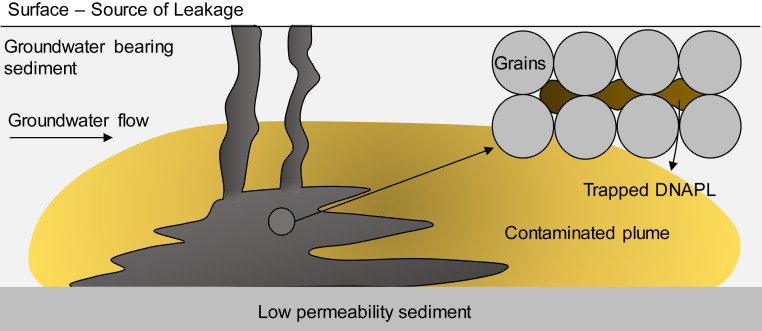
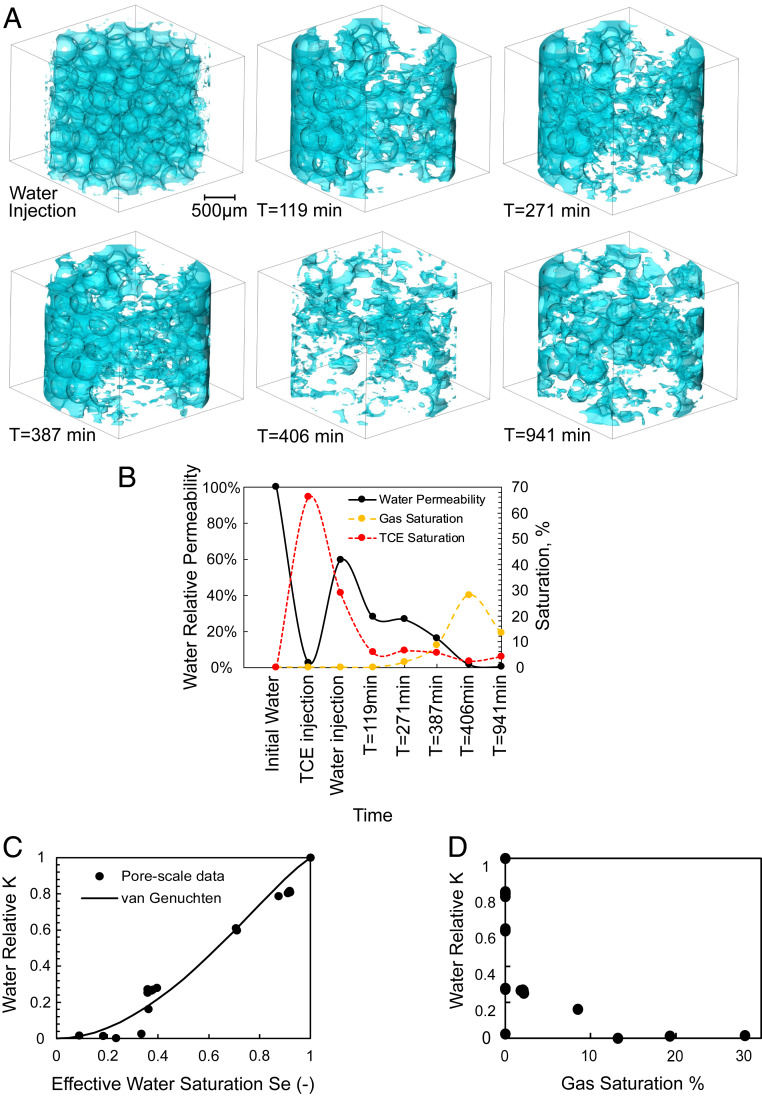
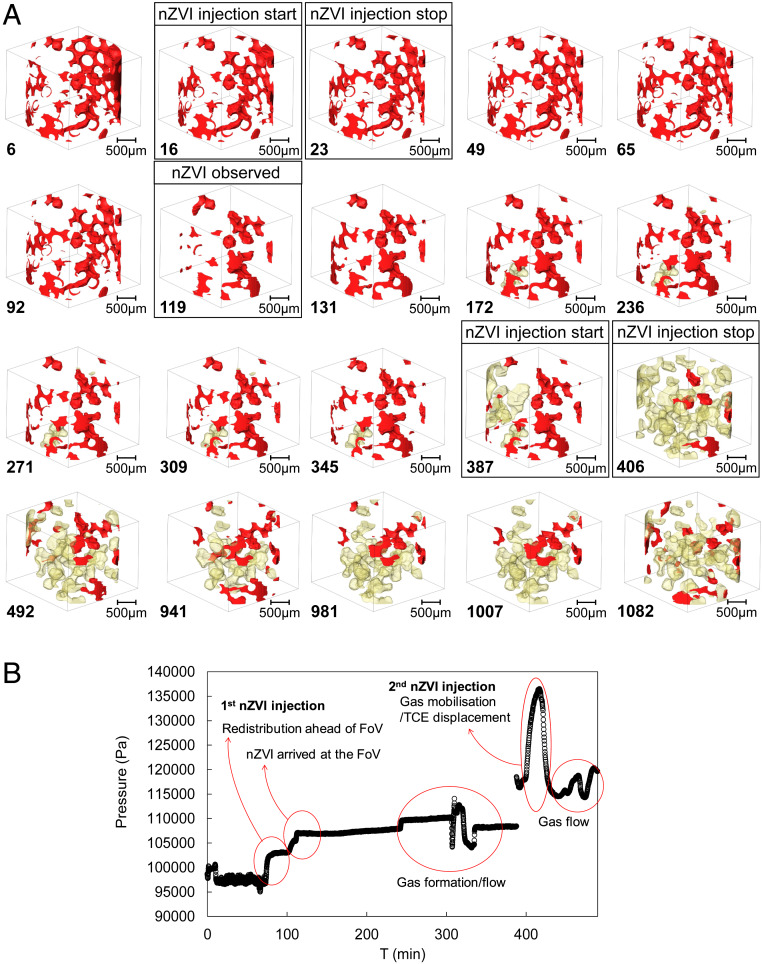
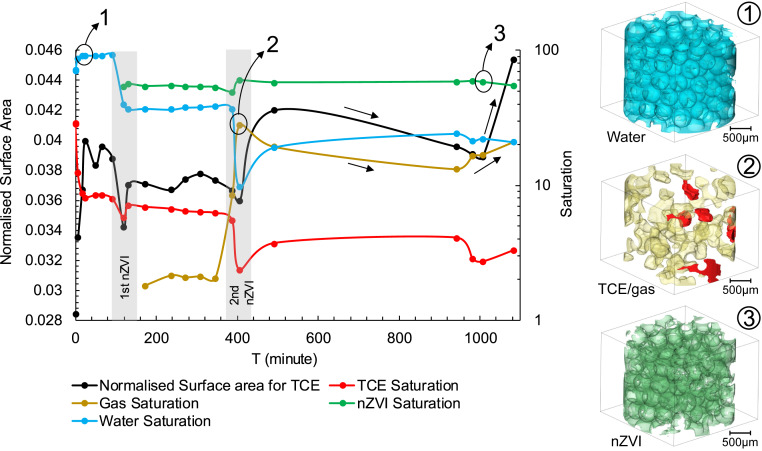
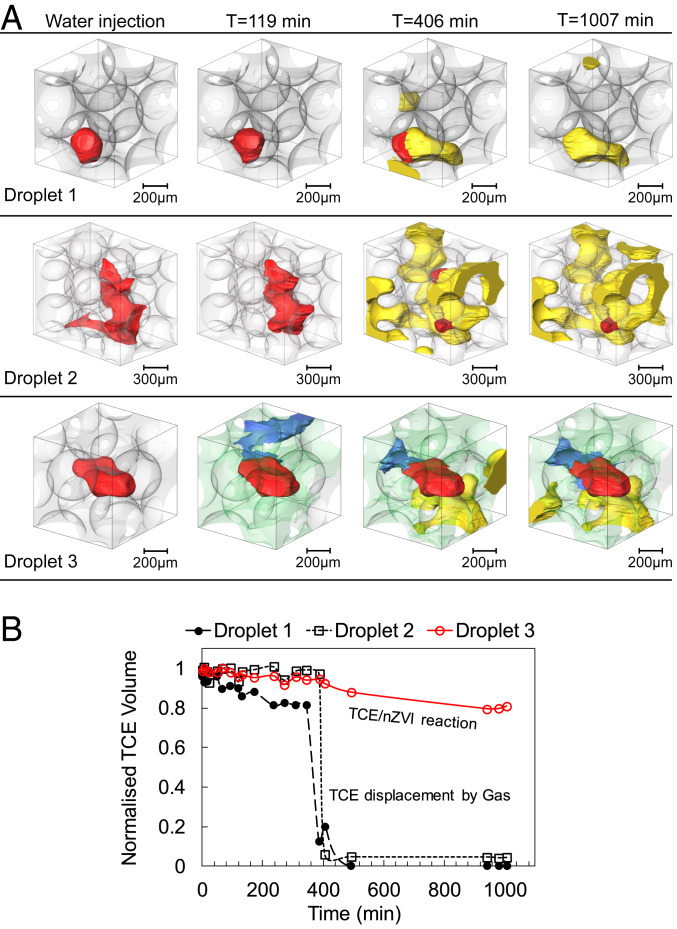
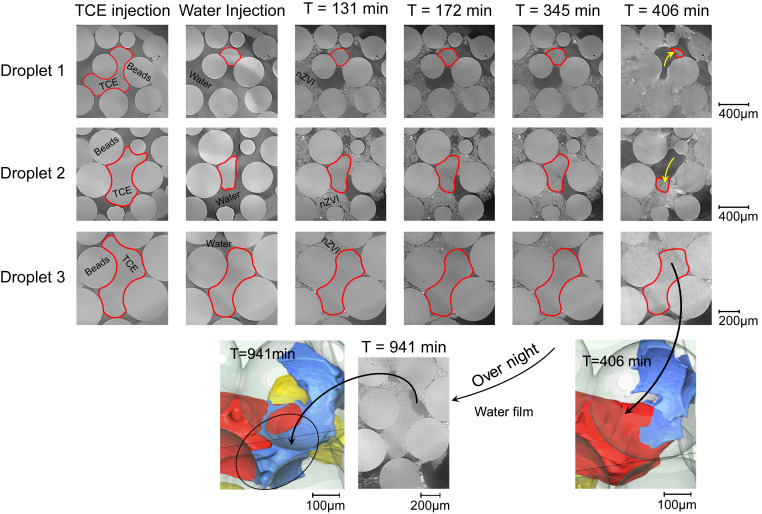
Nanoscale zero-valent iron (nZVI) particles have excellent capacity for in situ remediation of groundwater resources contaminated by a range of organic and inorganic contaminants. Chlorinated solvents are by far the most treated compounds. Studies at column, pilot, and field scales have reported successful decrease in contaminant concentration upon injection of nZVI suspensions in the contaminated zones. However, the field application is far from optimized, particularly for treatments at-or close to-the source, in the presence of residual nonaqueous liquid (NAPL). The knowledge gaps surrounding the processes that occur within the pores of the sediments hosting those contaminants at microscale limit our ability to design nanoremediation processes that are optimized at larger scales. This contribution provides a pore-scale picture of the nanoremediation process. Our results reveal how the distribution of the trapped contaminant evolves as a result of contaminant degradation and generation of gaseous products. We have used state-of-the-art four-dimensional (4D) imaging (time-resolved three-dimensional [3D]) experiments to understand the details of this degradation reaction at the micrometer scale. This contribution shows that the gas released (from the reduction reaction) remobilizes the trapped contaminant by overcoming the capillary forces. Our results show that the secondary sources of NAPL contaminations can be effectively treated by nZVI, not only by in situ degradation, but also through pore-scale remobilization (induced by the evolved gas phase). The produced gas reduces the water relative permeability to less than 1% and, therefore, significantly limits the extent of plume migration in the short term.
纳米零价铁(nZVI)颗粒具有原位修复受多种有机和无机污染物污染的地下水的卓越能力。氯化溶剂是迄今为止处理最多的化合物。在柱、中试和现场规模的研究中,报道了在受污染区域注入 nZVI 悬浮液后,污染物浓度成功降低。然而,现场应用还远未优化,特别是在存在残留非水相液体(NAPL)的情况下,在接近源的位置进行处理。围绕在承载这些污染物的沉积物的孔隙内发生的过程的知识空白限制了我们设计在较大规模上优化的纳米修复过程的能力。本研究提供了纳米修复过程的一个孔隙尺度的图像。我们的结果揭示了由于污染物降解和气态产物生成,被困污染物的分布如何演变。我们使用最先进的四维(4D)成像(时变三维[3D])实验来理解在微米尺度上这种降解反应的细节。本研究表明,释放的气体(来自还原反应)通过克服毛细力来重新移动被困的污染物。我们的结果表明,纳米零价铁不仅可以通过原位降解,而且可以通过孔隙尺度的再移动(由演化的气相引起)来有效处理 NAPL 污染物的次生源。产生的气体将水相对渗透率降低到 1%以下,因此在短期内显著限制了羽流迁移的范围。