Research Center for Translational Medicine, Key Laboratory of Arrhythmias of the Ministry of Education of China, East Hospital, Tongji University School of Medicine, Shanghai, China.
Institute of Translational Research, Tongji Hospital, the School of Life Sciences and Technology, Shanghai Key Laboratory of Signaling and Disease Research, Tongji University, Shanghai, China.
mBio. 2020 Jun 2;11(3):e01110-20. doi: 10.1128/mBio.01110-20.
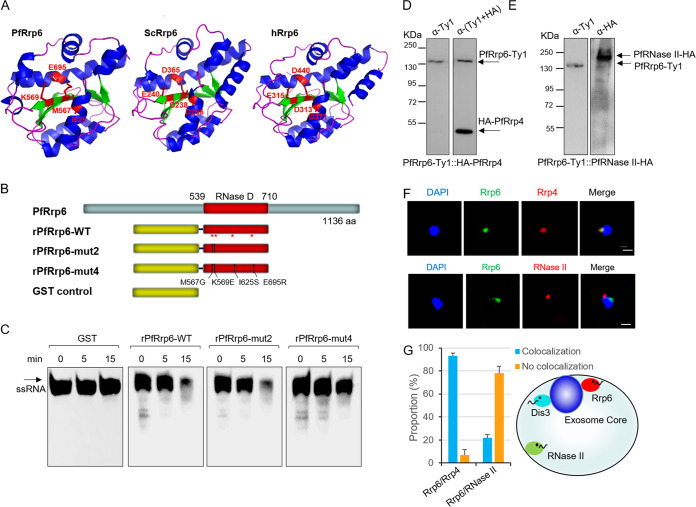
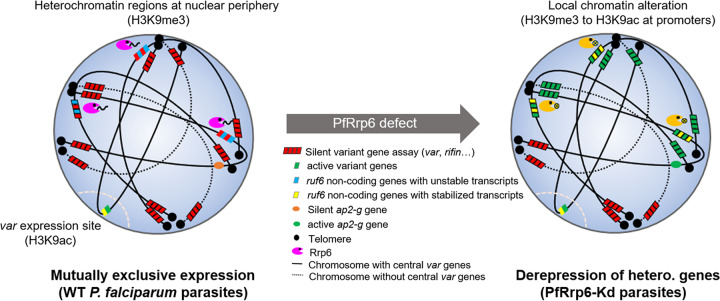
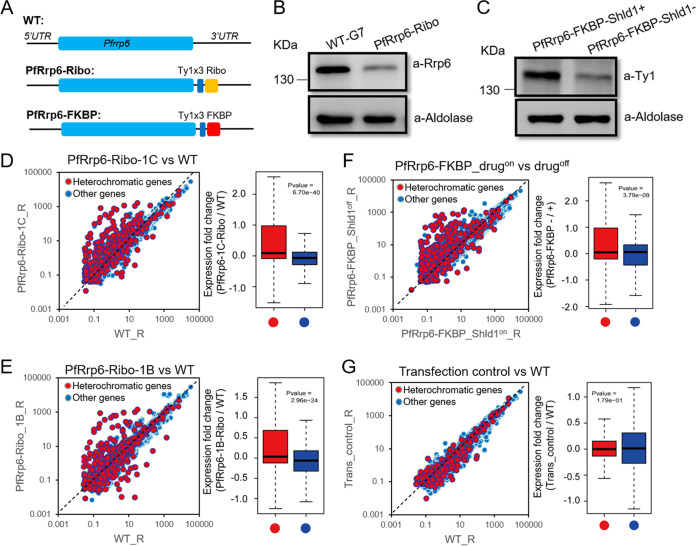
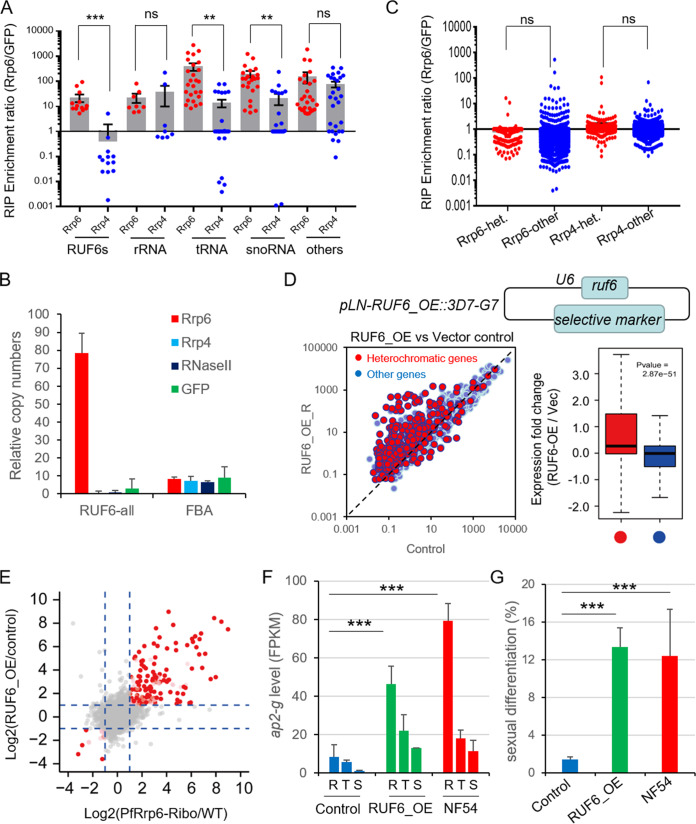
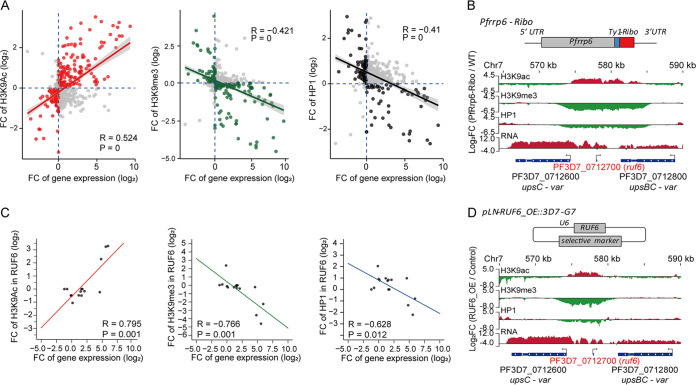
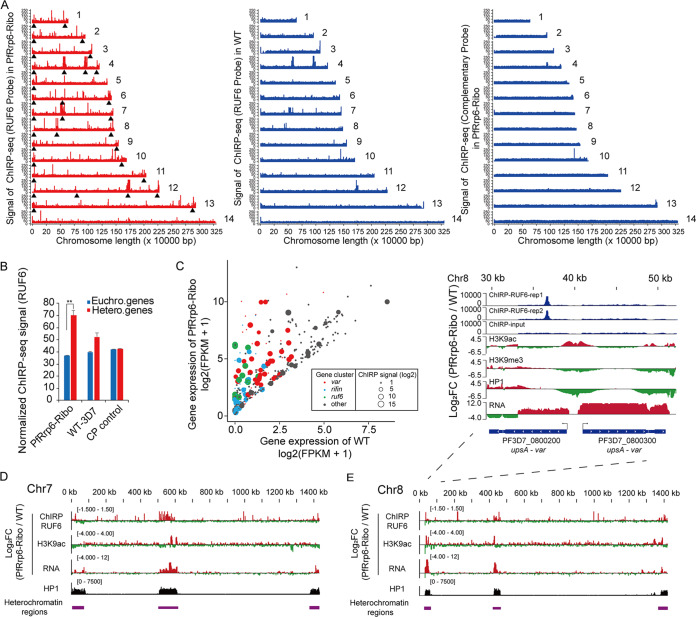
The heterochromatin environment plays a central role in silencing genes associated with the malaria parasite's development, survival in the host, and transmission to the mosquito vector. However, the underlying mechanism regulating the dynamic chromatin structure is not understood yet. Here, we have uncovered that Rrp6, an orthologue of eukaryotic RNA exosome-associated RNase, controls the silencing of heterochromatic genes. PfRrp6 knockdown disrupted the singular expression of the GC-rich ncRNA RUF6 family, a known critical regulator of virulence gene expression, through the stabilization of the nascent transcripts. Mechanistic investigation showed that the accumulation of the multiple RUF6 ncRNAs triggered local chromatin remodeling , which activated their adjacent genes. Strikingly, chromatin isolation by RNA purification analysis (ChIRP-seq) revealed that a remarkable RUF6 ncRNA had interacted with distal heterochromatin regions directly and stimulated a global derepression effect on heterochromatic genes, including all variant gene families and the sexual commitment-associated regulator gene. Collectively, Rrp6 appears to conduct the epigenetic surveillance of heterochromatic gene expression through controlling RUF6 levels, thereby securing antigenic variation and sexual commitment of malaria parasites during the infection of the host. Malaria remains a major public health and economic burden. The heterochromatin environment controls the silencing of genes associated with the fate of malaria parasites. Previous studies have demonstrated that a group of GC-rich ncRNAs (RUF6) is associated with the mutually exclusive expression of genes, but the underlying mechanisms remain elusive. Here, through a series of genetic manipulation and genome-wide multiomics analysis, we have identified the plasmodial orthologue of RNA exosome-associated Rrp6 as an upstream regulator of RUF6 expression and revealed that the dysregulation of RUF6 upon Rrp6 knockdown triggered local chromatin alteration, thereby activating most heterochromatic genes via direct interaction of RUF6 and distal gene loci. This finding not only uncovered the in-depth mechanism of RUF6-mediated regulation of heterochromatic genes but also identified Rrp6 as a novel regulator of gene expression in human malaria parasites, which provides a new target for developing intervention strategies against malaria.
异染色质环境在沉默与疟原虫发育、在宿主中存活和传播给蚊子媒介相关的基因方面发挥着核心作用。然而,调节动态染色质结构的潜在机制尚不清楚。在这里,我们发现 RNA 外切体相关 RNase 的真核生物同源物 Rrp6 控制着异染色质基因的沉默。PfRrp6 的敲低破坏了富含 GC 的 ncRNA RUF6 家族的单一表达,该家族是已知的毒力基因表达的关键调控因子,这是通过稳定新生转录本实现的。机制研究表明,多个 RUF6 ncRNA 的积累引发了局部染色质重塑,从而激活了它们相邻的基因。引人注目的是,通过 RNA 纯化分析进行的染色质分离(ChIRP-seq)表明,一个显著的 RUF6 ncRNA 直接与远端异染色质区域相互作用,并对异染色质基因(包括所有变体基因家族和与性承诺相关的调节剂基因)产生了全局去抑制效应。总的来说,Rrp6 似乎通过控制 RUF6 水平来进行异染色质基因表达的表观遗传监测,从而确保疟原虫在宿主感染过程中的抗原变异和性承诺。疟疾仍然是一个主要的公共卫生和经济负担。异染色质环境控制着与疟原虫命运相关的基因的沉默。以前的研究表明,一组富含 GC 的 ncRNA(RUF6)与基因的相互排斥表达有关,但潜在的机制仍不清楚。在这里,我们通过一系列遗传操作和全基因组多组学分析,鉴定出 RNA 外切体相关 Rrp6 的疟原虫同源物是 RUF6 表达的上游调节剂,并揭示了 Rrp6 敲低后 RUF6 的失调会引发局部染色质改变,从而通过 RUF6 与远端基因位点的直接相互作用激活大多数异染色质基因。这一发现不仅揭示了 RUF6 介导的异染色质基因调控的深入机制,还确定了 Rrp6 是人类疟原虫基因表达的新型调节剂,为开发针对疟疾的干预策略提供了新的靶点。