Caliciviruses Section, Laboratory of Infectious Diseases, National Institute of Allergy and Infectious Diseases, National Institutes of Health, Bethesda, MD, USA.
MedStar Georgetown Transplant Institute and Georgetown University Medical Center, Washington, DC, USA.
Nat Commun. 2020 Jun 2;11(1):2759. doi: 10.1038/s41467-020-16491-3.
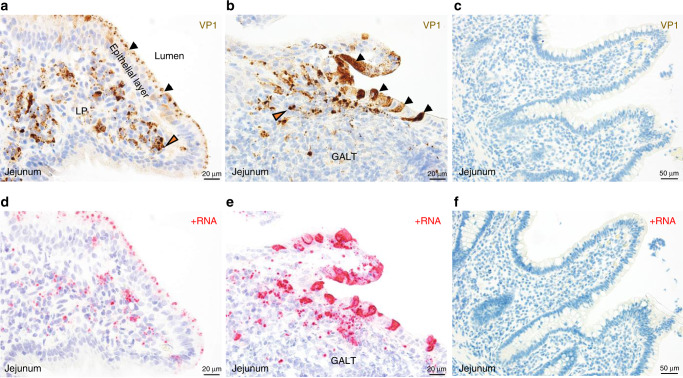
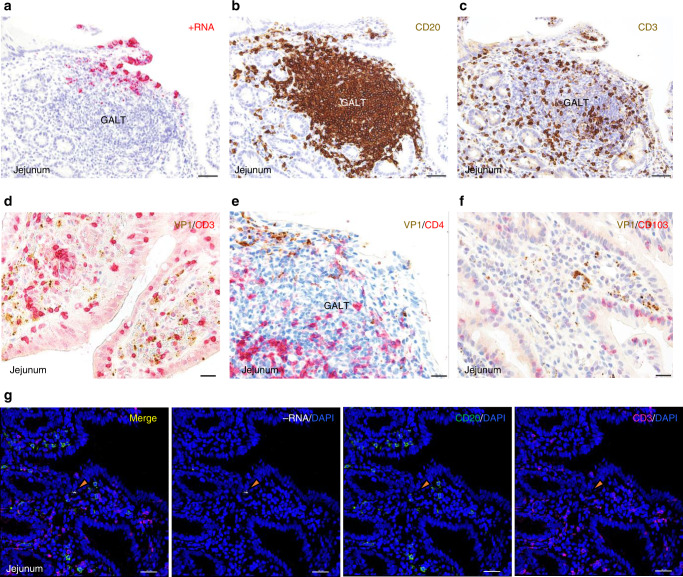
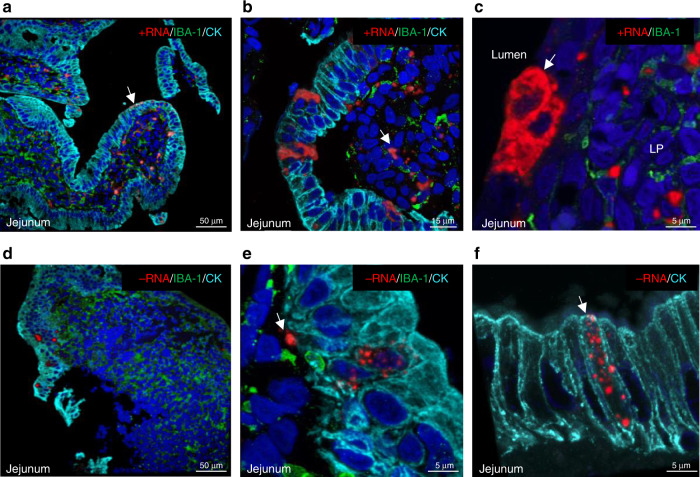
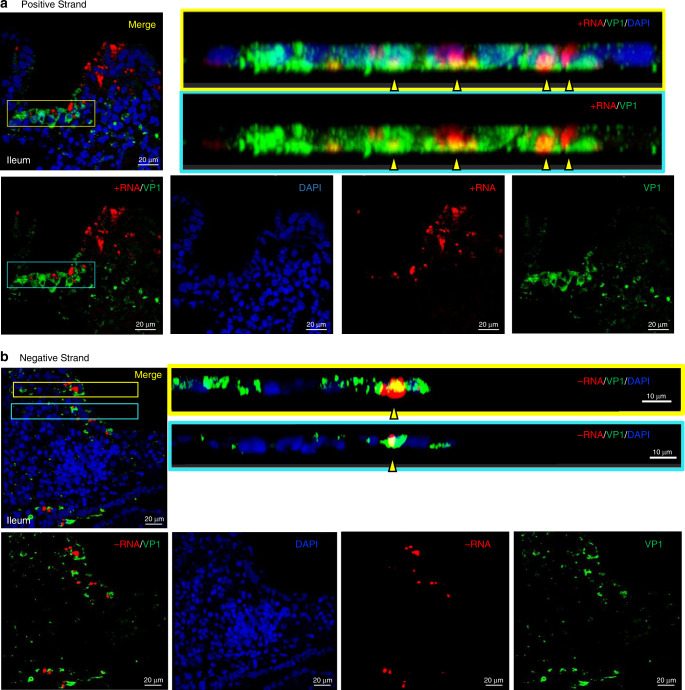
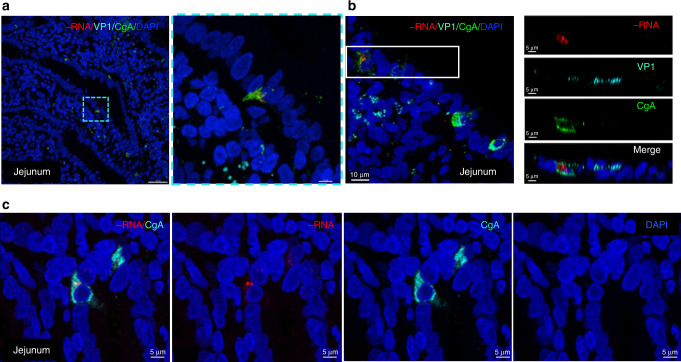
Human noroviruses are a major cause of diarrheal illness, but pathogenesis is poorly understood. Here, we investigate the cellular tropism of norovirus in specimens from four immunocompromised patients. Abundant norovirus antigen and RNA are detected throughout the small intestinal tract in jejunal and ileal tissue from one pediatric intestinal transplant recipient with severe gastroenteritis. Negative-sense viral RNA, a marker of active viral replication, is found predominantly in intestinal epithelial cells, with chromogranin A-positive enteroendocrine cells (EECs) identified as a permissive cell type in this patient. These findings are consistent with the detection of norovirus-positive EECs in the other three immunocompromised patients. Investigation of the signaling pathways induced in EECs that mediate communication between the gut and brain may clarify mechanisms of pathogenesis and lead to the development of in vitro model systems in which to evaluate norovirus vaccines and treatment.
人类诺如病毒是导致腹泻病的主要原因,但发病机制尚不清楚。在这里,我们研究了 4 名免疫功能低下患者标本中诺如病毒的细胞嗜性。在一名患有严重胃肠炎的儿科肠移植受者的空肠和回肠组织中,整个小肠均检测到大量诺如病毒抗原和 RNA。负义病毒 RNA 是活跃病毒复制的标志物,主要存在于肠上皮细胞中,在该患者中,嗜铬粒蛋白 A 阳性肠内分泌细胞 (EEC) 被鉴定为一种允许的细胞类型。这些发现与在其他 3 名免疫功能低下患者中检测到的诺如病毒阳性 EEC 一致。研究 EEC 中诱导的信号通路,这些通路介导肠道和大脑之间的通讯,可能阐明发病机制,并导致开发体外模型系统,以评估诺如病毒疫苗和治疗方法。