Department of Joint Surgery, Aviation General Hospital, Courtyard 3, AnwaiBeiyuan, Chaoyang District, Beijing, China.
Disinfection Supply Division, Aviation General Hospital, Beijing, China.
J Orthop Surg Res. 2020 Jun 3;15(1):206. doi: 10.1186/s13018-020-01730-6.
Osteonecrosis of the femoral head (ONFH) causes severe hip dysfunction. Left untreated, 80% of patients experience femoral head collapse, and 65-70% of patients require total hip arthroplasty (THA). Therefore, effective treatment is very important for ONFH.
To examine the effectiveness of fibula allografting for the treatment of early-stage ONFH METHODS: A systematic review was conducted by searching PubMed, EMBASE, and Web of Science databases using "avascular necrosis" or "ischemic necrosis" or "osteonecrosis" and "femoral head" and "fibula*," and checking the references of primary articles and reviews. Two independent authors completed the study selection separately. We extracted the following details from each article: characteristics of the patients, clinical efficacy evaluation (Harris hip score [HSS], radiographic outcomes, the rate of conversation to total hip arthroplasty [THA], and adverse effects).
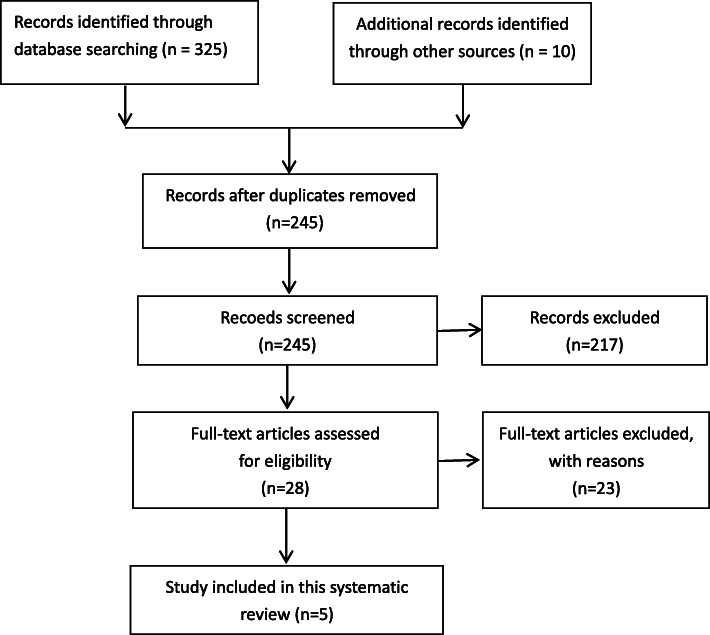
A total of 213 articles were selected from PubMed (n = 45), EMBASE (n = 77), Web of Science (n = 203), and other sources (n = 10). After checking the articles, five articles were included in the final analysis. The average age of patients involved in this review was 34.48 years. The studies investigated fibula allografts to treat ONFH in 394 hips with a mean follow-up of 49.06 months. HHS was improved from 62.73 to 86.94. Radiographic progression was found in 33.66% of hips. The failure rate of head-saving surgery by THA was 14.5%. No patients had serious postoperative complications.
The number of articles included in the study was small, and all studies were single-center studies. Most studies were retrospective with a low level of evidence. Surgical procedures were not identical with different follow-up times.
Although there are some limitations to our approach, this systematic review supports fibula allografting as a simple, effective treatment for early-stage ONFH, which presents less postoperative complications, and has a satisfactory clinical effect. We consider it to be worthy of promotion as a therapy for ONFH.
股骨头坏死(ONFH)可导致严重的髋关节功能障碍。如果不进行治疗,80%的患者会出现股骨头塌陷,65%-70%的患者需要接受全髋关节置换术(THA)。因此,对于 ONFH 的有效治疗非常重要。
探讨腓骨移植治疗早期 ONFH 的疗效。
通过检索 PubMed、EMBASE 和 Web of Science 数据库,使用“avascular necrosis”或“ischemic necrosis”或“osteonecrosis”和“femoral head”和“fibula*”,并检查原始文章和综述的参考文献,对腓骨移植治疗早期 ONFH 的文献进行系统评价。两名独立作者分别完成研究选择。我们从每篇文章中提取以下详细信息:患者特征、临床疗效评估(Harris 髋关节评分[HSS]、影像学结果、转换为全髋关节置换术[THA]的比率以及不良反应)。
从 PubMed(n=45)、EMBASE(n=77)、Web of Science(n=203)和其他来源(n=10)中筛选出 213 篇文章,经过文章筛选,最终纳入 5 篇文章进行分析。本综述纳入患者的平均年龄为 34.48 岁。这些研究共调查了 394 髋腓骨移植治疗 ONFH,平均随访 49.06 个月。HHS 从 62.73 提高到 86.94。33.66%的髋关节出现影像学进展。头保存手术的失败率为 14.5%。无患者发生严重术后并发症。
纳入研究的文章数量较少,且均为单中心研究。大多数研究为回顾性,证据水平较低。手术程序因随访时间不同而不同。
尽管我们的方法存在一些局限性,但这项系统评价支持腓骨移植作为一种简单、有效的早期 ONFH 治疗方法,术后并发症较少,临床效果满意。我们认为它作为一种治疗 ONFH 的方法值得推广。