Departments of Periodontology, The Maurice and Gabriela Goldschleger School of Dental Medicine, Tel Aviv University, Tel-Aviv, Israel.
Departments of Oral & Maxillofacial Surgery, The Maurice and Gabriela Goldschleger School of Dental Medicine, Tel Aviv University, Tel-Aviv, Israel.
Sci Rep. 2020 Jun 3;10(1):9046. doi: 10.1038/s41598-020-65874-5.
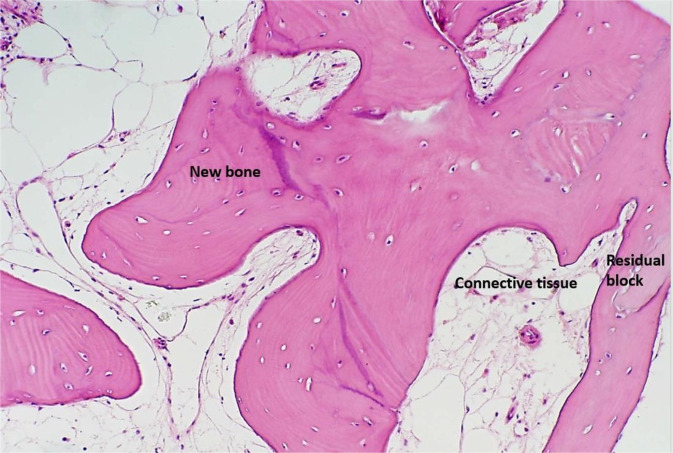
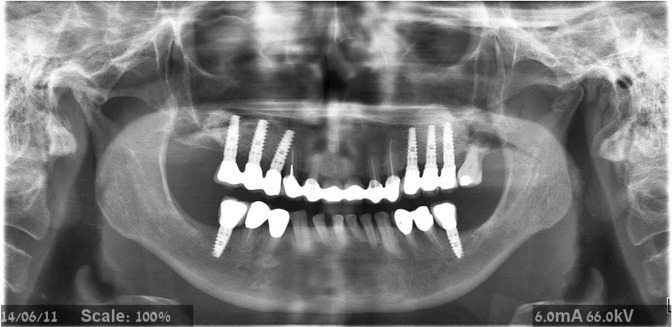
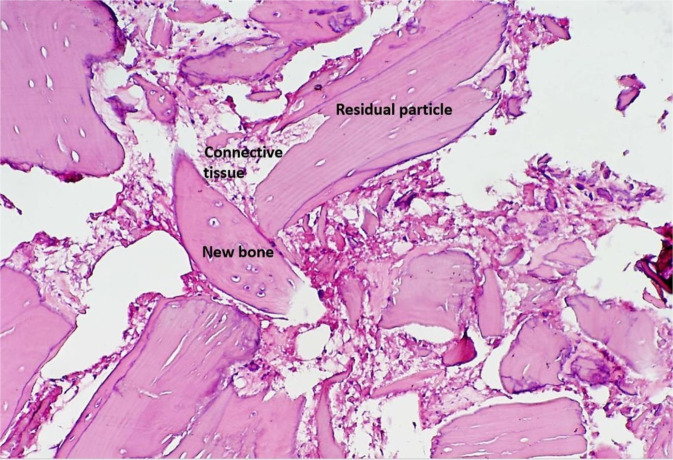
The aim of the present study was to compare the clinical, radiological and histomorphometrical outcome of simultaneous implant placement following augmentation of atrophic maxillary sinuses using allograft (block or particles). Consecutive patients with maxillary residual alveolar ridge height ≤3 mm, scheduled for sinus floor augmentation with simultaneous implant placement, were randomly included. Allograft bone-block or bone-particles served as grafting material. Simultaneously, dental implants were inserted. Biopsies were taken at second stage surgery (after 9 months) for histomorphometric evaluation. Initially 38 sinus augmentations (29 individuals) were allocated for the study. In 4 out of 21(19%) sinuses using particles it was impossible to stabilize the implants and a second stage insertion was preferred, leaving 34 sinuses for histomorphometric evaluation. The difference in the ability to perform simultaneous implant placement was statistically significant (p < 0.05). Ninety implants were inserted simultaneously. All implants osseointegrated. None of the implants was lost up to the end of follow-up time (Range 50-120 months, Mean 74.5 ± 13.5 months). Bone gain radiographically 12.3 ± 1 mm vs. 11.2 ± 1 mm (block vs. particles respectively) and new bone formation histomorphometrically 27.7 ± 15% vs. 32.1 ± 19% (block vs. particles respectively) showed no statistically significant differences between the two groups. Sinus augmentation using allograft (particles or block) and simultaneous implant placement is predictable. All outcome parameters are similar when sinus bone-blocks augmentation is compared to bone-particles augmentation (radiological new bone gain, implant survival, hisomorphometricly new bone formation) despite the ability to stabilize implants, when placed simultaneously with sinus augmentation. Blocks may be advisable when simultaneous implant placement is imperative in cases with residual alveolar bone height ≤3 mm.
本研究的目的是比较在使用同种异体移植物(块状或颗粒)进行上颌窦萎缩性增强后,同时植入种植体的临床、放射学和组织形态计量学结果。将高度≤3mm 的上颌剩余牙槽嵴,计划进行鼻窦底增强并同时植入种植体的连续患者随机纳入。同种异体骨块或骨颗粒作为移植物材料。同时,将植入物插入。在二期手术(9 个月后)时进行活检,用于组织形态计量评估。最初有 38 例鼻窦增强(29 例患者)被分配用于该研究。在使用颗粒的 21 例(19%)鼻窦中,有 4 例无法稳定植入物,因此更喜欢进行二期插入,留下 34 例鼻窦进行组织形态计量评估。同时植入种植体的能力差异具有统计学意义(p<0.05)。同时植入了 90 个种植体。所有种植体均骨整合。在随访结束时(范围 50-120 个月,平均 74.5±13.5 个月),没有种植体丢失。影像学上骨增量 12.3±1mm 与 11.2±1mm(块状与颗粒状分别),组织形态计量学上新骨形成 27.7±15%与 32.1±19%(块状与颗粒状分别),两组之间无统计学差异。使用同种异体移植物(颗粒或块状)进行鼻窦增强和同时植入种植体是可预测的。当与骨颗粒增强相比,当同时进行鼻窦增强时,尽管同时植入种植体的稳定性能力不同,但所有结果参数(放射学新骨获得、种植体存活率、组织形态计量学新骨形成)均相似。当剩余牙槽骨高度≤3mm 时,需要同时植入种植体时,使用块状物可能是明智的。