Zhang Ran, Luo Wenya, Zhang Yue, Zhu Dashuai, Midgley Adam C, Song Hao, Khalique Anila, Zhang Haoqi, Zhuang Jie, Kong Deling, Huang Xinglu
Key Laboratory of Bioactive Materials, Ministry of Education, College of Life Sciences, and State Key Laboratory of Medicinal Chemical Biology, Nankai University, Tianjin 300071, China.
Department of Physiology and Pathophysiology, Tianjin Medical University, Tianjin 300070, China.
Sci Adv. 2020 May 6;6(19):eaaz8011. doi: 10.1126/sciadv.aaz8011. eCollection 2020 May.
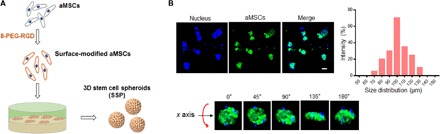
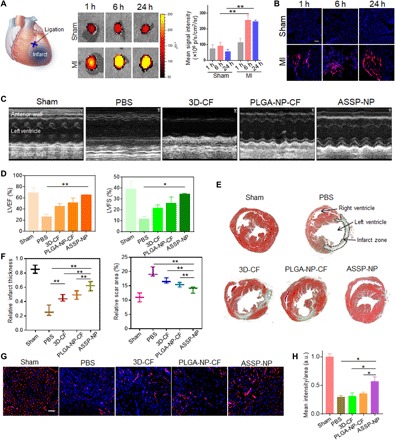
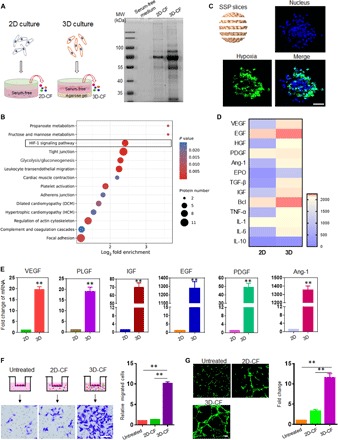
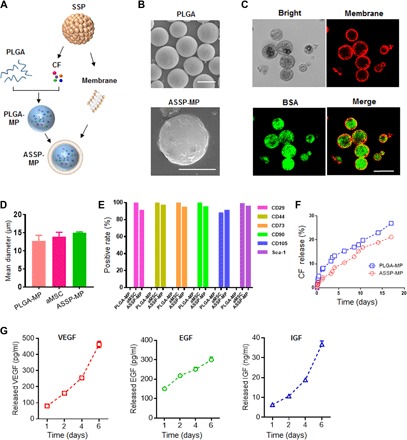
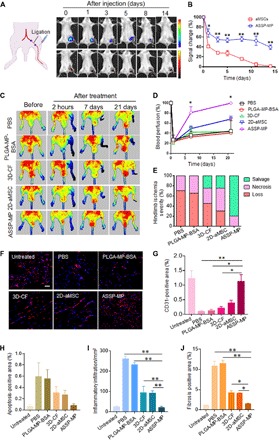
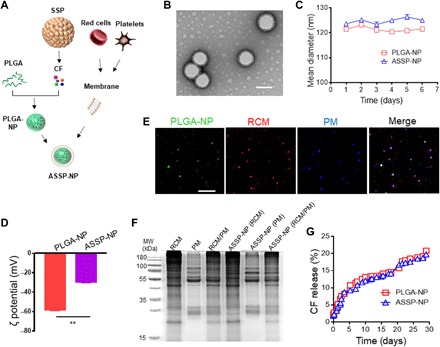
Development of new approaches to biomimetically reconstruct vasculature networks remains challenging in regenerative medicine. We introduce a particle-based artificial stem cell spheroid (ASSP) technology that recapitulates paracrine functions of three-dimensional (3D) SSPs for vasculature regeneration. Specifically, we used a facile method to induce the aggregation of stem cells into 3D spheroids, which benefited from hypoxia microenvironment-driven and enhanced secretion of proangiogenic bioactive factors. Furthermore, we artificially reconstructed 3D spheroids (i.e., ASSP) by integration of SSP-secreted factors into micro-/nanoparticles with cell membrane-derived surface coatings. The easily controllable sizes of the ASSP particles provided superior revascularization effects on the ischemic tissues in hindlimb ischemia models through local administration of ASSP microparticles and in myocardial infarction models via the systemic delivery of ASSP nanoparticles. The strategy offers a promising therapeutic option for ischemic tissue regeneration and addresses issues faced by the bottlenecked development in the delivery of stem cell therapies.
在再生医学中,开发仿生重建血管网络的新方法仍然具有挑战性。我们引入了一种基于粒子的人工干细胞球(ASSP)技术,该技术概括了三维(3D)干细胞球对血管再生的旁分泌功能。具体而言,我们使用一种简便的方法诱导干细胞聚集成3D球状体,这得益于缺氧微环境驱动并增强了促血管生成生物活性因子的分泌。此外,我们通过将干细胞球分泌的因子整合到具有细胞膜衍生表面涂层的微/纳米颗粒中来人工重建3D球状体(即ASSP)。ASSP颗粒易于控制的尺寸通过局部施用ASSP微粒在后肢缺血模型的缺血组织上以及通过ASSP纳米颗粒的全身递送在心肌梗死模型中提供了优异的血管再生效果。该策略为缺血组织再生提供了一种有前景的治疗选择,并解决了干细胞治疗递送中瓶颈发展所面临的问题。