Hori Kei, Yamashiro Kunihiko, Nagai Taku, Shan Wei, Egusa Saki F, Shimaoka Kazumi, Kuniishi Hiroshi, Sekiguchi Masayuki, Go Yasuhiro, Tatsumoto Shoji, Yamada Mitsuyo, Shiraishi Reika, Kanno Kouta, Miyashita Satoshi, Sakamoto Asami, Abe Manabu, Sakimura Kenji, Sone Masaki, Sohya Kazuhiro, Kunugi Hiroshi, Wada Keiji, Yamada Mitsuhiko, Yamada Kiyofumi, Hoshino Mikio
Department of Biochemistry and Cellular Biology, National Institute of Neuroscience, NCNP, Tokyo 187-8502, Japan.
Department of Biochemistry and Cellular Biology, National Institute of Neuroscience, NCNP, Tokyo 187-8502, Japan.
iScience. 2020 Jun 26;23(6):101183. doi: 10.1016/j.isci.2020.101183. Epub 2020 May 18.
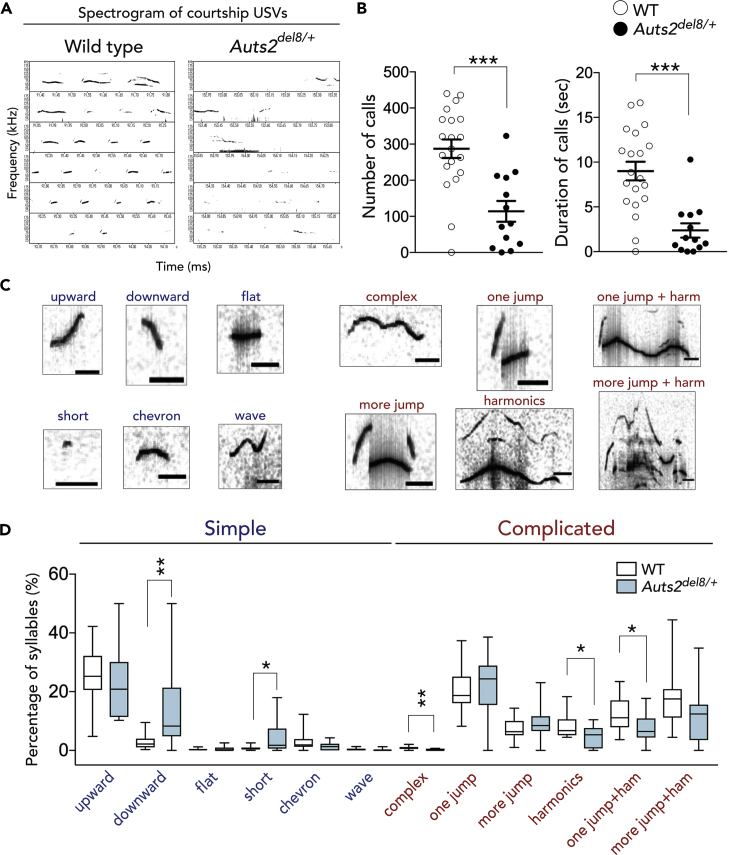
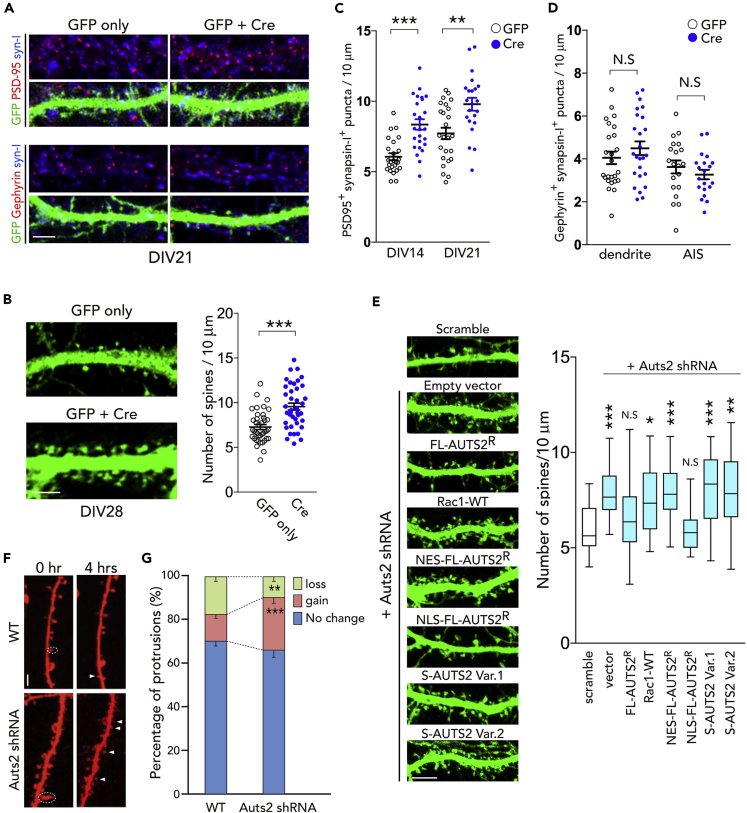
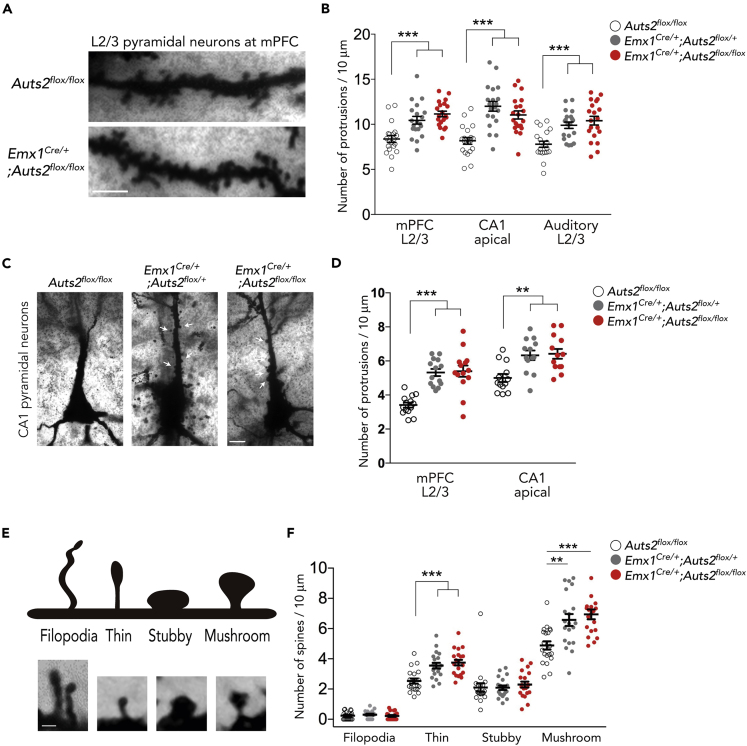
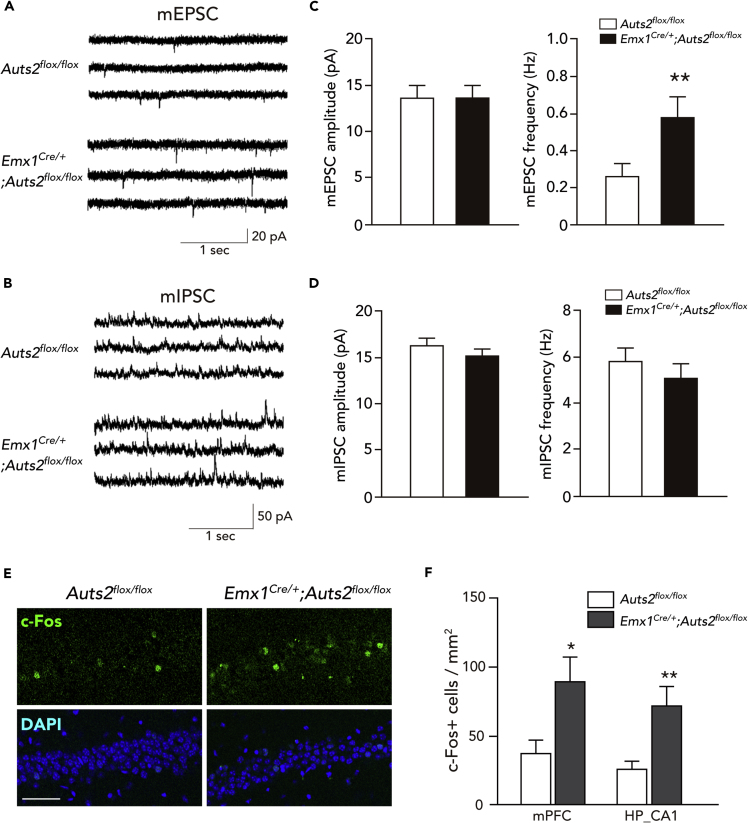
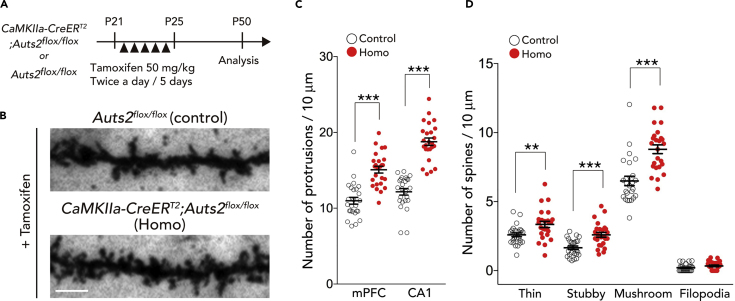
Impairments in synapse development are thought to cause numerous psychiatric disorders. Autism susceptibility candidate 2 (AUTS2) gene has been associated with various psychiatric disorders, such as autism and intellectual disabilities. Although roles for AUTS2 in neuronal migration and neuritogenesis have been reported, its involvement in synapse regulation remains unclear. In this study, we found that excitatory synapses were specifically increased in the Auts2-deficient primary cultured neurons as well as Auts2 mutant forebrains. Electrophysiological recordings and immunostaining showed increases in excitatory synaptic inputs as well as c-fos expression in Auts2 mutant brains, suggesting that an altered balance of excitatory and inhibitory inputs enhances brain excitability. Auts2 mutant mice exhibited autistic-like behaviors including impairments in social interaction and altered vocal communication. Together, these findings suggest that AUTS2 regulates excitatory synapse number to coordinate E/I balance in the brain, whose impairment may underlie the pathology of psychiatric disorders in individuals with AUTS2 mutations.
突触发育受损被认为会导致多种精神疾病。自闭症易感性候选基因2(AUTS2)已与多种精神疾病相关联,如自闭症和智力障碍。尽管已有报道称AUTS2在神经元迁移和神经突发生中发挥作用,但其在突触调节中的作用仍不清楚。在本研究中,我们发现,在Auts2基因缺陷的原代培养神经元以及Auts2突变体前脑中,兴奋性突触特异性增加。电生理记录和免疫染色显示,Auts2突变体大脑中的兴奋性突触输入以及c-fos表达增加,这表明兴奋性和抑制性输入平衡的改变增强了大脑的兴奋性。Auts2突变小鼠表现出自闭症样行为,包括社交互动障碍和发声交流改变。总之,这些发现表明,AUTS2调节兴奋性突触数量以协调大脑中的兴奋/抑制平衡,其受损可能是AUTS2突变个体精神疾病病理的基础。