Université Clermont Auvergne, 3iHP, CNRS, Laboratoire Microorganismes: Génome et Environnement, F-63000, Clermont-Ferrand, France.
Université Clermont Auvergne, 3iHP, Inserm U1107, NeuroDol, Clermont-Ferrand, France.
Sci Rep. 2020 Jun 4;10(1):9146. doi: 10.1038/s41598-020-66156-w.
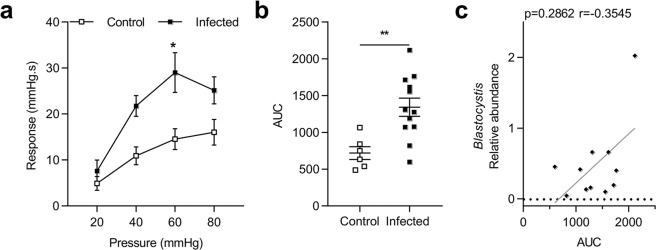
Infectious gastroenteritis is a risk factor for the development of post-infectious Irritable Bowel Syndrome (PI-IBS). Recent clinical studies reported a higher prevalence of the intestinal parasite Blastocystis in IBS patients. Using a rat model, we investigated the possible association between Blastocystis infection, colonic hypersensitivity (CHS), behavioral disturbances and gut microbiota changes.
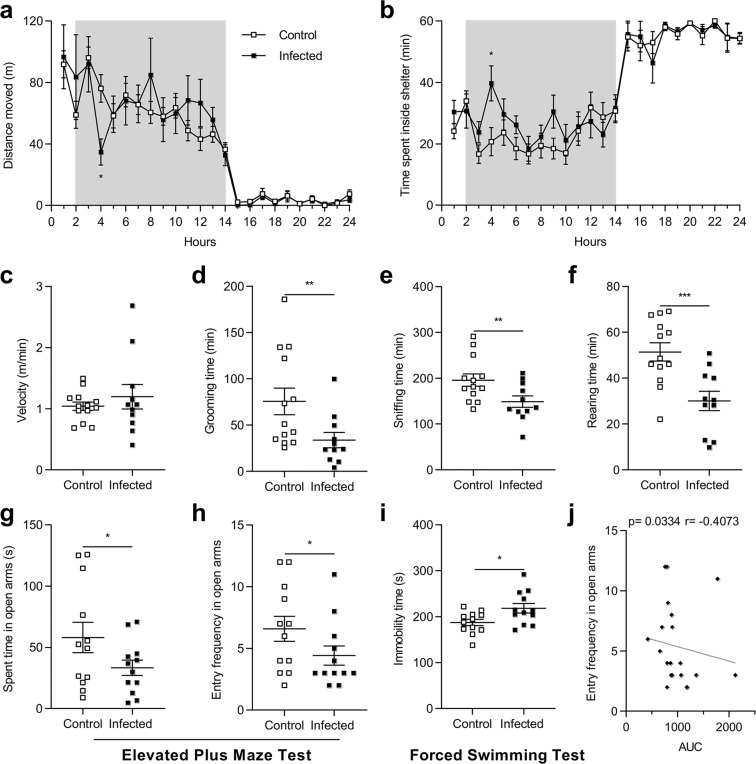
Rats were orally infected with Blastocystis subtype 4 (ST4) cysts, isolated from human stool samples. Colonic sensitivity was assessed by colorectal distension and animal behavior with an automatic behavior recognition system (PhenoTyper), the Elevated Plus Maze test and the Forced Swimming tests. Feces were collected at different time points after infection to study microbiota composition by 16 S rRNA amplicon sequencing and for short-chain fatty acid (SFCA) analysis.
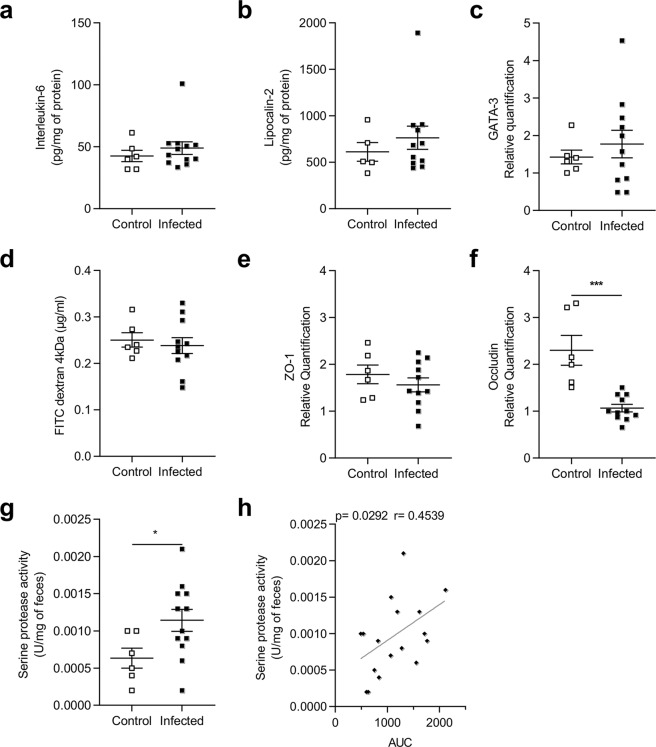
Blastocystis-infected animals had non-inflammatory CHS with increased serine protease activity. Infection was also associated with anxiety- and depressive-like behaviors. Analysis of fecal microbiota composition showed an increase in bacterial richness associated with altered microbiota composition. These changes included an increase in the relative abundance of Oscillospira and a decrease in Clostridium, which seem to be associated with lower levels of SCFAs in the feces from infected rats.
Our findings suggest that experimental infection of rats with Blastocystis mimics IBS symptoms with the establishment of CHS related to microbiota and metabolic shifts.
感染性胃肠炎是发生感染后肠易激综合征(PI-IBS)的一个危险因素。最近的临床研究报告称,肠易激综合征患者中肠道寄生虫芽囊原虫的患病率较高。本研究使用大鼠模型,研究芽囊原虫感染、结肠高敏性(CHS)、行为障碍和肠道微生物群变化之间的可能关联。
大鼠经口感染来源于人粪便样本的芽囊原虫 4 型(ST4)包囊。通过直肠扩张评估结肠敏感性,使用自动行为识别系统(PhenoTyper)、高架十字迷宫测试和强迫游泳测试评估动物行为。在感染后不同时间点收集粪便,通过 16S rRNA 扩增子测序和短链脂肪酸(SCFA)分析研究微生物群落组成。
芽囊原虫感染动物表现出非炎症性 CHS 和丝氨酸蛋白酶活性增加。感染还与焦虑和抑郁样行为有关。粪便微生物群落组成分析显示细菌丰富度增加,同时微生物群落组成发生改变。这些变化包括 Oscillospira 的相对丰度增加和 Clostridium 的相对丰度减少,这似乎与感染大鼠粪便中 SCFA 水平降低有关。
本研究结果表明,大鼠感染芽囊原虫可模拟 IBS 症状,与微生物群和代谢变化相关的 CHS 建立有关。