Institute of Cell Biology and Immunology, University of Stuttgart, Allmandring 31, 70569, Stuttgart, Germany.
Cancer Immunol Immunother. 2020 Nov;69(11):2291-2303. doi: 10.1007/s00262-020-02624-6. Epub 2020 Jun 5.
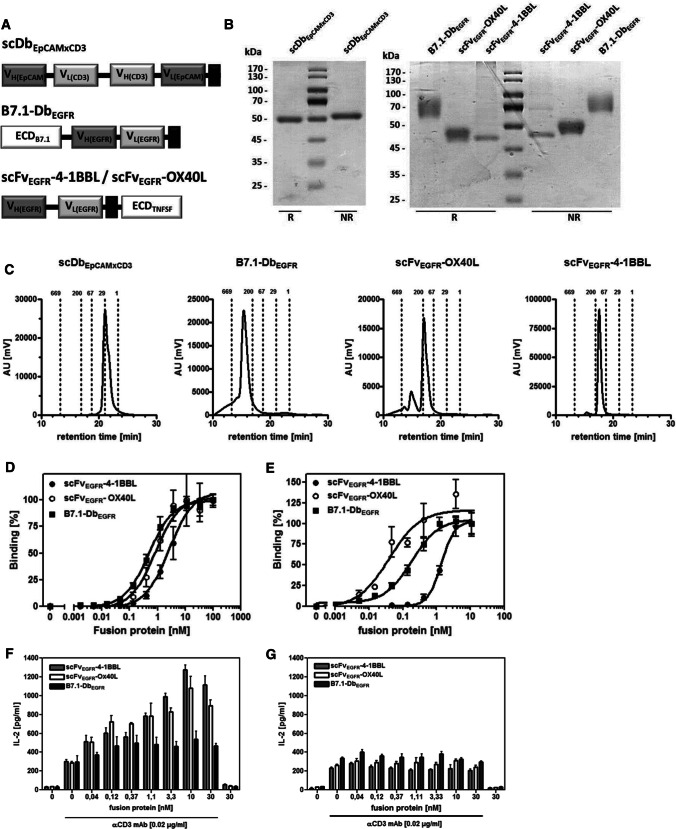
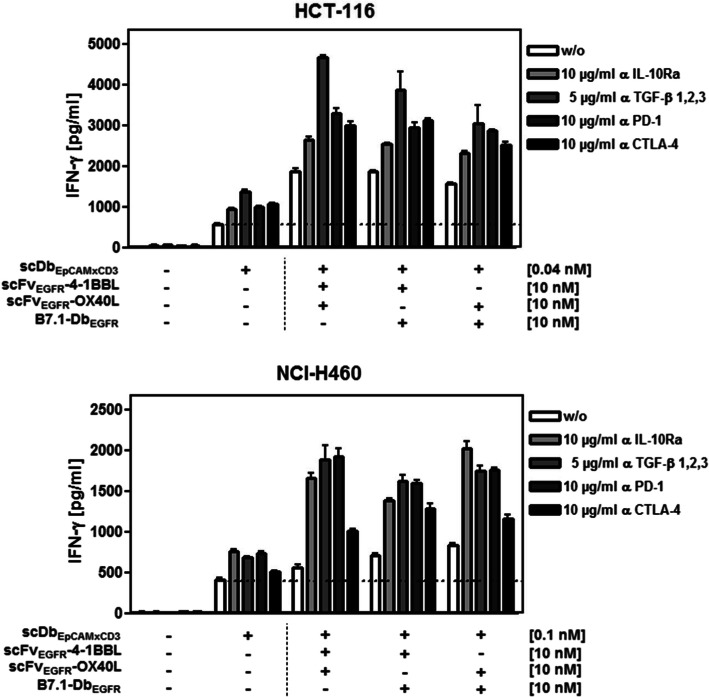
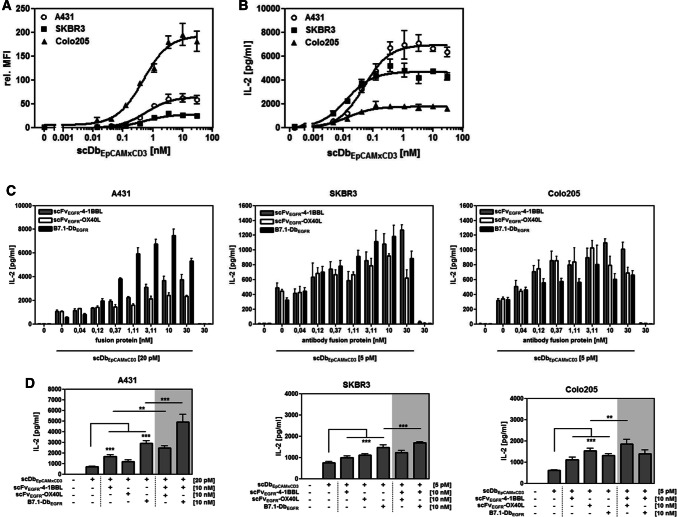
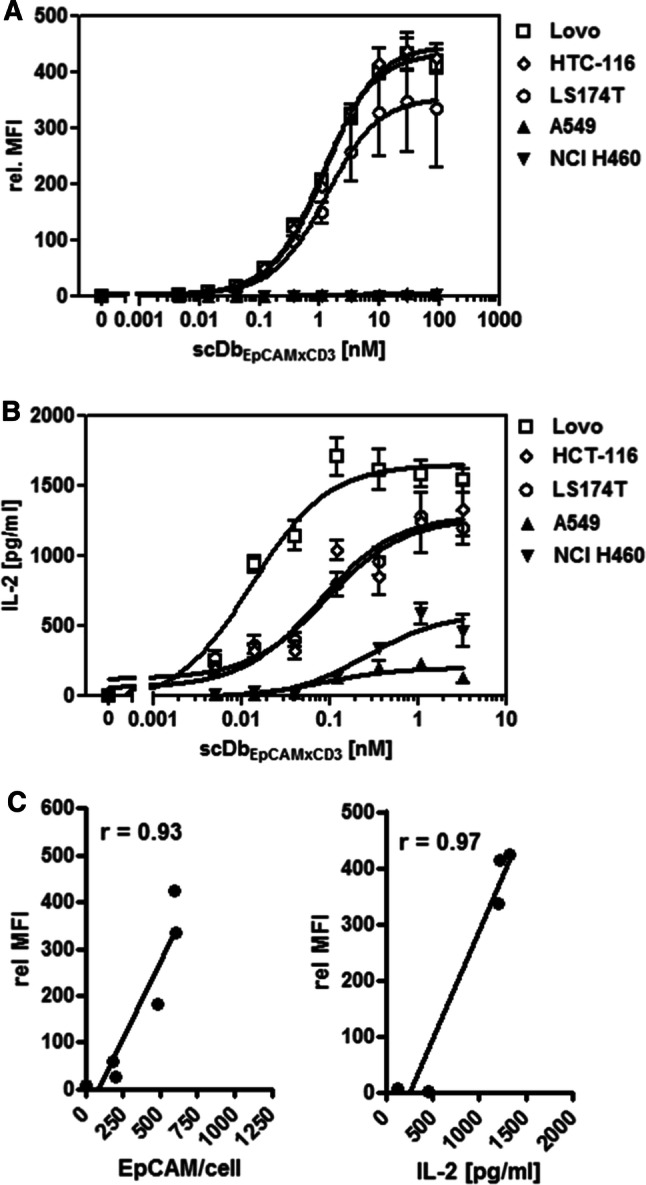
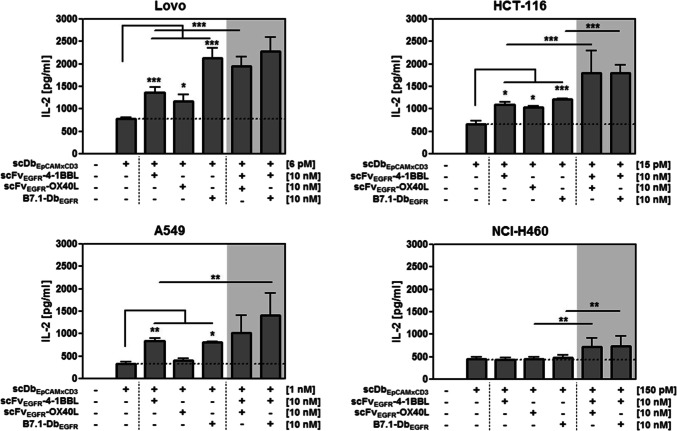
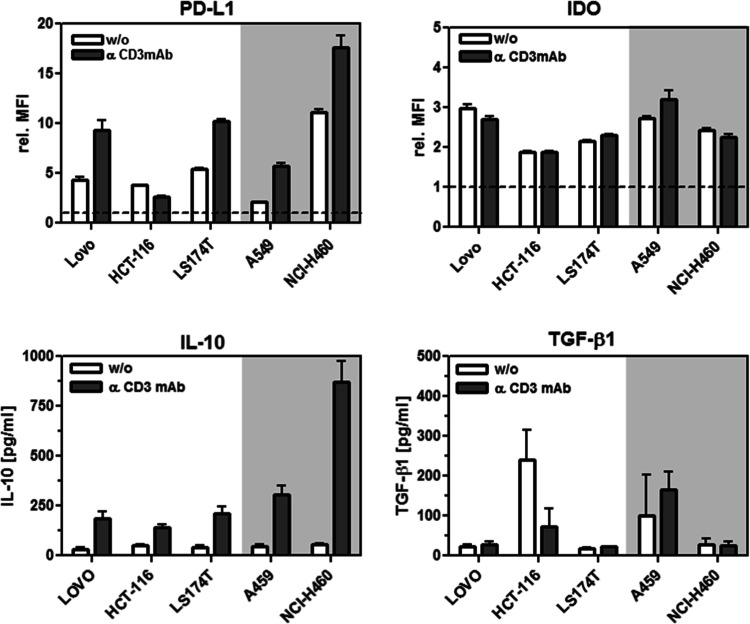
Target expression heterogeneity and the presence of an immunosuppressive microenvironment can hamper severely the efficiency of immunotherapeutic approaches. We have analyzed the potential to encounter and overcome such conditions by a combinatory two-target approach involving a bispecific antibody retargeting T cells to tumor cells and tumor-directed antibody-fusion proteins with costimulatory members of the B7 and TNF superfamily. Targeting the tumor-associated antigens EpCAM and EGFR with the bispecific antibody and costimulatory fusion proteins, respectively, we analyzed the impact of target expression and the influence of the immunosuppressive factors IDO, IL-10, TGF-β, PD-1 and CTLA-4 on the targeting-mediated stimulation of T cells. Here, suboptimal activity of the bispecific antibody at diverse EpCAM expression levels could be effectively enhanced by targeting-mediated costimulation by B7.1, 4-1BBL and OX40L in a broad range of EGFR expression levels. Furthermore, the benefit of combined costimulation by B7.1/4-1BBL and 4-1BBL/OX40L was demonstrated. In addition, the expression of immunosuppressive factors was shown in all co-culture settings, where blocking of prominent factors led to synergistic effects with combined costimulation. Thus, targeting-mediated costimulation showed general promise for a broad application covering diverse target expression levels, with the option for further selective enhancement by the identification and blockade of main immunosuppressive factors of the particular tumor environment.
靶向表达异质性和免疫抑制微环境的存在可能严重阻碍免疫治疗方法的效率。我们通过一种组合的双靶点方法分析了遇到和克服这种情况的潜力,该方法涉及将双特异性抗体重新靶向肿瘤细胞的 T 细胞,以及具有 B7 和 TNF 超家族共刺激成员的肿瘤定向抗体融合蛋白。我们分别用双特异性抗体和共刺激融合蛋白靶向肿瘤相关抗原 EpCAM 和 EGFR,分析了靶标表达和免疫抑制因子 IDO、IL-10、TGF-β、PD-1 和 CTLA-4 对 T 细胞靶向介导刺激的影响。在这里,在广泛的 EGFR 表达水平下,双特异性抗体在不同 EpCAM 表达水平下的亚最佳活性可以通过 B7.1、4-1BBL 和 OX40L 的靶向介导共刺激有效增强。此外,还证明了 B7.1/4-1BBL 和 4-1BBL/OX40L 的联合共刺激的益处。此外,在所有共培养设置中均检测到免疫抑制因子的表达,其中阻断主要因子导致与联合共刺激产生协同作用。因此,靶向介导的共刺激具有广泛应用的广阔前景,涵盖了广泛的靶标表达水平,并可通过鉴定和阻断特定肿瘤环境中的主要免疫抑制因子进行进一步的选择性增强。