Unidad de Secuenciación y Genómica, Dirección de Investigación en Salud Pública, Instituto Nacional de Salud, Bogotá 111321, Colombia; Grupo de Salud Materna y Perinatal, Dirección de Investigación en Salud Pública, Instituto Nacional de Salud, Bogotá 111321, Colombia.
Unidad de Secuenciación y Genómica, Dirección de Investigación en Salud Pública, Instituto Nacional de Salud, Bogotá 111321, Colombia; Grupo de Parasitología, Dirección de Investigación en Salud Pública, Instituto Nacional de Salud, Bogotá 111321, Colombia.
Infect Genet Evol. 2020 Oct;84:104390. doi: 10.1016/j.meegid.2020.104390. Epub 2020 Jun 4.
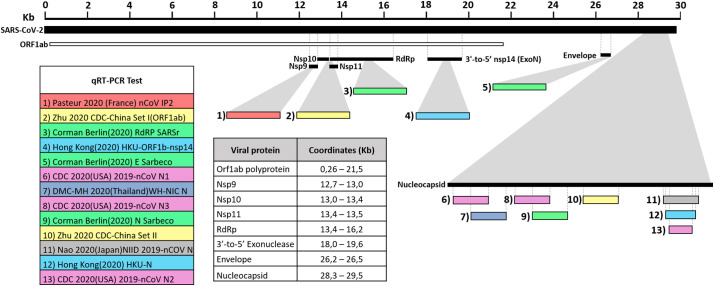
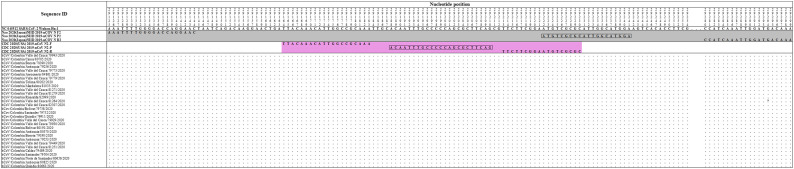
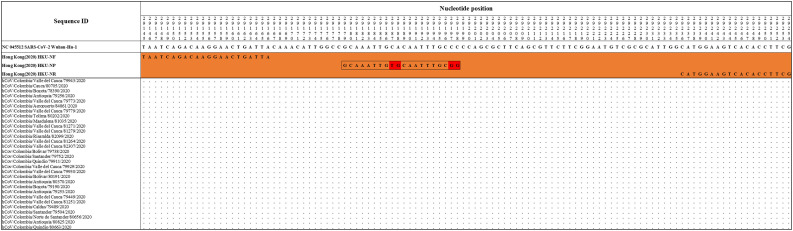
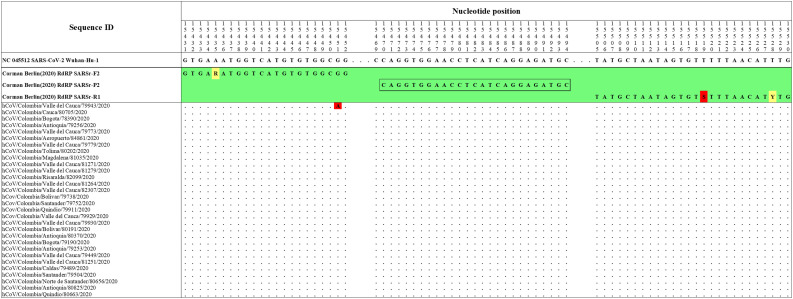
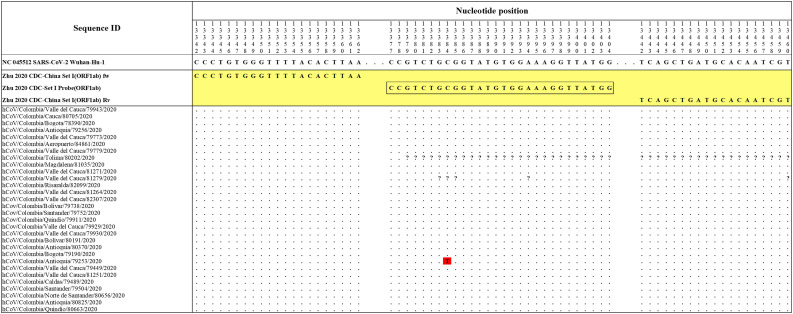
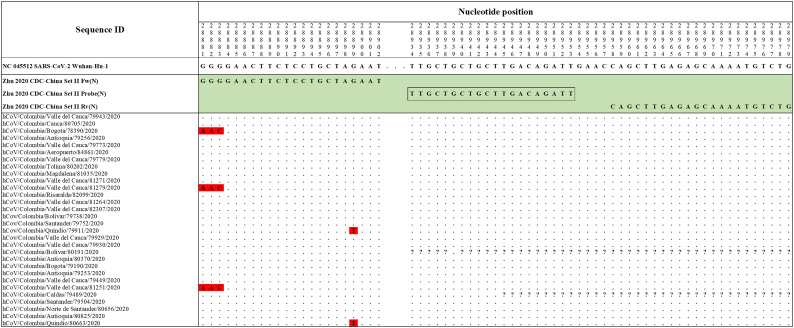
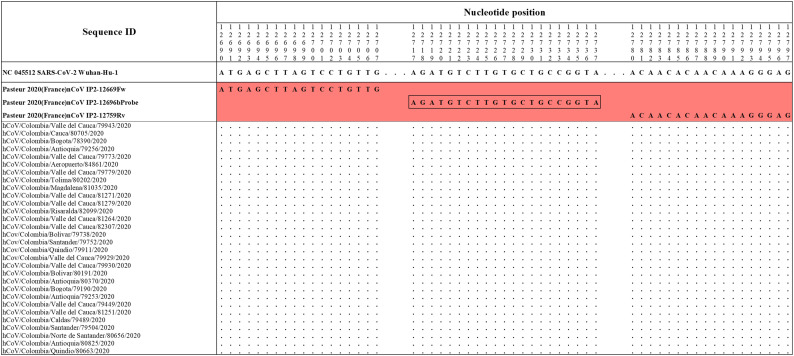
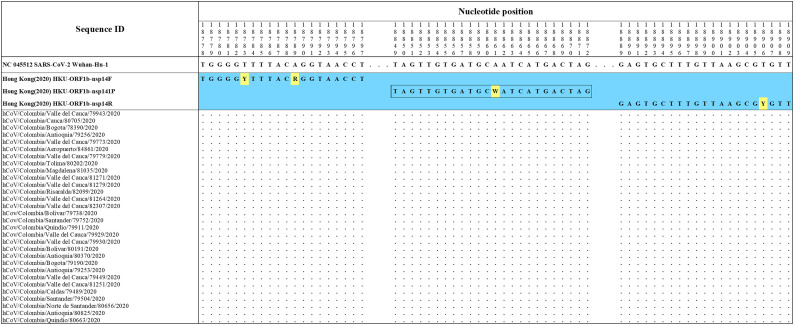
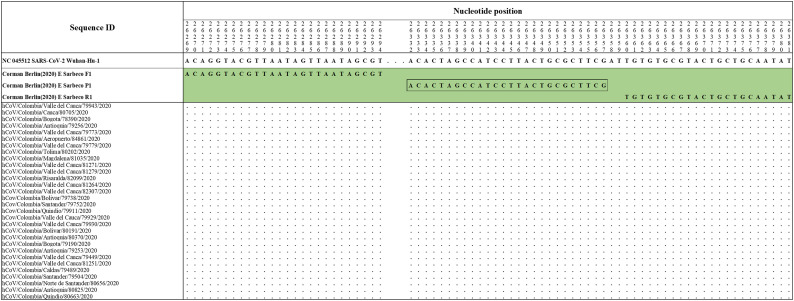
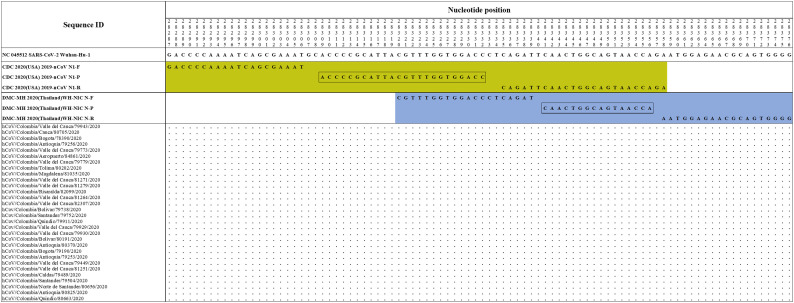
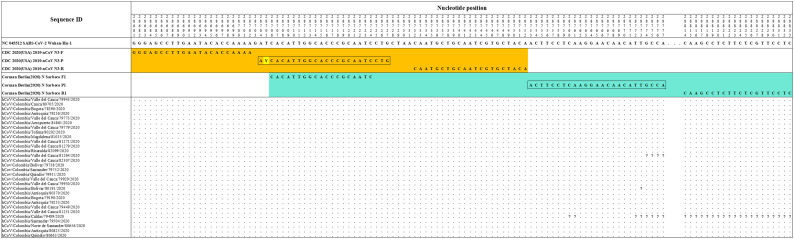
The COVID-19 pandemic caused by SARS-CoV-2 is a public health problem unprecedented in the recent history of humanity. Different in-house real-time RT-PCR (rRT-PCR) methods for SARS-CoV-2 diagnosis and the appearance of genomes with mutations in primer regions have been reported. Hence, whole-genome data from locally-circulating SARS-CoV-2 strains contribute to the knowledge of its global variability and the development and fine tuning of diagnostic protocols. To describe the genetic variability of Colombian SARS-CoV-2 genomes in hybridization regions of oligonucleotides of the main in-house methods for SARS-CoV-2 detection, RNA samples with confirmed SARS-CoV-2 molecular diagnosis were processed through next-generation sequencing. Primers/probes sequences from 13 target regions for SARS-CoV-2 detection suggested by 7 institutions and consolidated by WHO during the early stage of the pandemic were aligned with Muscle tool to assess the genetic variability potentially affecting their performance. Finally, the corresponding codon positions at the 3' end of each primer, the open reading frame inspection was identified for each gene/protein product. Complete SARS-CoV-2 genomes were obtained from 30 COVID-19 cases, representative of the current epidemiology in the country. Mismatches between at least one Colombian sequence and five oligonucleotides targeting the RdRP and N genes were observed. The 3' end of 4 primers aligned to the third codon position, showed high risk of nucleotide substitution and potential mismatches at this critical position. Genetic variability was detected in Colombian SARS-CoV-2 sequences in some of the primer/probe regions for in-house rRT-PCR diagnostic tests available at WHO COVID-19 technical guidelines; its impact on the performance and rates of false-negative results should be experimentally evaluated. The genomic surveillance of SARS-CoV-2 is highly recommended for the early identification of mutations in critical regions and to issue recommendations on specific diagnostic tests to ensure the coverage of locally-circulating genetic variants.
由 SARS-CoV-2 引起的 COVID-19 大流行是人类近代史上前所未有的公共卫生问题。已经报道了不同的用于 SARS-CoV-2 诊断的内部实时 RT-PCR(rRT-PCR)方法和引物区域出现突变的基因组。因此,来自本地循环的 SARS-CoV-2 菌株的全基因组数据有助于了解其全球变异性以及诊断方案的开发和微调。为了描述在用于 SARS-CoV-2 检测的主要内部方法的杂交区域中寡核苷酸的哥伦比亚 SARS-CoV-2 基因组的遗传变异性,对经确认具有 SARS-CoV-2 分子诊断的 RNA 样本进行了下一代测序。使用 Muscle 工具对齐了 7 家机构和世界卫生组织在大流行早期建议的针对 SARS-CoV-2 检测的 13 个靶区域的引物/探针序列,以评估可能影响其性能的遗传变异性。最后,确定了每个基因/蛋白质产物的每个引物的 3'末端的相应密码子位置,以及开放阅读框检验。从该国当前流行的 30 例 COVID-19 病例中获得了完整的 SARS-CoV-2 基因组。观察到至少一个哥伦比亚序列与针对 RdRP 和 N 基因的五个寡核苷酸之间存在不匹配。与第三个密码子位置对齐的 4 个引物的 3'末端显示出核苷酸替换的高风险,并且在该关键位置存在潜在的不匹配。在世界卫生组织 COVID-19 技术指南中提供的用于内部 rRT-PCR 诊断测试的一些引物/探针区域中检测到哥伦比亚 SARS-CoV-2 序列的遗传变异性;应通过实验评估其对性能和假阴性结果率的影响。强烈建议对 SARS-CoV-2 进行基因组监测,以尽早识别关键区域中的突变,并就特定诊断测试发布建议,以确保涵盖本地循环的遗传变异。