Department of Orthopaedic Surgery, Tan Tock Seng Hospital, Singapore.
Acta Orthop. 2020 Oct;91(5):551-555. doi: 10.1080/17453674.2020.1774138. Epub 2020 Jun 8.
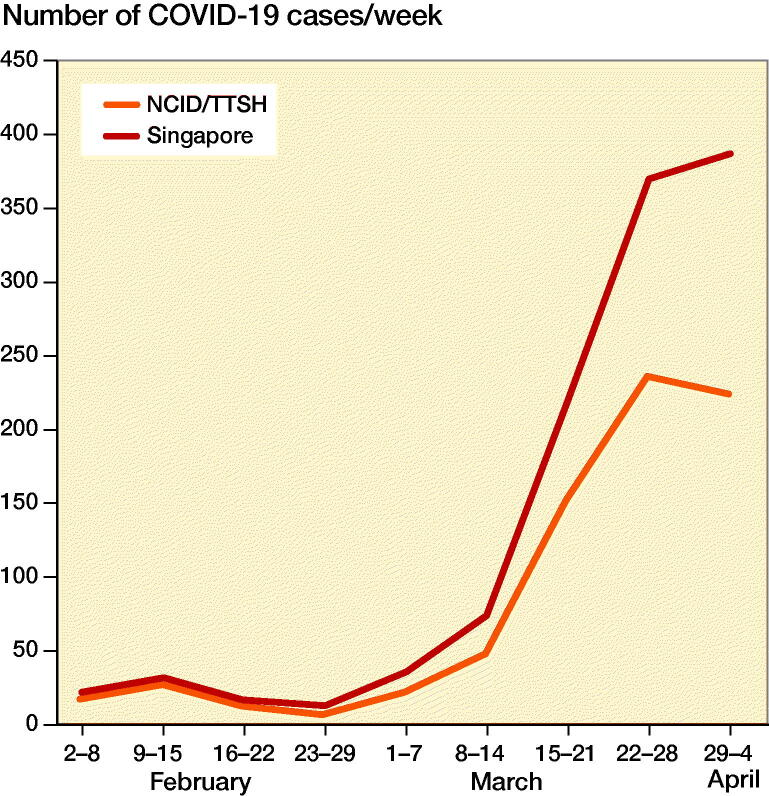
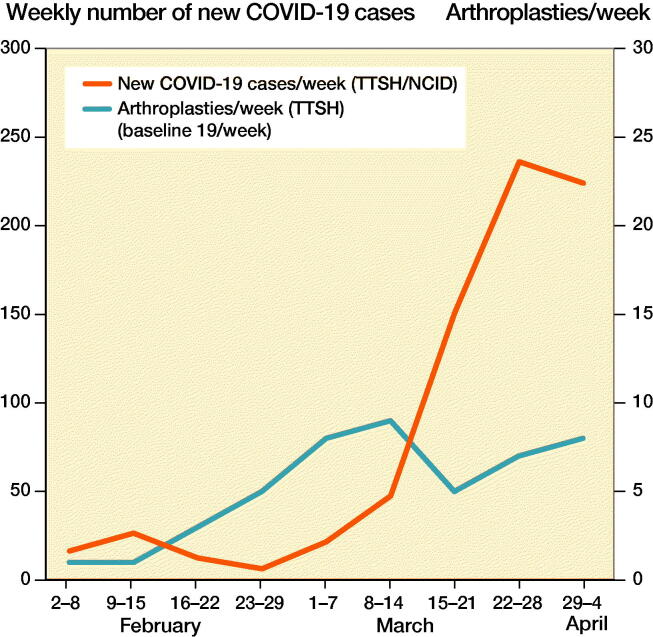
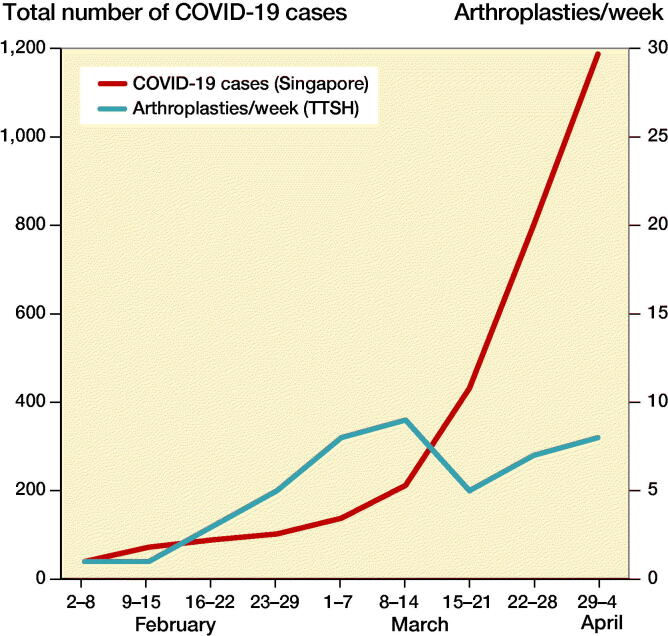
Background and purpose - The ongoing Coronavirus Disease-19 (COVID-19) pandemic has taken a toll on healthcare systems around the world. This has led to guidelines advising against elective procedures, which includes elective arthroplasty. Despite arthroplasty being an elective procedure, some arthroplasties are arguably essential, as pain or functional impairment maybe devastating for patients, especially during this difficult period. We describe our experience as the Division of Arthroplasty in the hospital at the epicenter of the COVID-19 pandemic in Singapore.Patients and methods - The number of COVID-19 cases reported both nationwide and at our institution from February 2020 to date were reviewed. We then collated the number of arthroplasties that we were able to cope with on a weekly basis and charted it against the number of new COVID-19 cases admitted to our institution and the prevalence of COVID-19 within the Singapore population.Results - During the COVID-19 pandemic period, a significant decrease in the volume of arthroplasties was seen. 47 arthroplasties were performed during the pandemic period from February to April, with a weekly average of 5 cases. This was a 74% reduction compared with our institutional baseline. The least number of surgeries were performed during early periods of the pandemic. This eventually rose to a maximum of 47% of our baseline numbers. Throughout this period, no cases of COVID-19 infection were reported amongst the orthopedic inpatients at our institution.Interpretation - During the early periods of the pandemic, careful planning was required to evaluate the pandemic situation and gauge our resources and manpower. Our study illustrates the number of arthroplasties that can potentially be done relative to the disease curve. This could serve as a guide to reinstating arthroplasty as the pandemic dies down. However, it is prudent to note that these situations are widely dynamic and frequent re-evaluation is required to secure patient and healthcare personnel safety, while ensuring appropriate care is delivered.
背景与目的- 当前的 2019 冠状病毒病(COVID-19)大流行对全球各地的医疗体系造成了影响。这导致指南建议避免进行选择性手术,包括选择性关节置换术。尽管关节置换术是一种选择性手术,但有些关节置换术可以说是必不可少的,因为疼痛或功能障碍可能对患者造成毁灭性的影响,尤其是在这个困难时期。我们描述了作为新加坡 COVID-19 大流行中心医院关节置换科的经验。
患者与方法- 我们回顾了自 2020 年 2 月以来全国和我们机构报告的 COVID-19 病例数。然后,我们整理了每周能够处理的关节置换术数量,并将其与我们机构新收治的 COVID-19 病例数以及新加坡人口中 COVID-19 的流行情况进行对比。
结果- 在 COVID-19 大流行期间,关节置换术的数量显著减少。从 2 月到 4 月大流行期间共进行了 47 例关节置换术,每周平均 5 例。与我们机构的基线相比,减少了 74%。大流行早期手术数量最少。这最终上升到我们基线数量的 47%。在整个期间,我们机构的骨科住院患者没有报告 COVID-19 感染病例。
解释- 在大流行早期,需要进行仔细的规划,以评估大流行情况并评估我们的资源和人力。我们的研究说明了相对于疾病曲线可以进行的关节置换术数量。这可以作为大流行消退后恢复关节置换术的指南。但是,需要注意的是,这些情况是广泛动态的,需要频繁重新评估以确保患者和医疗保健人员的安全,同时确保提供适当的护理。