University of Oxford, Oxford, UK.
Oxford University Hospitals NHS Foundation Trust, Oxford, UK.
Neurorehabil Neural Repair. 2020 Jul;34(7):661-671. doi: 10.1177/1545968320929669. Epub 2020 Jun 7.
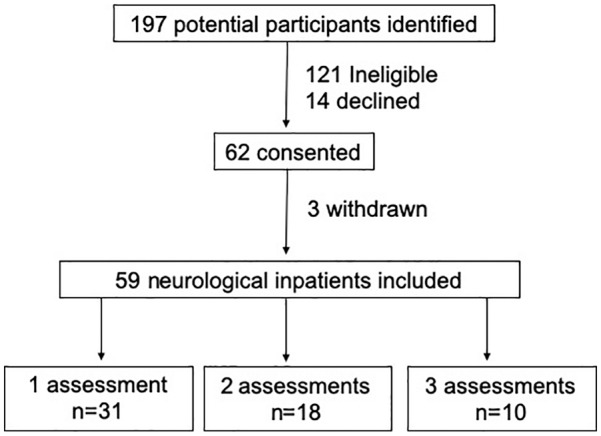
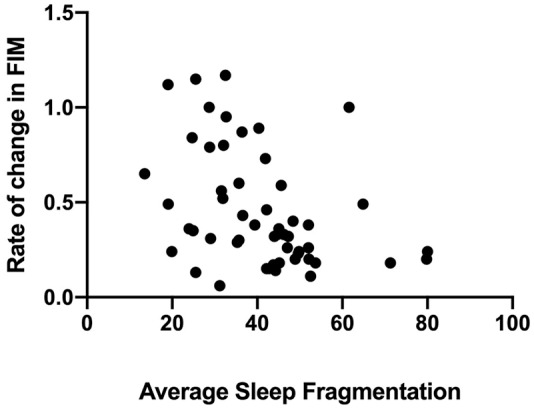
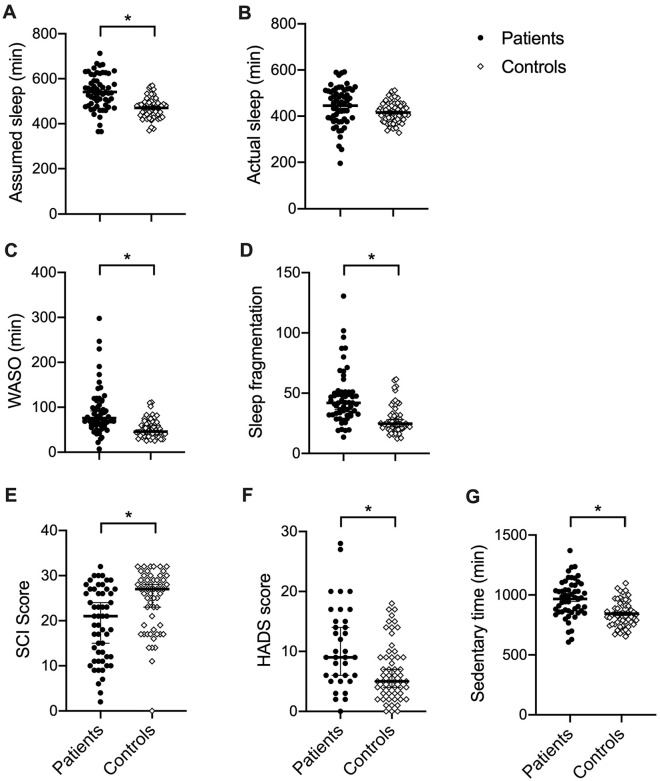
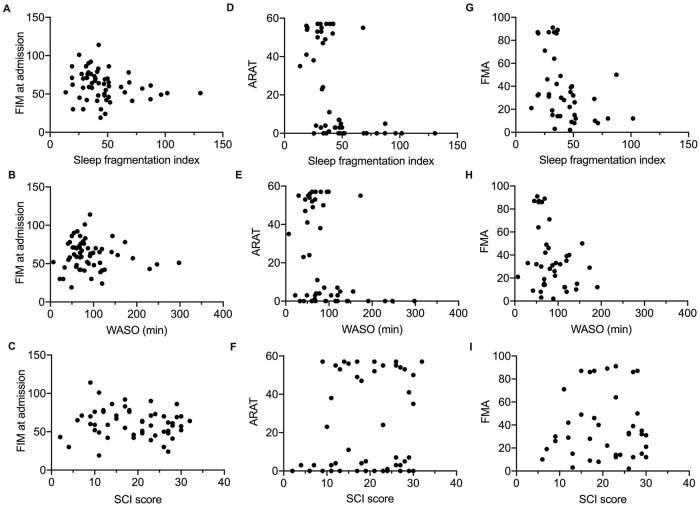
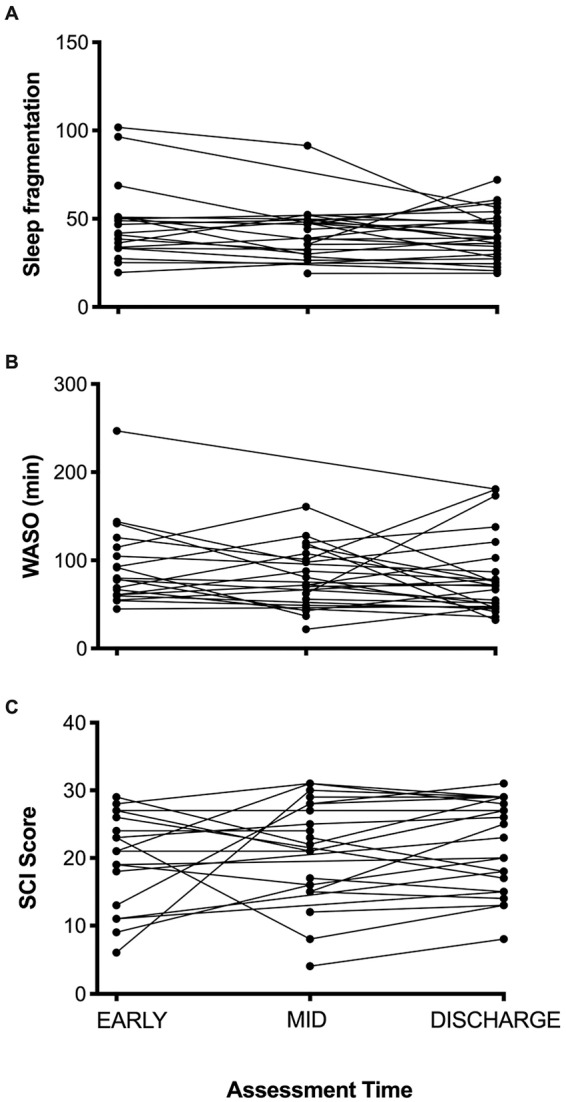
. Sleep is important for consolidation of motor learning, but brain injury may affect sleep continuity and therefore rehabilitation outcomes. . This study aims to assess the relationship between sleep quality and motor recovery in brain injury patients receiving inpatient rehabilitation. . Fifty-nine patients with brain injury were recruited from 2 specialist inpatient rehabilitation units. Sleep quality was assessed (up to 3 times) objectively using actigraphy (7 nights) and subjectively using the Sleep Condition Indicator. Motor outcome assessments included Action Research Arm test (upper limb function), Fugl-Meyer Assessment (motor impairment), and the Rivermead Mobility Index. The Functional Independence Measure (FIM) was assessed at admission and discharge by the clinical team. Fifty-five age- and gender-matched healthy controls completed one assessment. . Inpatients demonstrated lower self-reported sleep quality ( < .001) and more fragmented sleep ( < .001) than controls. For inpatients, sleep fragmentation explained significant additional variance in motor outcomes, over and above that explained by admission FIM score ( < .017), such that more disrupted sleep was associated with poorer motor outcomes. Using stepwise linear regression, sleep fragmentation was the only variable found to explain variance in rate of change in FIM ( = 0.12, = .027), whereby more disrupted sleep was associated with slower recovery. . Inpatients with brain injury demonstrate impaired sleep quality, and this is associated with poorer motor outcomes and slower functional recovery. Further investigation is needed to determine how sleep quality can be improved and whether this affects outcome.
睡眠对于运动学习的巩固很重要,但脑损伤可能会影响睡眠的连续性,从而影响康复效果。本研究旨在评估脑损伤患者接受住院康复治疗期间睡眠质量与运动恢复之间的关系。
从 2 个专门的住院康复病房招募了 59 名脑损伤患者。使用活动记录仪(7 晚)客观评估睡眠质量(最多 3 次),并使用睡眠状况指标进行主观评估。运动功能评估包括动作研究上肢测试(上肢功能)、Fugl-Meyer 评估(运动障碍)和 Rivermead 移动指数。临床团队在入院和出院时评估功能性独立测量(FIM)。55 名年龄和性别匹配的健康对照者完成了一次评估。
住院患者的自我报告睡眠质量( <.001)和睡眠碎片化( <.001)均低于对照组。对于住院患者,睡眠碎片化解释了运动结果的额外差异,超过了入院时 FIM 评分所解释的差异( <.017),因此睡眠碎片化程度越高,运动结果越差。使用逐步线性回归,睡眠碎片化是唯一可以解释 FIM 变化率差异的变量( = 0.12, =.027),即睡眠碎片化程度越高,康复速度越慢。
脑损伤住院患者的睡眠质量受损,这与运动结果较差和功能恢复较慢有关。需要进一步研究如何改善睡眠质量以及这是否会影响结果。