Huang Mi, Wang Ying, Peng Rui
Hubei University of Chinese Medicine, Hubei, Wuhan 430000, China.
South China Botanical Garden, Chinese Academy of Sciences, Key Laboratory of South China Agricultural Plant Molecular Analysis and Genetic Improvement, Key Laboratory of Guangdong Province Applied Botany, Guangzhou 510650, China.
Evid Based Complement Alternat Med. 2020 May 17;2020:2982480. doi: 10.1155/2020/2982480. eCollection 2020.
Glucocorticoid (GC) is the most important risk factor for osteoporosis (OP); in the present study, we examined the potential mechanism of icariin, a natural bioactive compound isolated from the traditional Chinese herbal , for GC-induced OP to explore its potential therapeutic effect.
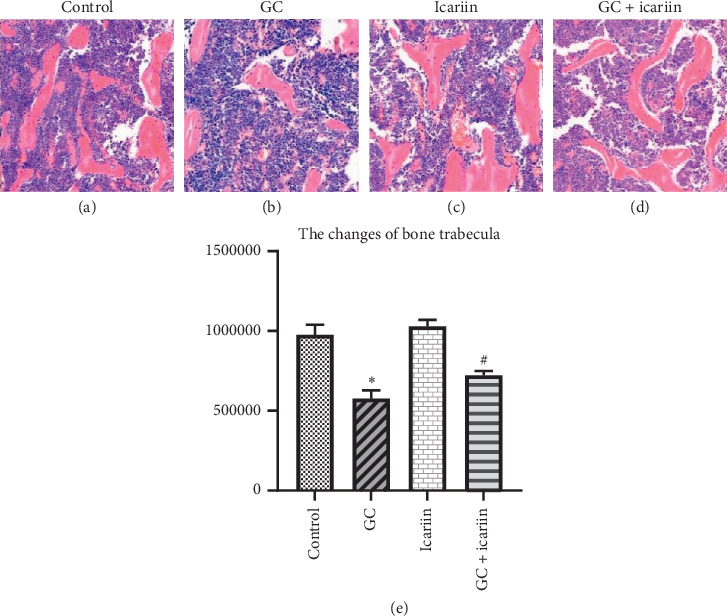
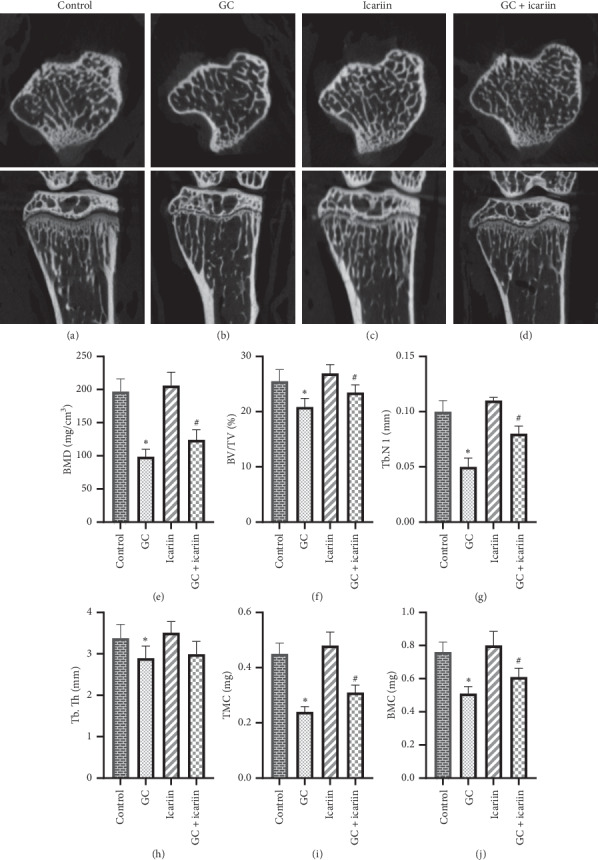
We used a GC-induced OP mice model and treated with icariin. Pathological changes were measured by H&E staining, and the effects of icariin on osteoblasts and osteoclasts were measured by immunohistochemistry (IHC) staining and western blot (WB) analyses, while trabecular bone parameters were detected by micro-CT imaging .
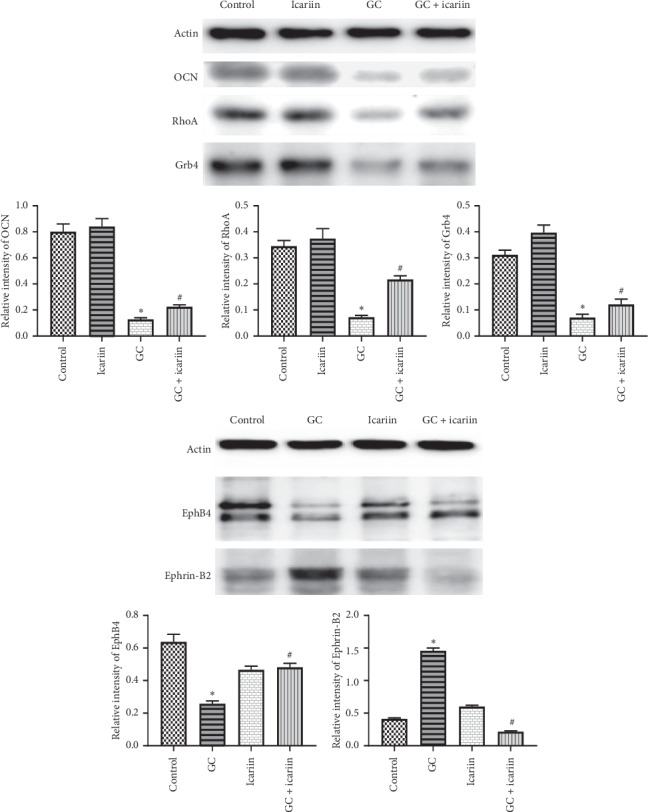
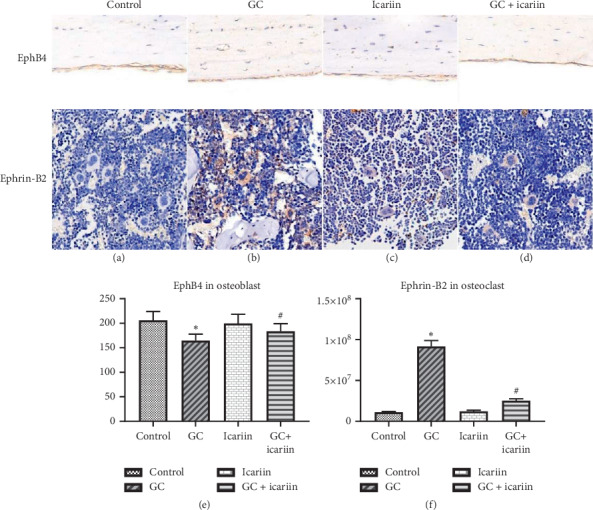
The results showed that in GC-induced OP symptoms, icariin treatment significantly increased the density of the trabecular bone when exposed to GC, revealed by H&E staining and micro-CT imaging. IHC staining showed that GC-induced OP had a lower EphB4 expression and higher Ephrin-B2 expression, but icariin could promote EphB4 while suppressing Ephrin-B2 expression. The WB results also provided evidence of the same protein expression trend, showing that the osteoblast marker OCN and the EphB4 downstream factor RhoA in the GC group were decreased, while both OCN and RhoA expression were significantly increased and the Ephrin-B2 downstream factor Grb4 in in GC group was increased after icariin treatment.
Icariin could improve the characteristics of OP through regulating the balance of the EphB4/Ephrin-B2 pathway. Further preclinical trial is needed to provide certainty of clinical benefits for OP patients.
糖皮质激素(GC)是骨质疏松症(OP)最重要的危险因素;在本研究中,我们研究了从传统中药中分离出的天然生物活性化合物淫羊藿苷对GC诱导的OP的潜在作用机制,以探索其潜在治疗效果。
我们使用GC诱导的OP小鼠模型并用淫羊藿苷进行治疗。通过苏木精-伊红(H&E)染色测量病理变化,通过免疫组织化学(IHC)染色和蛋白质印迹(WB)分析测量淫羊藿苷对成骨细胞和破骨细胞的影响,同时通过显微计算机断层扫描(micro-CT)成像检测小梁骨参数。
结果显示,在GC诱导的OP症状中,通过H&E染色和micro-CT成像显示,淫羊藿苷治疗在暴露于GC时显著增加了小梁骨密度。IHC染色显示,GC诱导的OP具有较低的EphB4表达和较高的Ephrin-B2表达,但淫羊藿苷可促进EphB4表达同时抑制Ephrin-B2表达。WB结果也提供了相同蛋白质表达趋势的证据,表明GC组中成骨细胞标志物骨钙素(OCN)和EphB4下游因子RhoA降低,而淫羊藿苷治疗后,OCN和RhoA表达均显著增加,且GC组中Ephrin-B2下游因子Grb4增加。
淫羊藿苷可通过调节EphB4/Ephrin-B2通路的平衡改善OP的特征。需要进一步的临床前试验来确定对OP患者的临床益处。