Department of Pharmacology and Toxicology, College of Pharmacy, King Saud University, Riyadh 11451, Saudi Arabia.
Department of Pathology, College of Medicine, King Saud University, Riyadh 11451, Saudi Arabia.
Oxid Med Cell Longev. 2020 May 14;2020:7453406. doi: 10.1155/2020/7453406. eCollection 2020.
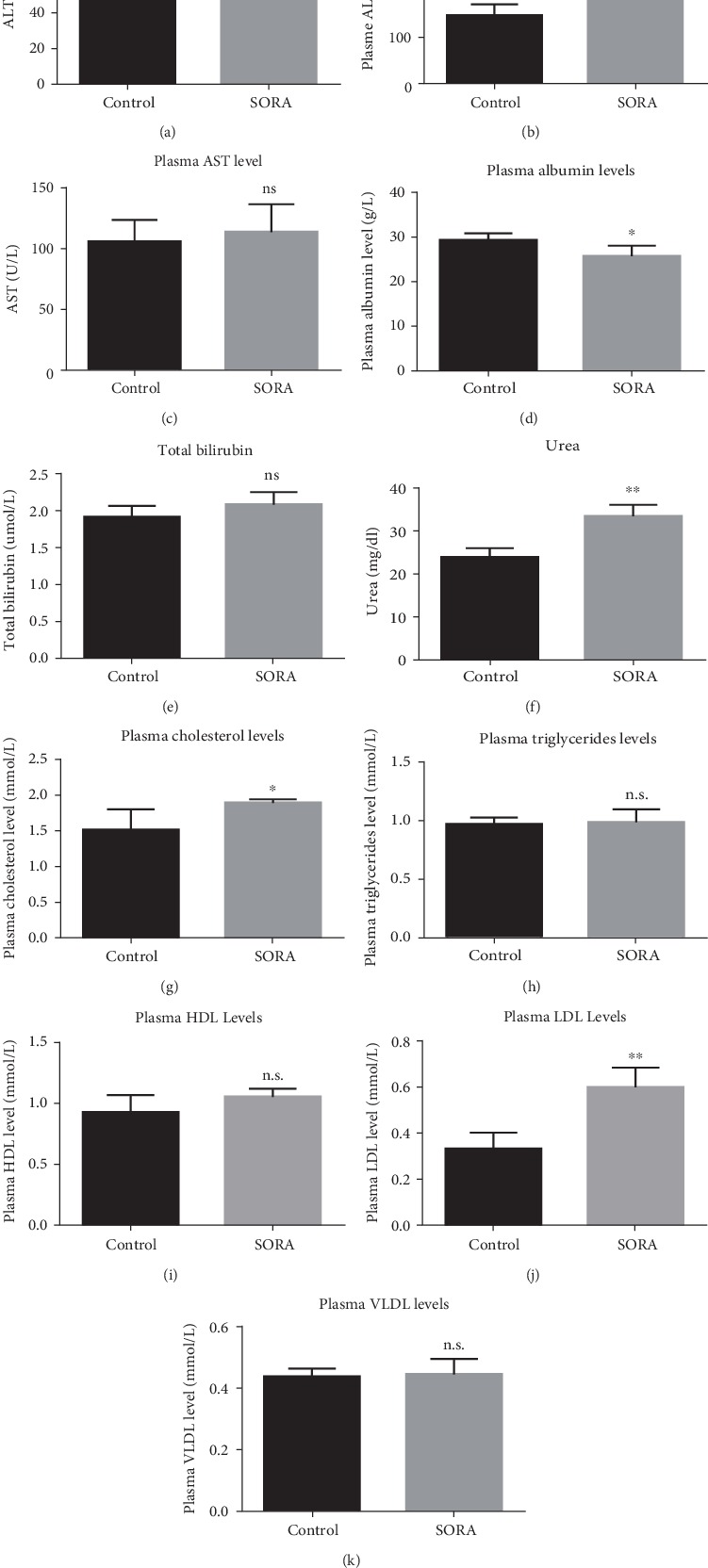
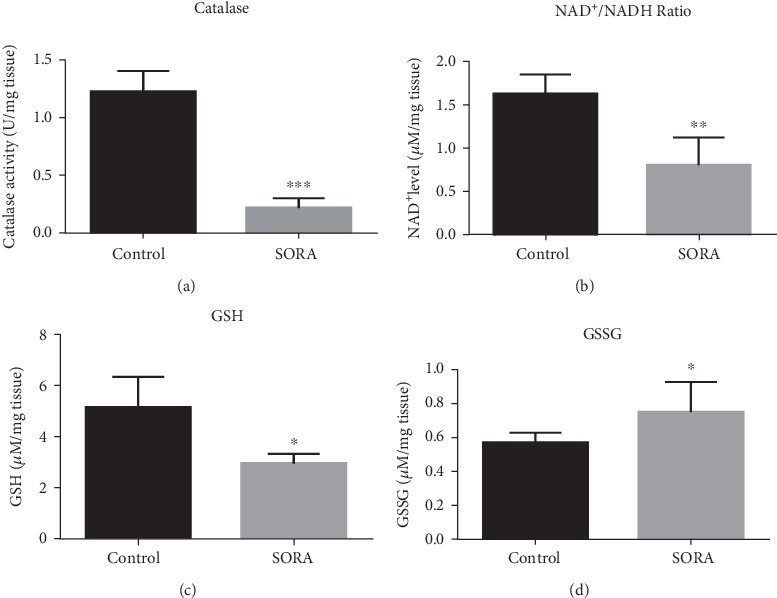
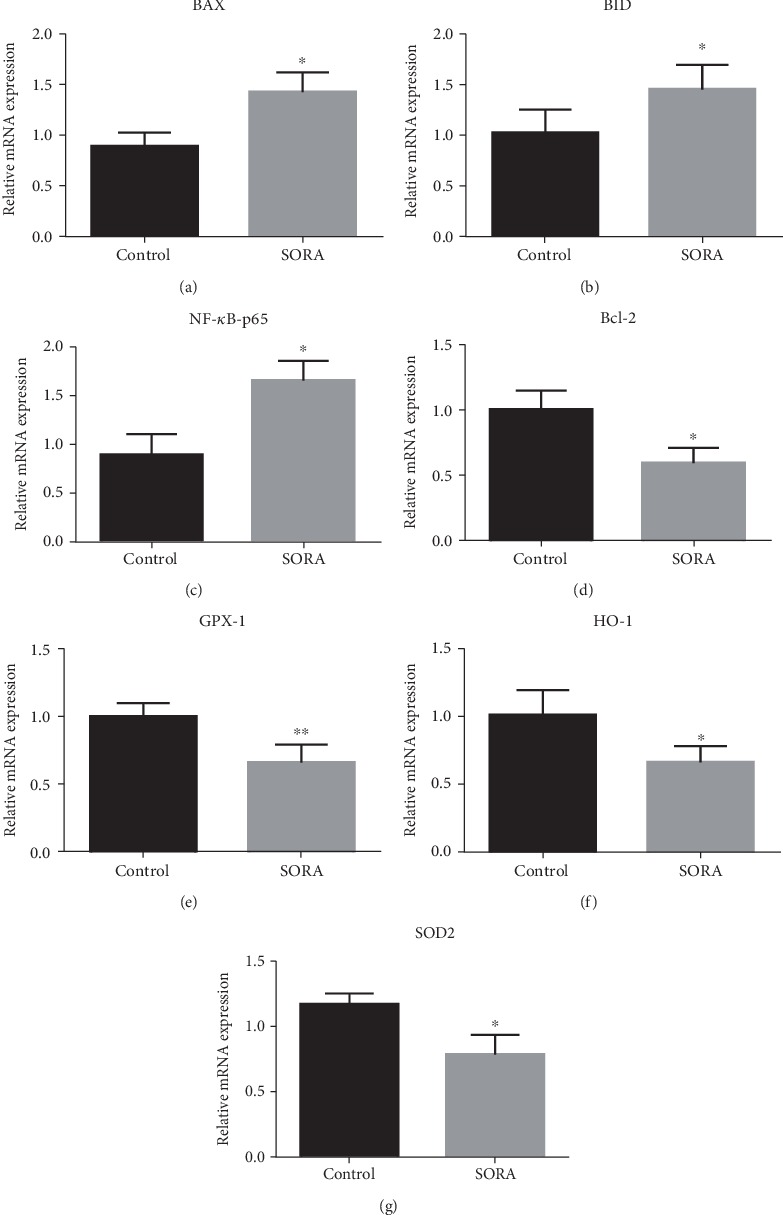
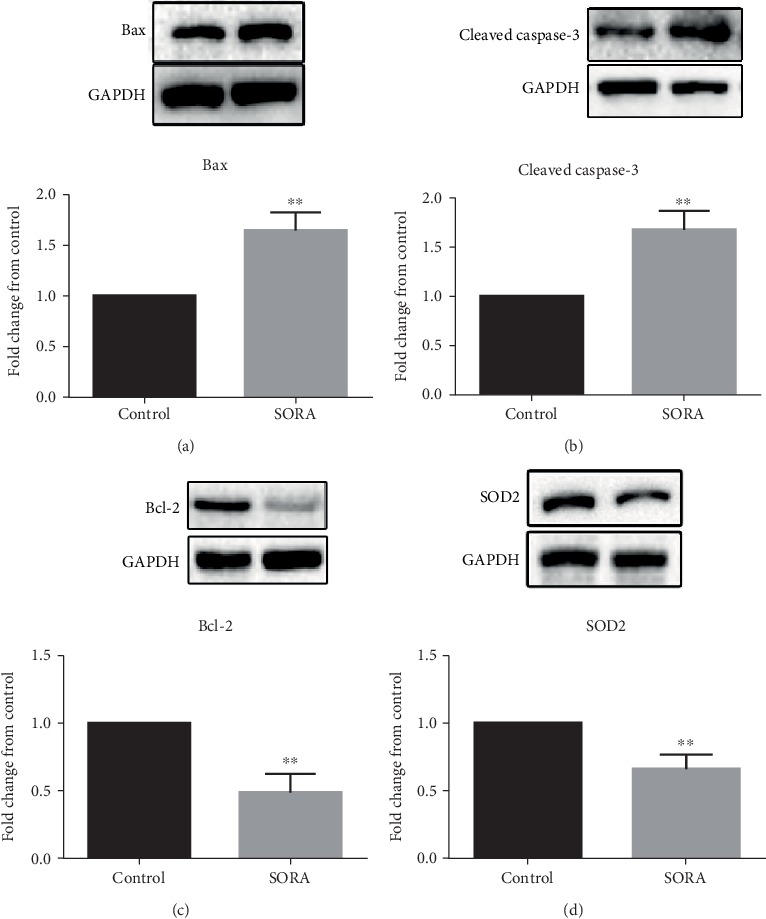
Sorafenib is a small, orally-active multikinase inhibitor that is most frequently used for the management of renal cell carcinoma, hepatocellular carcinoma, and radioactive iodine-resistant thyroid carcinoma. However, recent reports have associated sorafenib with hepatotoxicity that can limit its clinical application, although the mechanism of hepatotoxicity is still to be elucidated. Thus, our study was designed to explore the molecular mechanisms underlying sorafenib-induced hepatotoxicity in an model. Twenty male adult Wistar rats were randomly placed into two groups; the first group received an oral dose of normal saline (vehicle), and the second received sorafenib (30 mg/kg) once daily for twenty-one consecutive days. After twenty-one days, liver tissues and blood samples were used for gene expression, protein expression, and biochemical analysis. Sorafenib treatment resulted in markedly increased levels of alanine aminotransferase and alkaline phosphatase, which indicate the presence of liver damage. Additionally, sorafenib administration induced the inflammatory and oxidative stress marker NF-B-p65, while antioxidant enzymes were attenuated. Moreover, sorafenib caused upregulation of both gene and protein for the apoptotic markers cleaved Caspase-3, Bax, and Bid, and downregulation of the antiapoptotic protein Bcl-2. In conclusion, our findings suggest that sorafenib administration is associated with hepatotoxicity, which might be due to the activation of oxidative stress and apoptotic pathways.
索拉非尼是一种小分子、口服活性的多激酶抑制剂,最常用于治疗肾细胞癌、肝细胞癌和放射性碘难治性甲状腺癌。然而,最近的报告表明,索拉非尼与肝毒性有关,这可能限制了它的临床应用,尽管肝毒性的机制仍有待阐明。因此,我们的研究旨在探讨索拉非尼在模型中诱导肝毒性的分子机制。20 只成年雄性 Wistar 大鼠被随机分为两组;第一组给予生理盐水(载体)口服剂量,第二组给予索拉非尼(30mg/kg)每日一次,连续 21 天。21 天后,采集肝脏组织和血液样本进行基因表达、蛋白表达和生化分析。索拉非尼治疗导致丙氨酸氨基转移酶和碱性磷酸酶水平显著升高,表明存在肝损伤。此外,索拉非尼给药诱导炎症和氧化应激标志物 NF-B-p65,同时抗氧化酶减弱。此外,索拉非尼引起凋亡标志物 cleaved Caspase-3、Bax 和 Bid 的基因和蛋白上调,以及抗凋亡蛋白 Bcl-2 的下调。总之,我们的研究结果表明,索拉非尼给药与肝毒性有关,这可能是由于氧化应激和凋亡途径的激活。