
不同生物絮团起始物对养殖罗非鱼系统中氨氮、硝酸盐和亚硝酸盐浓度的影响。
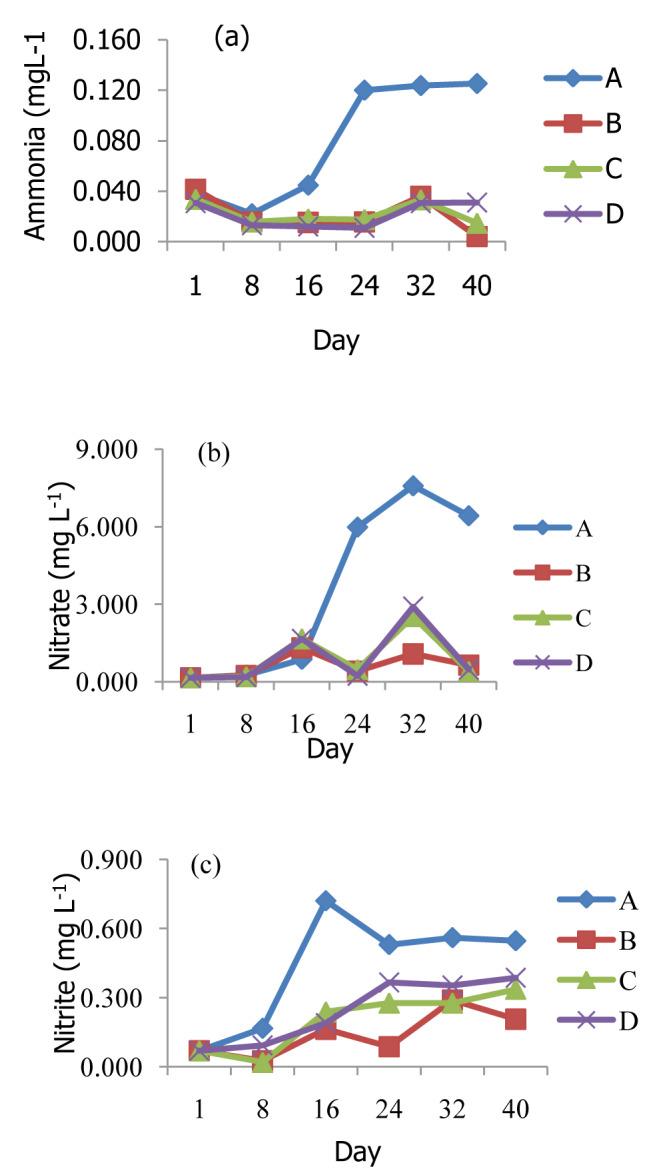
Effect of different biofloc starters on ammonia, nitrate, and nitrite concentrations in the cultured tilapia system.
机构信息
Faculty of Fisheries and Marine Science, Universitas Riau, Pekanbaru, Riau, 28000, Indonesia.
Faculty of Marine and Fisheries, Universitas Syiah Kuala, Banda Aceh, Indonesia.
出版信息
F1000Res. 2020 Apr 24;9:293. doi: 10.12688/f1000research.22977.3. eCollection 2020.
High stocking density and intensive feeding in aquaculture systems lead to the accumulation of organic waste, which results in an increase in ammonia, nitrite, and nitrite concentrations in culture media. Biofloc is a potential technology to overcome this problem. The starter is a crucial carbon source for bacteria in the formation of biofloc. The objective of the present study aimed to explore the best starter of biofloc in a red tilapia culture system. A completely randomized design with four levels of treatment was used in this study. The tested starter was (A) control treatment, biofloc without starter, (B) biofloc with molasses starter, (C) biofloc with tapioca starter, and (D) biofloc with sucrose starter. The floc was cultured in 100-L tanks with a salinity of 17 ppt. The tanks were stocked with with a size of 3.71±0.11 cm at a stocking density of 30 fish per tank. The fish were fed on a commercial diet two times a day at satiation for 40 days. The ammonia, nitrite, and nitrite concentrations were measured for an interval of 8 days. The study showed that the NH -N range was 0.02-0.07 mg L (mean, 0.03 ± 0.02 mg L ), NO -N range was 0.20-0.43 mg L (mean, 0.25 ± 0.12 mg L ), and NO -N range was 0.90-3.20 mg L (mean, 1.42 ± 1.19 mg L ). Among the starters tested, molasses was found to be the best for biofloc in tilapia culture.
高密度和集约化的水产养殖系统会导致有机废物的积累,从而导致养殖介质中氨、亚硝酸盐和硝酸盐浓度的增加。生物絮团是克服这一问题的一种有潜力的技术。生物絮团形成过程中,起始物是细菌的关键碳源。本研究的目的是探索罗非鱼养殖系统中生物絮团的最佳起始物。本研究采用完全随机设计,设 4 个处理水平。测试的起始物分别为:(A)对照处理,无起始物的生物絮团;(B)以糖蜜为起始物的生物絮团;(C)以木薯淀粉为起始物的生物絮团;(D)以蔗糖为起始物的生物絮团。絮团在盐度为 17 ppt 的 100-L 水槽中培养。每个水槽中放养 3.71±0.11 cm 的鱼,放养密度为 30 尾/水槽。鱼每天投喂 2 次商业饲料,饱食投喂 40 天。每隔 8 天测量一次氨氮、亚硝酸盐和硝酸盐浓度。研究表明,NH 3 -N 浓度范围为 0.02-0.07 mg/L(平均值为 0.03 ± 0.02 mg/L),NO 2 -N 浓度范围为 0.20-0.43 mg/L(平均值为 0.25 ± 0.12 mg/L),NO 3 -N 浓度范围为 0.90-3.20 mg/L(平均值为 1.42 ± 1.19 mg/L)。在所测试的起始物中,糖蜜被发现是罗非鱼养殖中生物絮团的最佳起始物。
 Zotero 插件