Suyama Tomonori, Shimura Masaru, Fushimi Takuya, Kuranobu Naomi, Ichimoto Keiko, Matsunaga Ayako, Takayanagi Masaki, Murayama Kei
Center for Medical Genetics, Department of Metabolism, Chiba Children's Hospital, 579-1 Heta-cho, Midori-ku, Chiba 266-0007, Japan.
Mol Genet Metab Rep. 2020 May 30;24:100610. doi: 10.1016/j.ymgmr.2020.100610. eCollection 2020 Sep.
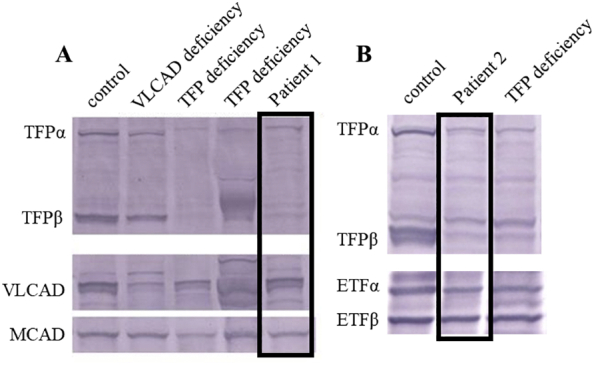
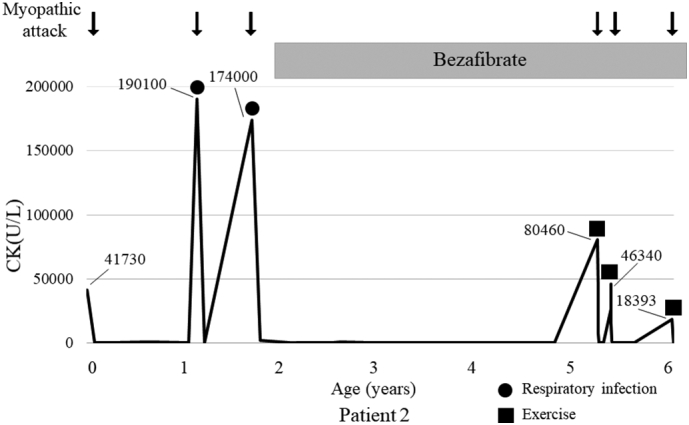
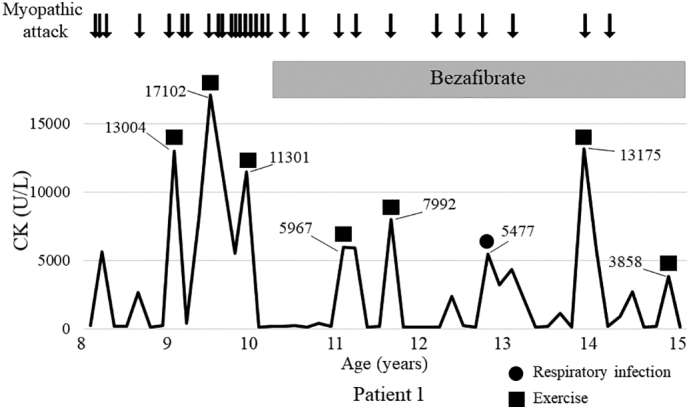
Mitochondrial trifunctional protein (TFP) deficiency is a rare inherited metabolic disorder caused by defects in fatty acid β-oxidation (FAO) of long-chain fatty acids, leading to impaired energy production. Fasting avoidance, fatty acid-restricted diets, and supplementation with medium-chain triglycerides are recommended as a treatment, but there are no pharmaceutical treatments available with strong evidence of efficacy. Bezafibrate, which enhances the transcription of FAO enzymes, is a promising therapeutic option for FAO disorders (FAODs). The effectiveness of bezafibrate for FAODs has been reported in some clinical trials, but few clinical studies have investigated its efficacy toward TFP deficiency. Herein, we describe two Japanese patients with TFP deficiency. Patient 1 presented with recurrent myalgia since the age of 5 years. Laboratory findings showed increased serum levels of long-chain fatty acids and reduced expression of TFPα and TFPβ in his skin fibroblasts. Based on these findings, he was diagnosed with the myopathic type of TFP deficiency. Patient 2 suddenly exhibited cardiopulmonary arrest one day after birth. Elevated levels of creatine kinase and long-chain acylcarnitines were observed. Genetic analysis identified compound heterozygous variants in (c.1175C>T/c.1364T>G). He was diagnosed with the lethal type of TFP deficiency. Although both patients were treated with dietary therapy and l-carnitine supplementation, they experienced frequent myopathic attacks associated with respiratory infections and exercise. After the initiation of bezafibrate, their myopathic manifestations were markedly reduced, leading to an improvement in quality of life without any side effects. Our clinical findings indicate that bezafibrate combined with other treatments such as dietary therapy may be effective in improving myopathic manifestations in TFP deficiency.
线粒体三功能蛋白(TFP)缺乏症是一种罕见的遗传性代谢紊乱疾病,由长链脂肪酸的脂肪酸β氧化(FAO)缺陷引起,导致能量产生受损。建议避免禁食、采用脂肪酸限制饮食并补充中链甘油三酯作为治疗方法,但尚无有充分疗效证据的药物治疗方法。苯扎贝特可增强FAO酶的转录,是治疗FAO紊乱(FAODs)的一种有前景的治疗选择。一些临床试验报道了苯扎贝特对FAODs的有效性,但很少有临床研究调查其对TFP缺乏症的疗效。在此,我们描述了两名患有TFP缺乏症的日本患者。患者1自5岁起就反复出现肌痛。实验室检查结果显示其血清长链脂肪酸水平升高,皮肤成纤维细胞中TFPα和TFPβ的表达降低。基于这些发现,他被诊断为肌病型TFP缺乏症。患者2出生一天后突然出现心肺骤停。观察到肌酸激酶和长链酰基肉碱水平升高。基因分析确定了(c.1175C>T/c.1364T>G)中的复合杂合变异。他被诊断为致死型TFP缺乏症。尽管两名患者都接受了饮食治疗和左卡尼汀补充治疗,但他们仍频繁出现与呼吸道感染和运动相关的肌病发作。开始使用苯扎贝特治疗后,他们的肌病表现明显减轻,生活质量得到改善且无任何副作用。我们的临床研究结果表明,苯扎贝特与饮食治疗等其他治疗方法联合使用可能有效改善TFP缺乏症的肌病表现。