Department of Neurosurgery, The First Affiliated Hospital of Zhengzhou University, Zhengzhou, 450052, Henan, China.
School of Science, Zhengzhou University, Zhengzhou, 450001, Henan, China.
Sci Rep. 2020 Jun 11;10(1):9471. doi: 10.1038/s41598-020-65331-3.
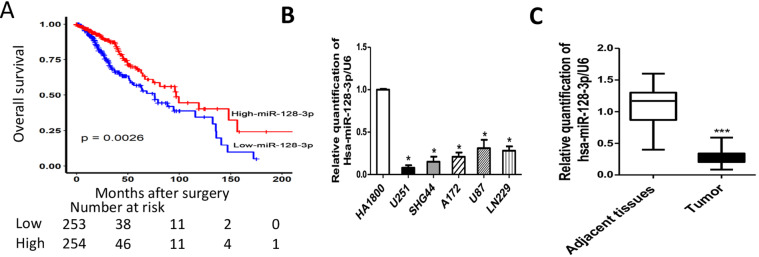
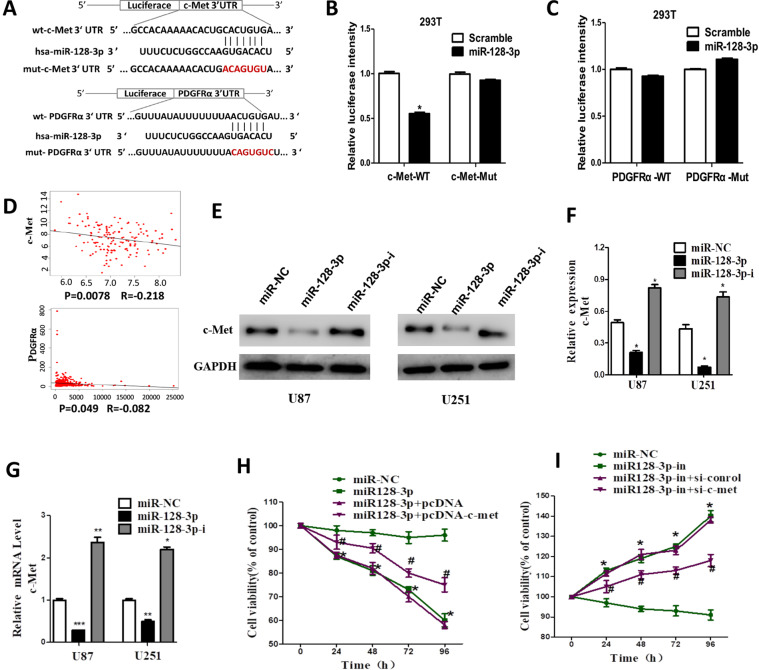
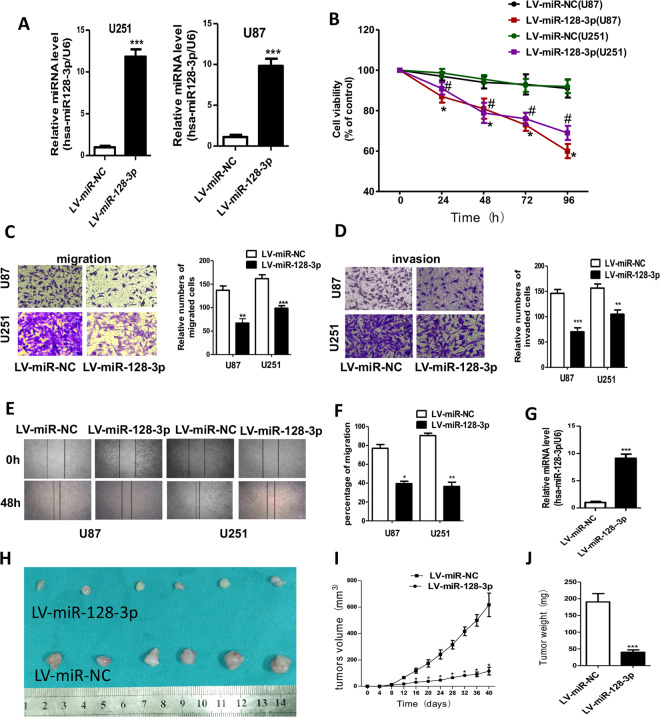
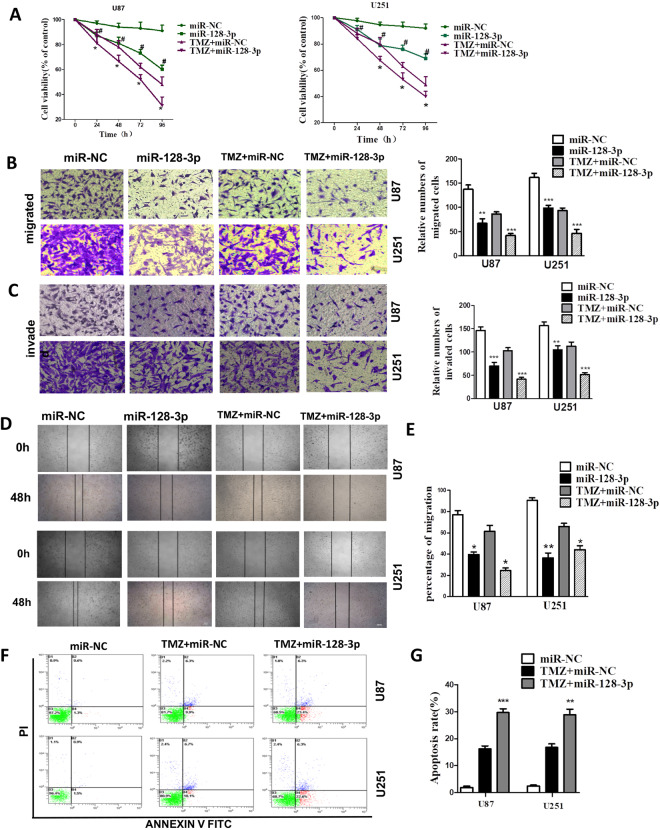
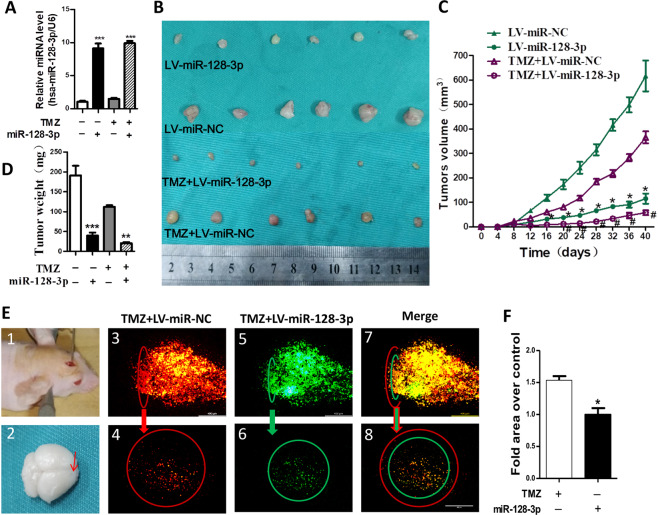
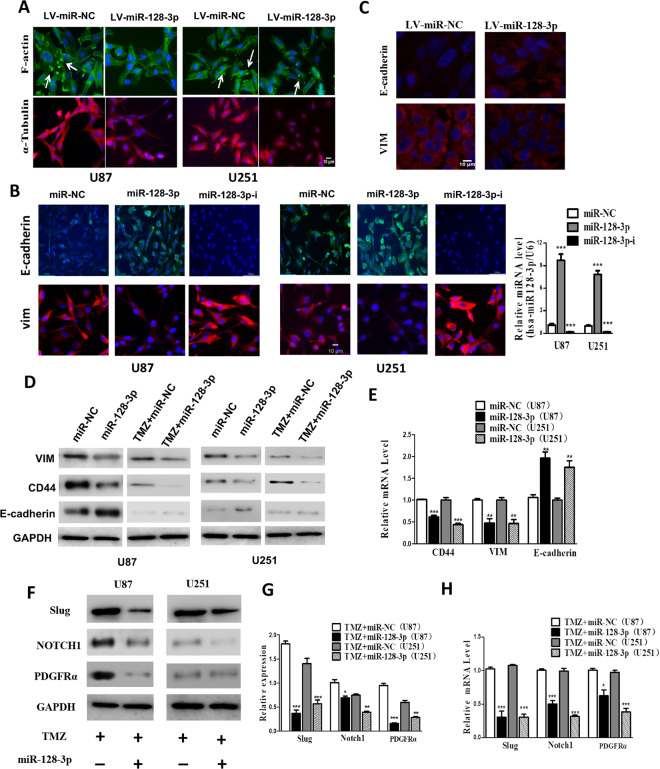
Temozolomide is a first line anti-tumor drug used for the treatment of patients with Glioblastoma multiforme (GBM). However, the drug resistance to temozolomide limits its clinical application. Therefore, novel strategies to overcome chemoresistance are desperately needed for improved treatment of human GBM. Recent studies have demonstrated that miRNAs are closely related to resistance to cancer chemotherapy. This study aimed to further validate the biological role of miR-128-3p and to investigate whether miR-128-3p can enhance the chemosensitivity of glioblastoma to temozolomide (TMZ) and the underlying mechanisms. The effects of miR-128-3p and TMZ on the proliferation of glioblastoma cells were investigated by cell counting kit-8 (cck8). Transwell and intracerebral invasion assays were applied to determine the effects of the combination of miR-128-3p and TMZ on the invasion and migration of glioblastoma in vitro and in vivo. Flow cytometry was used to detect apoptosis in each group, and immunofluorescence was used to determine the expression levels of EMT-related proteins. RT-PCR and Western-blot were applied to detect EMT-transformed proteins (c-Met, PDGFRα, Notch1, and Slug) and EMT phenotype-associated proteins (Vim, CD44, and E-cadherin) at both mRNA and protein levels. Based on the microRNA.org database, we predicted the target genes of miR-128-3p. The target-relationship between miR-128-3p and c-Met and PDGFRα was verified by dual luciferase reporter gene. The tumor volume, weight and the expression levels of the proteins described above were measured in subcutaneously transplanted tumor model in nude mice. We found that the expression of miR-128-3p was down-regulated in glioblastoma tissue samples and cell lines. miR-128-3p suppressed the proliferation, migration, and invasion of GBM both in vitro and in vivo; miR-128-3p enhanced the therapeutic effect of TMZ via inhibition of proliferation, invasion and migration of glioblastoma cells and induction of apoptosis. Overexpression of miR-128-3p down-regulated the expression levels of EMT-transformed proteins (c-Met, PDGFRα, Notch1 and Slug) to enhance the effect of TMZ. In addition, we found that miR-128-3p targeted and bound c-Met. More importantly, the upregulation of c-Met significantly prompted U87 and U251 cell proliferation. This effect could be abolished when c-Met was silenced. The investigation in tumor bearing nude mice showed that miR-128-3p in combination with TMZ reduced tumor volume and the invasion extent, and increased the sensitivity of glioblastoma to TMZ. miR-128-3p is capable of enhancing the sensitivity of glioblastoma to TMZ through regulating c-Met/EMT.
替莫唑胺是一种用于治疗多形性胶质母细胞瘤(GBM)患者的一线抗肿瘤药物。然而,替莫唑胺的耐药性限制了其临床应用。因此,迫切需要新的策略来克服化疗耐药性,以提高人类 GBM 的治疗效果。最近的研究表明,miRNAs 与癌症化疗耐药性密切相关。本研究旨在进一步验证 miR-128-3p 的生物学作用,并探讨 miR-128-3p 是否可以增强替莫唑胺(TMZ)对胶质母细胞瘤的化疗敏感性及其潜在机制。通过细胞计数试剂盒-8(cck8)检测 miR-128-3p 和 TMZ 对胶质母细胞瘤细胞增殖的影响。应用 Transwell 和脑内侵袭实验检测 miR-128-3p 和 TMZ 对体外和体内胶质母细胞瘤侵袭和迁移的影响。流式细胞术检测各组细胞凋亡情况,免疫荧光法检测 EMT 相关蛋白表达水平。RT-PCR 和 Western-blot 检测 EMT 转化蛋白(c-Met、PDGFRα、Notch1 和 Slug)和 EMT 表型相关蛋白(Vim、CD44 和 E-cadherin)在 mRNA 和蛋白水平上的表达。根据 microRNA.org 数据库,预测 miR-128-3p 的靶基因。通过双荧光素酶报告基因验证 miR-128-3p 与 c-Met 和 PDGFRα 的靶基因关系。在裸鼠皮下移植瘤模型中测量肿瘤体积、重量和上述蛋白的表达水平。我们发现 miR-128-3p 在胶质母细胞瘤组织样本和细胞系中的表达下调。miR-128-3p 抑制 GBM 的体外和体内增殖、迁移和侵袭;miR-128-3p 通过抑制 glioblastoma 细胞的增殖、侵袭和迁移以及诱导细胞凋亡来增强 TMZ 的治疗效果。miR-128-3p 的过表达下调 EMT 转化蛋白(c-Met、PDGFRα、Notch1 和 Slug)的表达水平,增强 TMZ 的作用。此外,我们发现 miR-128-3p 靶向并结合 c-Met。更重要的是,c-Met 的上调显著促进了 U87 和 U251 细胞的增殖。当沉默 c-Met 时,这种作用可以被消除。在荷瘤裸鼠的研究表明,miR-128-3p 联合 TMZ 可减少肿瘤体积和侵袭程度,并提高胶质母细胞瘤对 TMZ 的敏感性。miR-128-3p 通过调节 c-Met/EMT 增强胶质母细胞瘤对 TMZ 的敏感性。