Department of Science Education, Chinju National University of Education, Shinan-dong, Jinju, Kyungnam, 52673, South Korea.
Dinosaur Trackers Research Group, University of Colorado Denver, P.O. Box 173364, Denver, CO, 80217-3364, USA.
Sci Rep. 2020 Jun 11;10(1):8680. doi: 10.1038/s41598-020-66008-7.
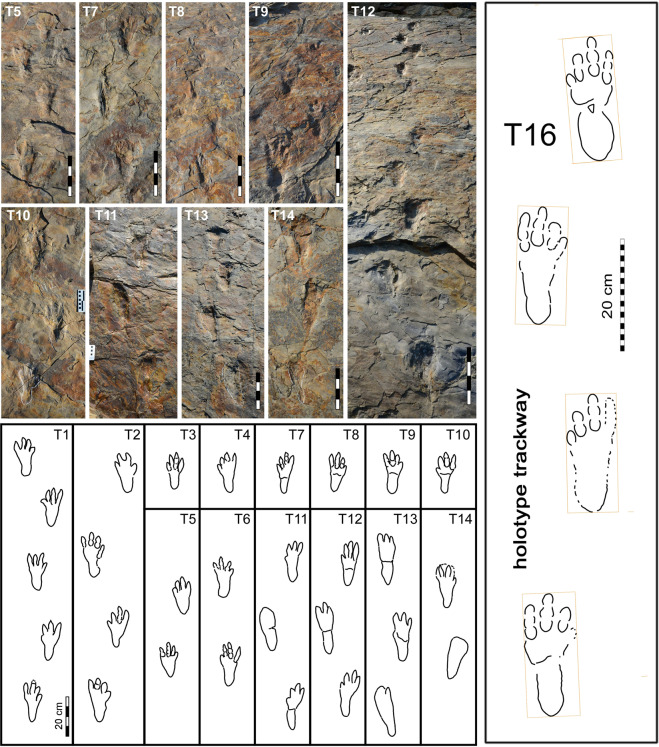
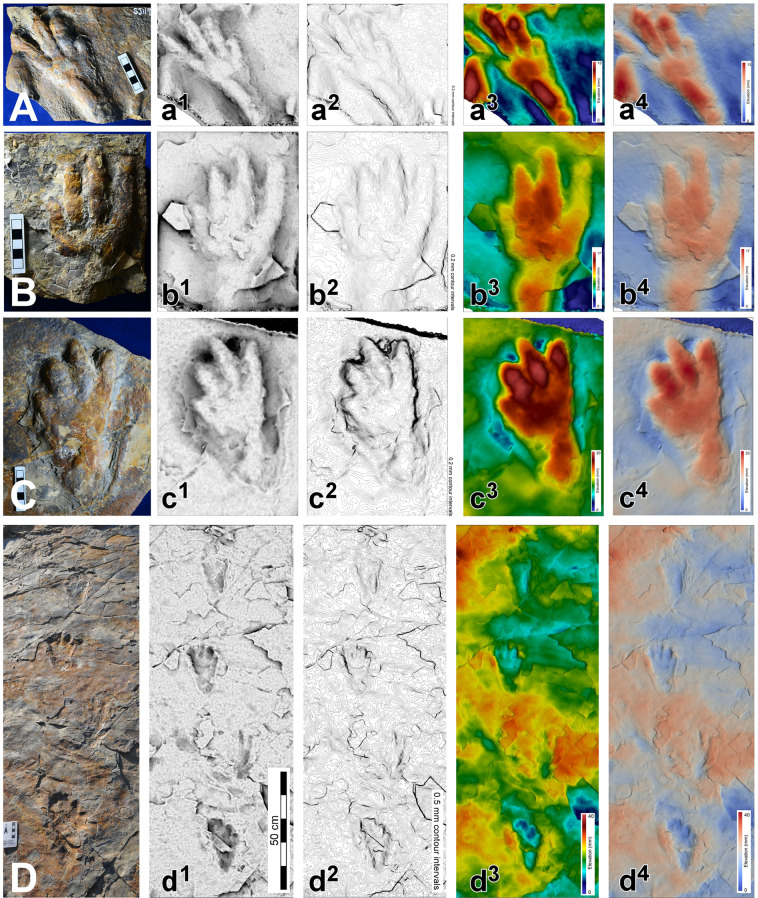
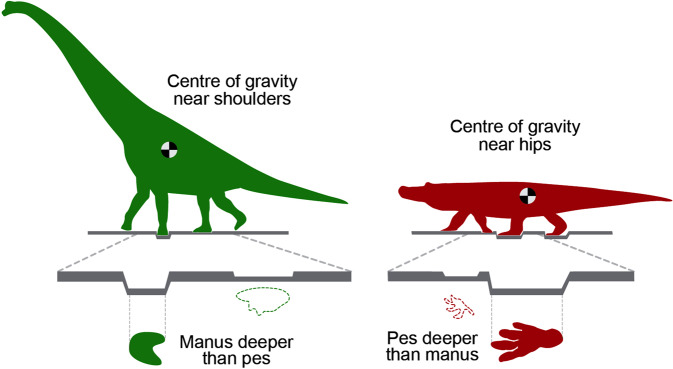
Large well-preserved crocodylomorph tracks from the Lower Cretaceous (? Aptian) Jinju Formation of South Korea, represent the well-known crocodylomorph ichnogenus Batrachopus. The Korean sample includes multiple, narrow-gauge, pes-only trackways with footprint lengths (FL) 18-24 cm, indicating trackmaker body lengths up to ~3.0 m. Surprisingly, the consistent absence of manus tracks in trackways, with well-preserved digital pad and skin traces, argues for bipedal trackmakers, here assigned to Batrachopus grandis ichnosp. nov. No definitive evidence, either from pes-on-manus overprinting or poor track preservation, suggests the trackways where made by quadrupeds that only appear bipedal. This interpretation helps solve previous confusion over interpretation of enigmatic tracks of bipeds from younger (? Albian) Haman Formation sites by showing they are not pterosaurian as previously inferred. Rather, they support the strong consensus that pterosaurs were obligate quadrupeds, not bipeds. Lower Jurassic Batrachopus with foot lengths (FL) in the 2-8 cm range, and Cretaceous Crocodylopodus (FL up to ~9.0 cm) known only from Korea and Spain registered narrow gauge trackways indicating semi-terrestrial/terrestrial quadrupedal gaits. Both ichnogenera, from ichnofamily Batrachopodidae, have been attributed to Protosuchus-like semi-terrestrial crocodylomorphs. The occurrence of bipedal B. grandis ichnosp. nov. is evidence of such adaptations in the Korean Cretaceous.
韩国下白垩统(可能是阿普第期)金州组中保存完好的大型鳄形类足迹代表了著名的鳄形类足迹属 Batrachopus。韩国样本包括多个狭窄轨距、仅后足的足迹,足迹长度(FL)为 18-24 厘米,表明造迹者体长可达 3.0 米左右。令人惊讶的是,足迹中始终没有前足足迹,而保存完好的指垫和皮肤痕迹表明造迹者是两足动物,这里将其归入新种 Batrachopus grandis 足迹种。无论是前足踩踏在后足足迹上的明确证据,还是足迹保存不佳的情况,都表明这些足迹不是四足动物留下的,而这些四足动物看起来是两足动物。这种解释有助于解决之前对来自较年轻(可能是阿尔比期) Haman 组遗址的神秘两足动物足迹的解释混乱问题,表明它们不是以前推断的翼龙,而是支持了一个强烈的共识,即翼龙是强制性的四足动物,而不是两足动物。下侏罗统的 Batrachopus 足迹长度(FL)在 2-8 厘米范围内,而白垩纪的 Crocodylopodus(FL 可达 9.0 厘米)仅在韩国和西班牙有记录,其足迹也为狭窄轨距,表明其为半陆生/陆生的四足步态。这两个足迹属,均来自 Batrachopodidae 科,都被归因于类似于Protosuchus 的半陆生鳄形类。新种 B. grandis 足迹的两足行走表明,这种适应在韩国白垩纪时期已经存在。