University of Potsdam, Potsdam, Germany.
J Youth Adolesc. 2020 Sep;49(9):1849-1863. doi: 10.1007/s10964-020-01260-8. Epub 2020 Jun 11.
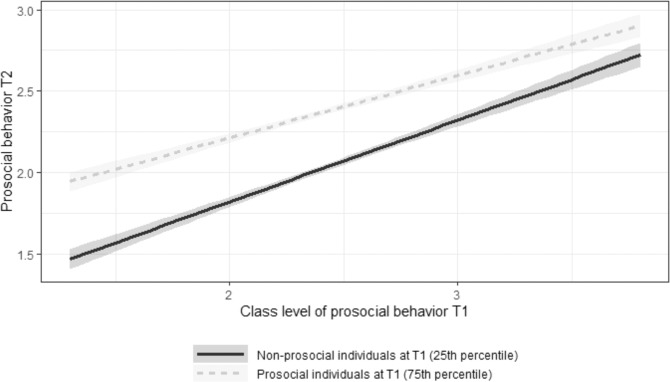
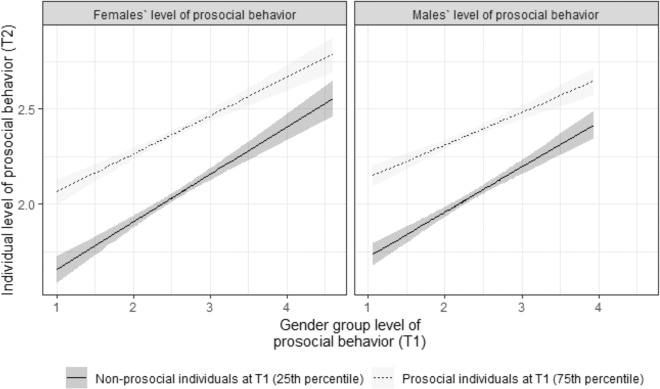
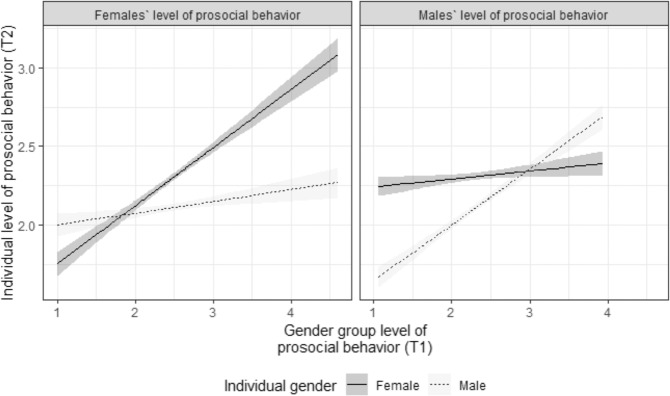
Peer groups are critical socialization agents for the development of social behavior in adolescence, but studies examining peer-group effects on individuals' prosocial behavior are scarce. Using a two-wave, multilevel data set (N = 16,893, 8481 male; 8412 female; mean age at Time 1: 14.0 years) from 1308 classes in 252 secondary schools in Germany, main effects of the classroom level of prosocial behavior, cross-level interactions between the classroom and the individual levels of prosocial behavior at Time 1, and the moderating role of gender were examined. The results showed that adolescents in classrooms with high collective levels of prosocial behavior at Time 1 reported more prosocial behavior at Time 2, about two years later, reflecting a class-level main effect. A significant cross-level interaction indicated that a high classroom level of prosocial behavior particularly affected individuals with lower levels of prosocial behavior at Time 1. The influence of same-gender peers was larger compared with opposite-gender peers. The findings are discussed with respect to social learning mechanisms in the development of prosocial behavior and their implications for interventions to promote prosocial behavior.
同伴群体是青少年社会行为发展的关键社会化因素,但关于同伴群体对个体亲社会行为影响的研究却很少。本研究使用来自德国 252 所中学的 1308 个班级的两波多层次数据集(N=16893,男性 8412 名,女性 8412 名;第 1 次时间点的平均年龄为 14.0 岁),考察了课堂亲社会行为水平的主要影响、第 1 次时间点课堂和亲社会行为个体水平之间的交叉水平交互作用,以及性别调节作用。结果表明,第 1 次时间点具有较高集体亲社会行为水平的班级中的青少年在大约两年后的第 2 次时间点报告了更多的亲社会行为,反映了班级水平的主要效应。显著的交叉水平交互作用表明,较高的课堂亲社会行为水平尤其会影响第 1 次时间点亲社会行为水平较低的个体。讨论了这些发现,涉及亲社会行为发展中的社会学习机制及其对促进亲社会行为干预的意义。