• 文献检索
  • 文档翻译
  • 深度研究
  • 学术资讯
  • Suppr Zotero 插件Zotero 插件
  • 邀请有礼
  • 套餐&价格
  • 历史记录
应用&插件
Suppr Zotero 插件Zotero 插件浏览器插件Mac 客户端Windows 客户端微信小程序
定价
高级版会员购买积分包购买API积分包
服务
文献检索文档翻译深度研究API 文档MCP 服务
关于我们
关于 Suppr公司介绍联系我们用户协议隐私条款
关注我们

Suppr 超能文献

核心技术专利:CN118964589B侵权必究
粤ICP备2023148730 号-1Suppr @ 2026

文献检索

告别复杂PubMed语法,用中文像聊天一样搜索,搜遍4000万医学文献。AI智能推荐,让科研检索更轻松。

立即免费搜索

文件翻译

保留排版,准确专业,支持PDF/Word/PPT等文件格式,支持 12+语言互译。

免费翻译文档

深度研究

AI帮你快速写综述,25分钟生成高质量综述,智能提取关键信息,辅助科研写作。

立即免费体验

咀嚼、牙齿形态和磨损在貘(Tapirus spp.)中,以及对自由放养和圈养标本的比较。

Chewing, dental morphology and wear in tapirs (Tapirus spp.) and a comparison of free-ranging and captive specimens.

机构信息

Clinic for Zoo Animals, Exotic Pets and Wildlife, Vetsuisse Faculty, University of Zurich, Zurich, Switzerland.

Department of Zoology and Entomology, University of the Free State, Bloemfontein, South Africa.

出版信息

PLoS One. 2020 Jun 15;15(6):e0234826. doi: 10.1371/journal.pone.0234826. eCollection 2020.

DOI:10.1371/journal.pone.0234826
PMID:32542033
原文链接:https://pmc.ncbi.nlm.nih.gov/articles/PMC7295239/
Abstract

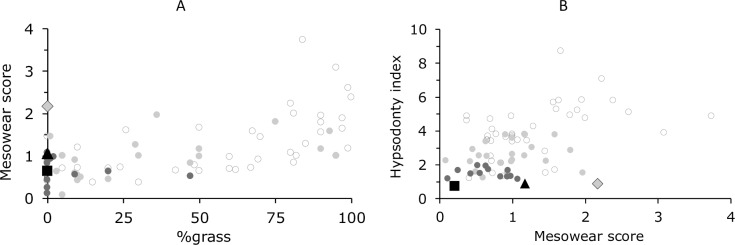
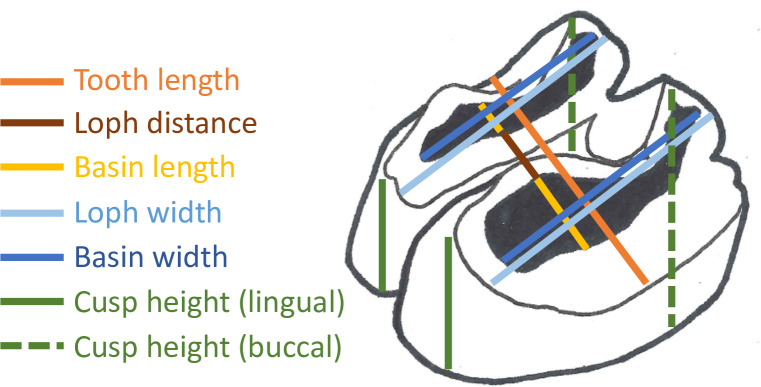
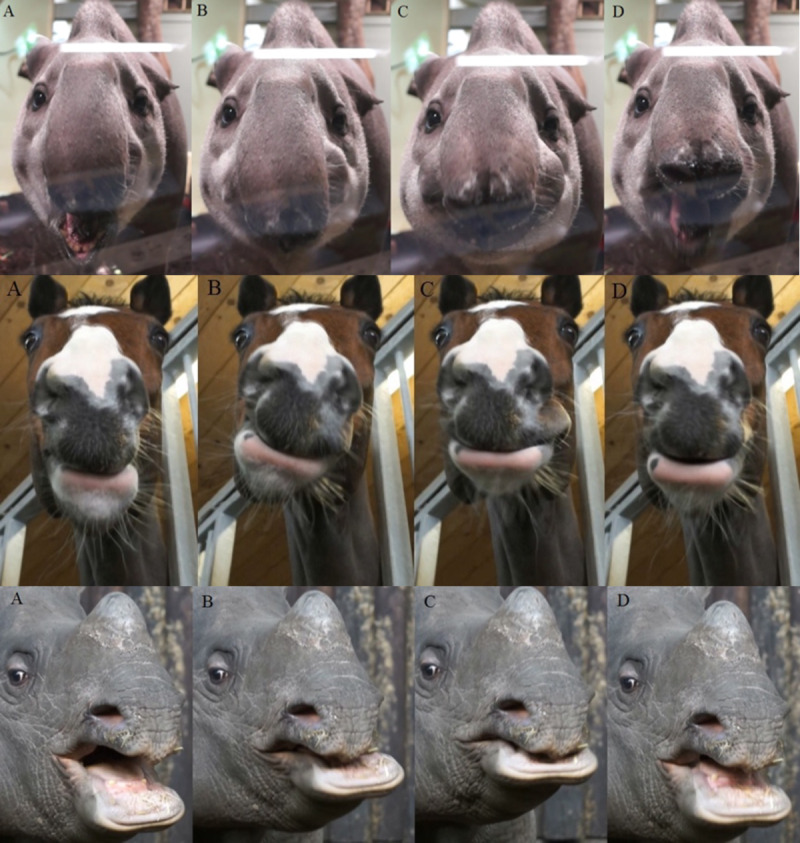
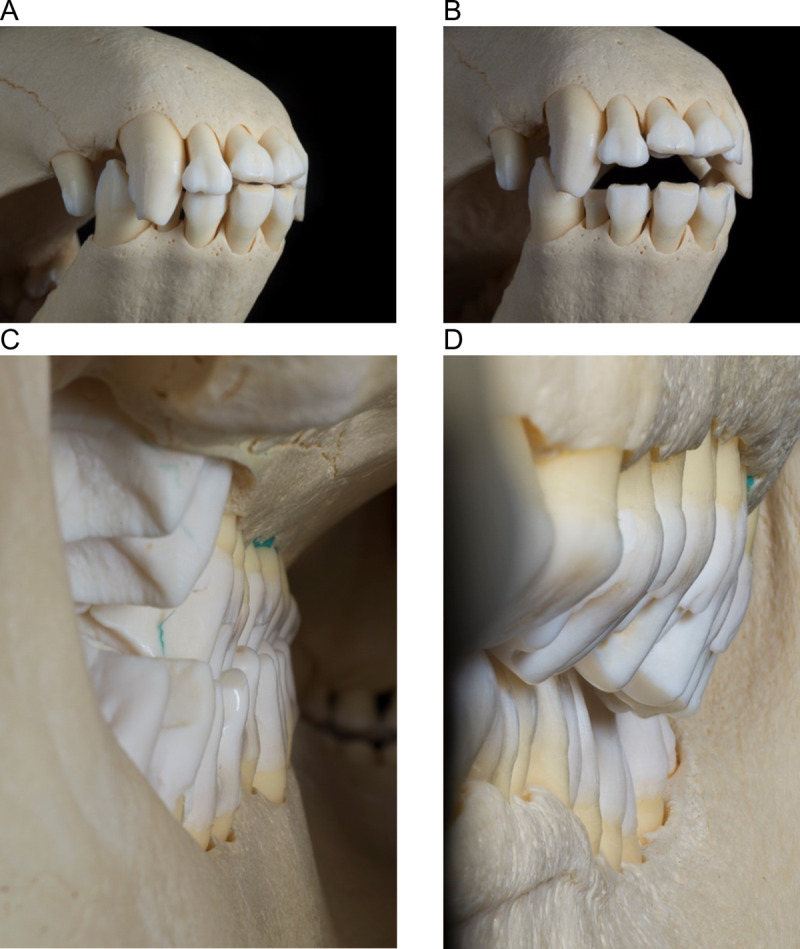
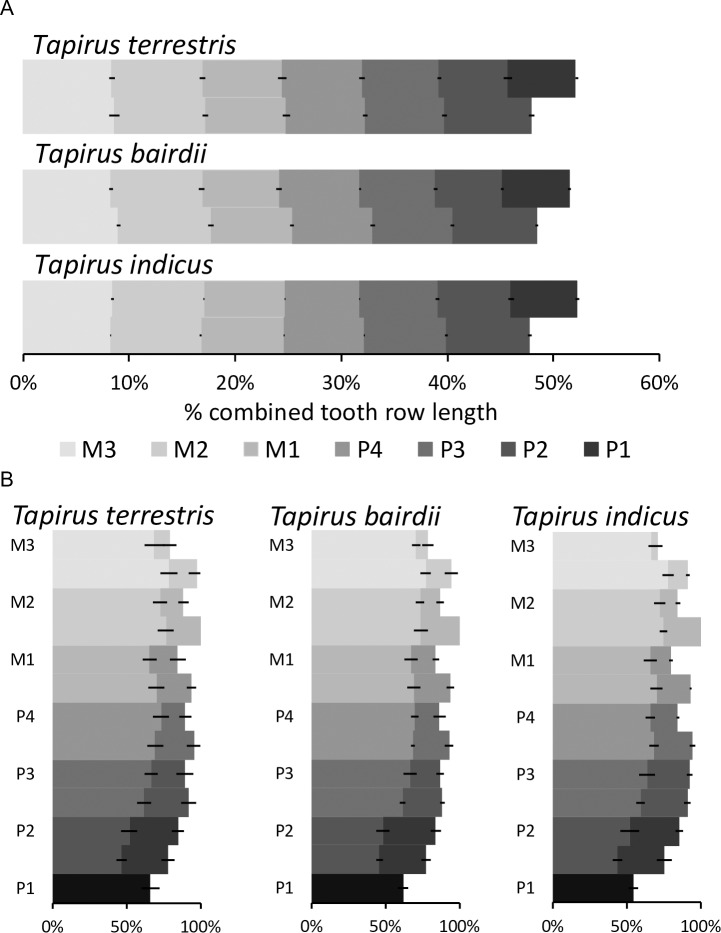
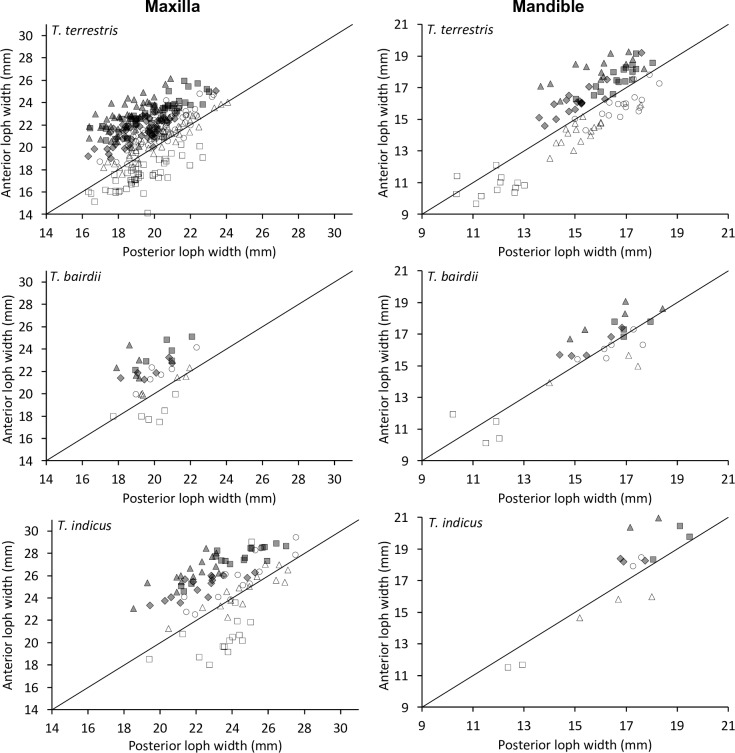
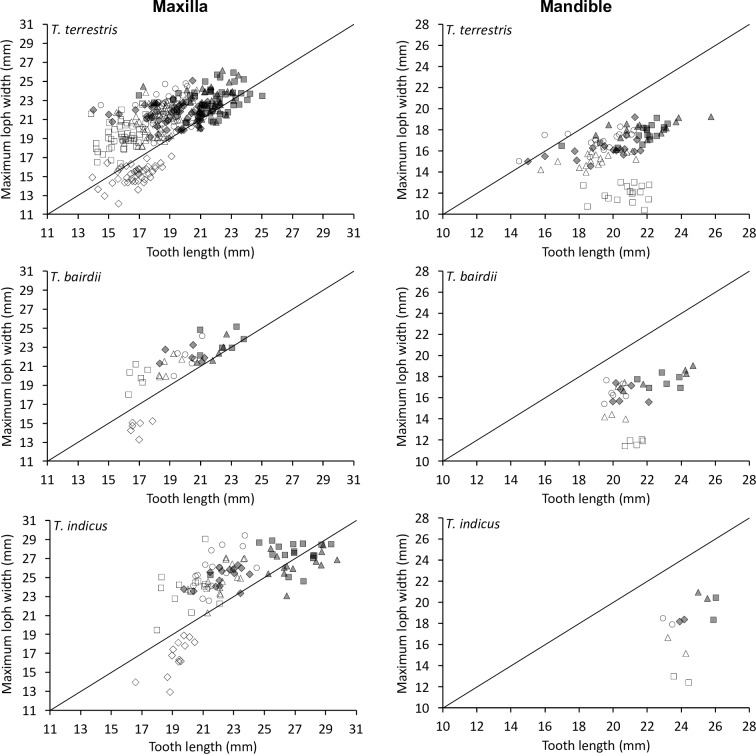
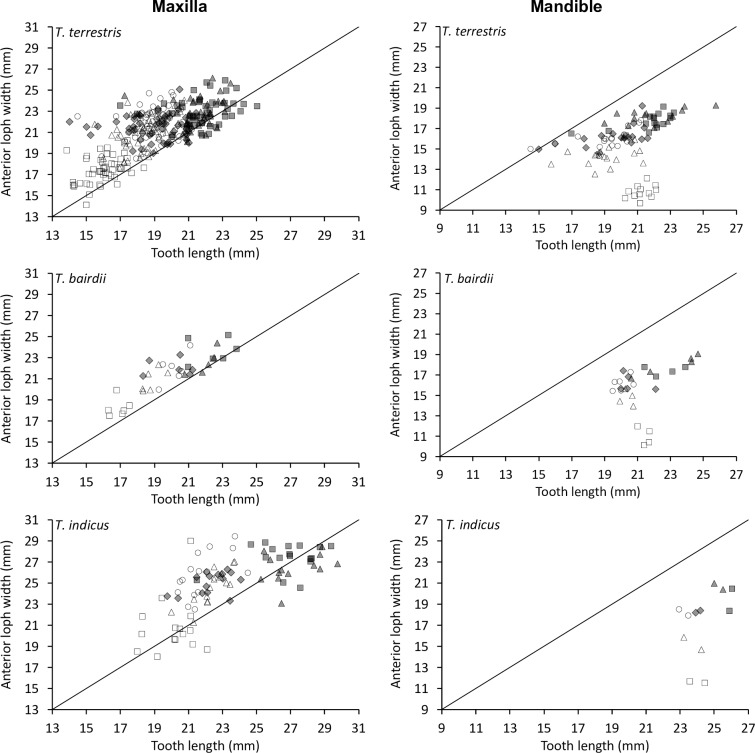
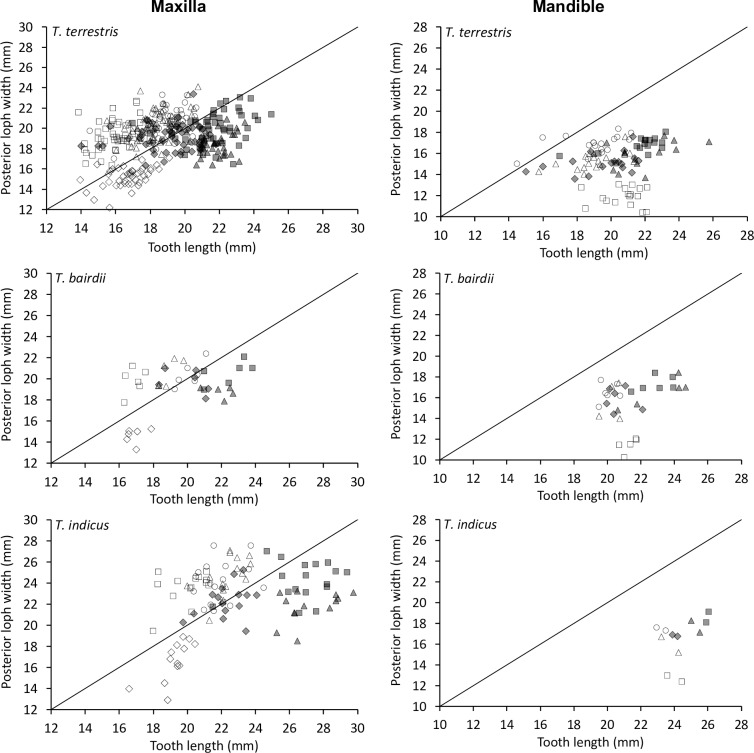
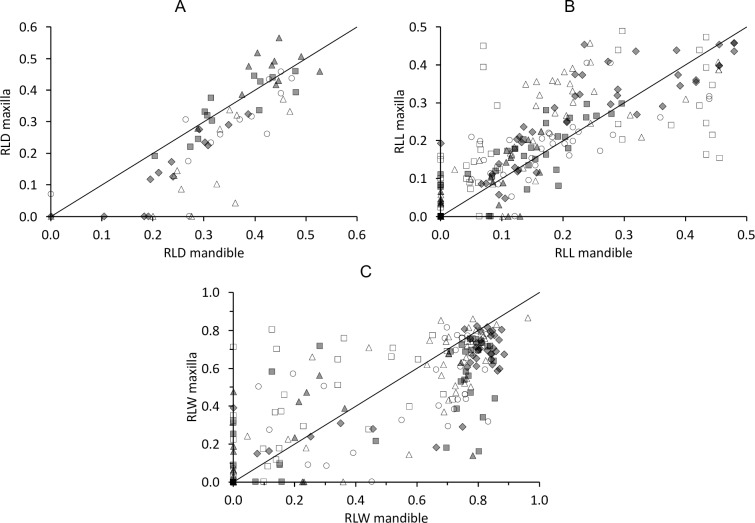
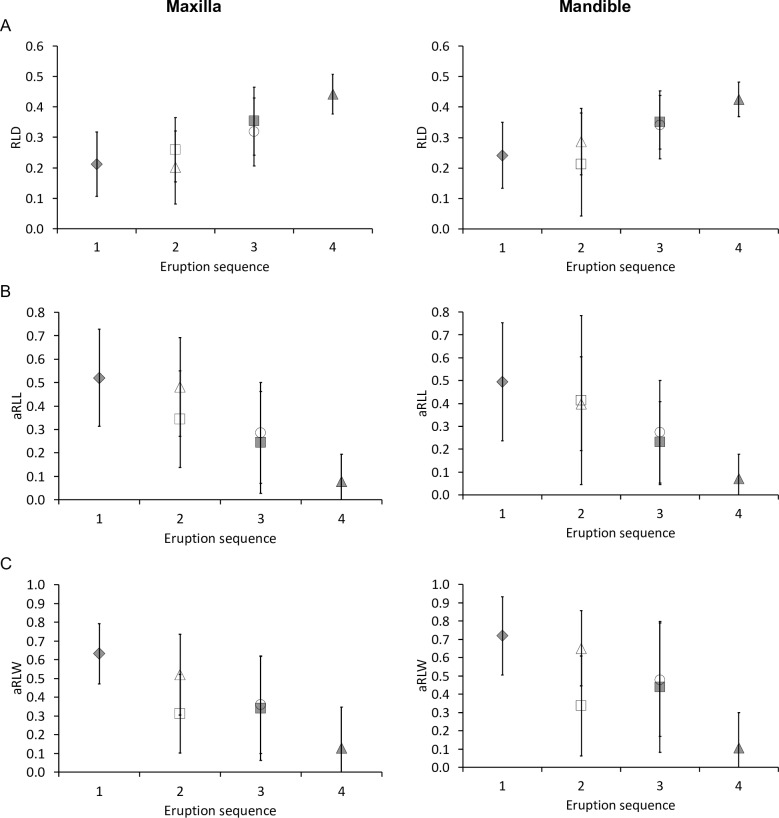
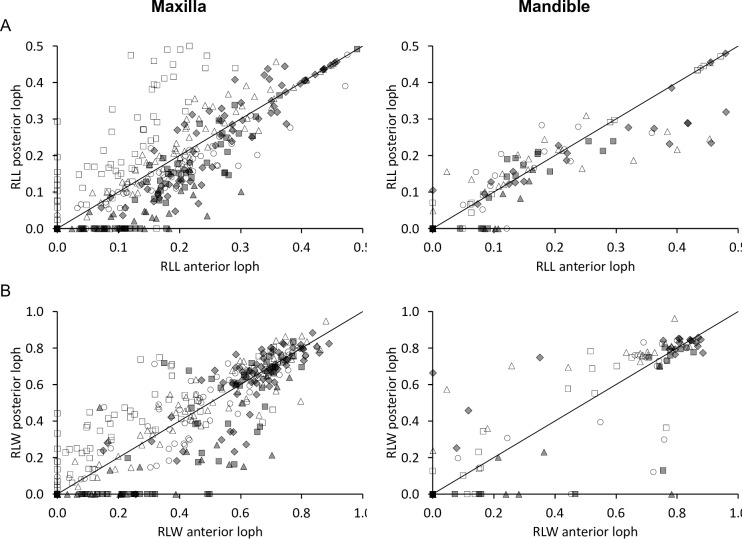
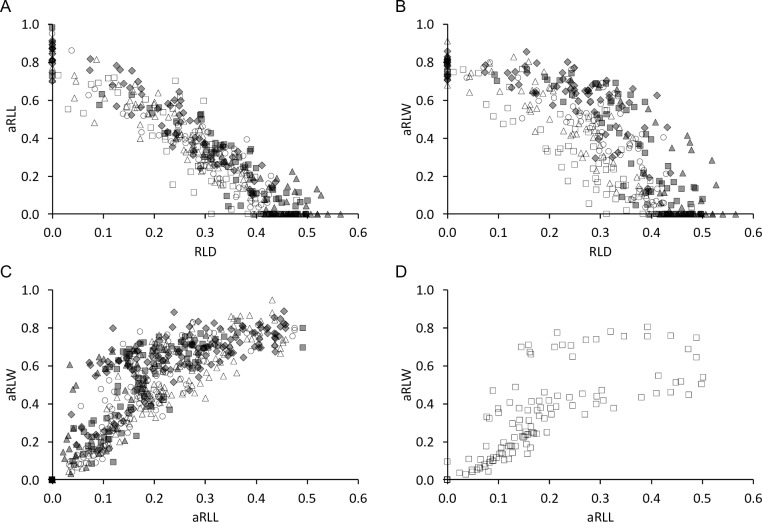
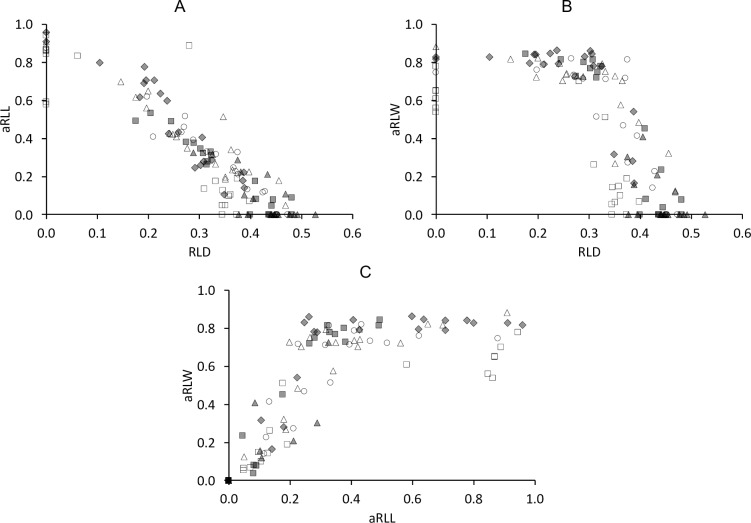
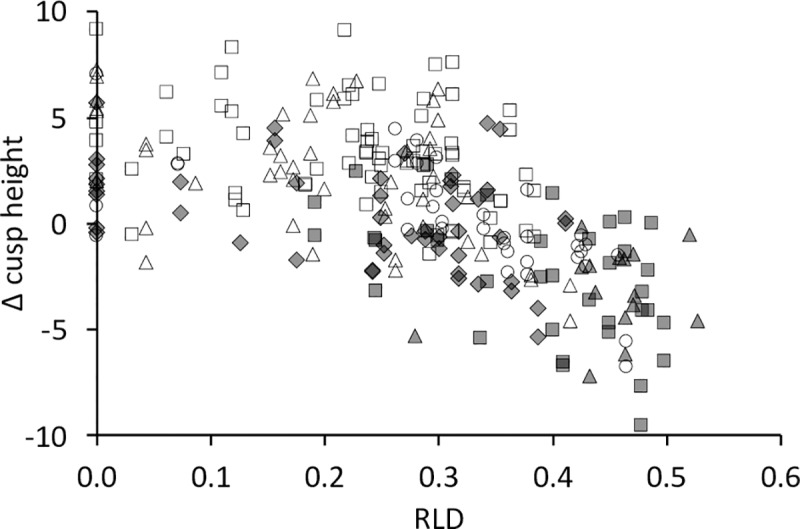
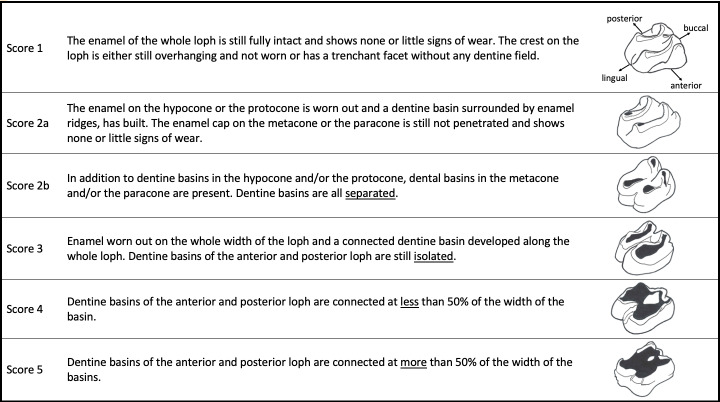
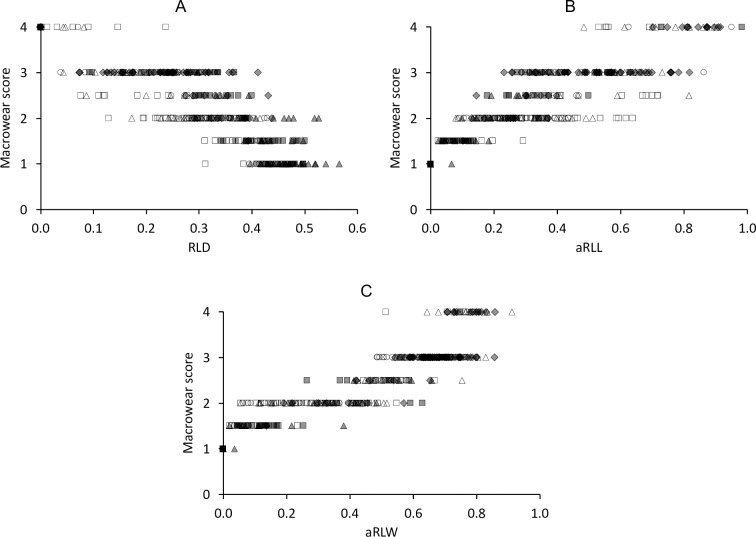
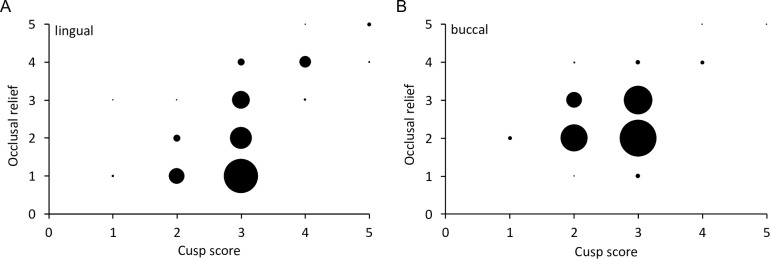
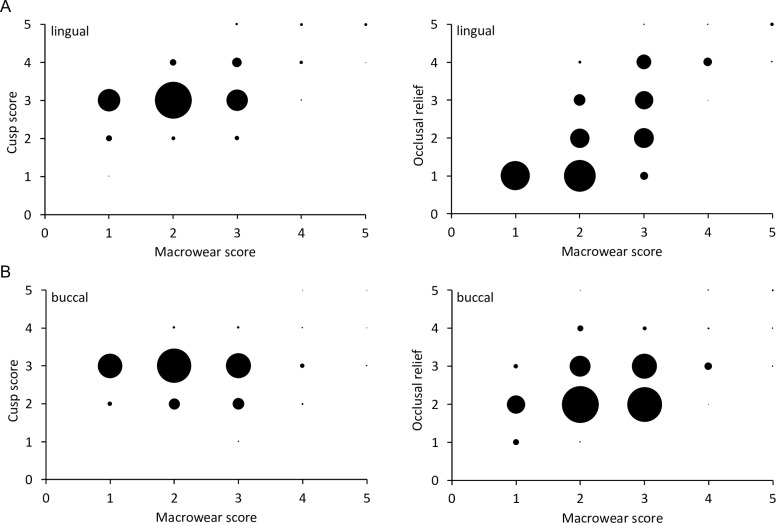
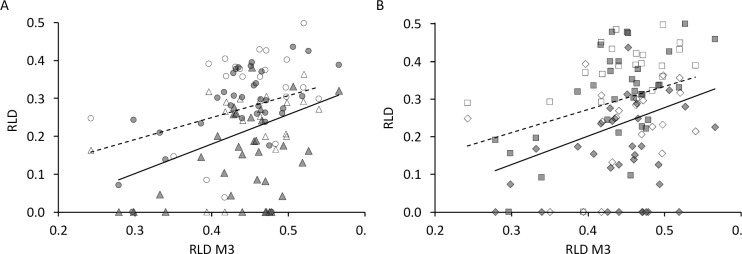
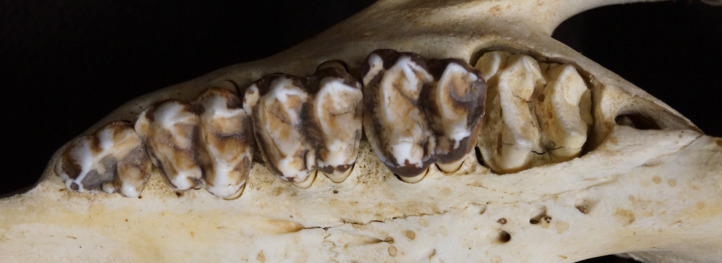
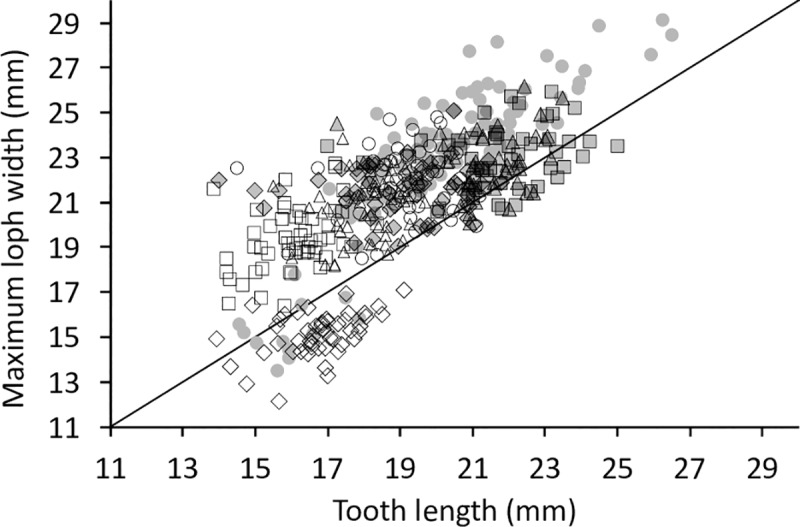
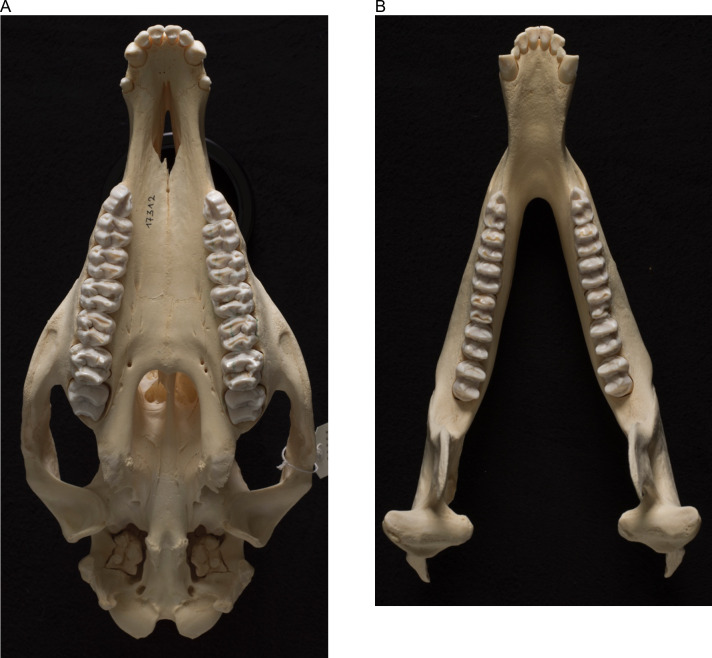
Feeding practice in herbivorous mammals can impact their dental wear, due to excessive or irregular abrasion. Previous studies indicated that browsing species display more wear when kept in zoos compared to natural habitats. Comparable analyses in tapirs do not exist, as their dental anatomy and chewing kinematics are assumed to prevent the use of macroscopic wear proxies such as mesowear. We aimed at describing tapir chewing, dental anatomy and wear, to develop a system allowing comparison of free-ranging and captive specimens even in the absence of known age. Video analyses suggest that in contrast to other perissodactyls, tapirs have an orthal (and no lateral) chewing movement. Analysing cheek teeth from 74 museum specimens, we quantified dental anatomy, determined the sequence of dental wear along the tooth row, and established several morphometric measures of wear. In doing so, we showcase that tapir maxillary teeth distinctively change their morphology during wear, developing a height differential between less worn buccal and more worn lingual cusps, and that quantitative wear corresponds to the eruption sequence. We demonstrate that mesowear scoring shows a stable signal during initial wear stages but results in a rather high mesowear score compared to other browsing herbivores. Zoo specimens had lesser or equal mesowear scores as specimens from the wild; additionally, for the same level of third molar wear, premolars and other molars of zoo specimens showed similar or less wear compared specimens from the wild. While this might be due to the traditional use of non-roughage diet items in zoo tapirs, these results indicate that in contrast to the situation in other browsers, excessive tooth wear appears to be no relevant concern in ex situ tapir management.

摘要

食草哺乳动物的饲养方式会影响其牙齿磨损,这是由于过度或不规则的磨损造成的。以前的研究表明,与自然栖息地相比,动物园中的食草动物表现出更多的磨损。在貘类中,没有类似的分析,因为它们的牙齿解剖结构和咀嚼运动学被认为可以防止使用宏观磨损代理物,如Mesowear。我们的目的是描述貘的咀嚼、牙齿解剖结构和磨损,开发一种系统,即使在没有已知年龄的情况下,也能比较自由放养和圈养的标本。视频分析表明,与其他奇蹄目动物不同,貘的咀嚼运动是 orthal(而不是 lateral)的。通过对 74 件博物馆标本的臼齿进行分析,我们量化了牙齿解剖结构,确定了沿牙齿排列的磨损顺序,并建立了几个磨损的形态测量指标。在这样做的过程中,我们展示了貘的上颌牙齿在磨损过程中明显改变了它们的形态,在磨损较少的颊侧和磨损较多的舌侧牙尖之间形成了高度差,并且定量磨损与出牙顺序相对应。我们证明,Mesowear 评分在初始磨损阶段表现出稳定的信号,但与其他食草动物相比,结果显示出相当高的 Mesowear 评分。动物园标本的 Mesowear 评分低于或等于野生标本;此外,对于相同程度的第三磨牙磨损,动物园标本的前磨牙和其他磨牙的磨损与野生标本相似或更小。虽然这可能是由于动物园中的貘传统上使用非粗饲料食物,但这些结果表明,与其他食草动物的情况相反,过度的牙齿磨损似乎不是圈养貘管理中的一个相关问题。
https://cdn.ncbi.nlm.nih.gov/pmc/blobs/26e2/7295239/33c017cb9d49/pone.0234826.g024.jpg
https://cdn.ncbi.nlm.nih.gov/pmc/blobs/26e2/7295239/b3896b86ffde/pone.0234826.g001.jpg
https://cdn.ncbi.nlm.nih.gov/pmc/blobs/26e2/7295239/1f9127e64798/pone.0234826.g002.jpg
https://cdn.ncbi.nlm.nih.gov/pmc/blobs/26e2/7295239/cb6f272fb921/pone.0234826.g003.jpg
https://cdn.ncbi.nlm.nih.gov/pmc/blobs/26e2/7295239/a3b9bfc2bb07/pone.0234826.g004.jpg
https://cdn.ncbi.nlm.nih.gov/pmc/blobs/26e2/7295239/2d560db5214c/pone.0234826.g005.jpg
https://cdn.ncbi.nlm.nih.gov/pmc/blobs/26e2/7295239/8cb311bbb635/pone.0234826.g006.jpg
https://cdn.ncbi.nlm.nih.gov/pmc/blobs/26e2/7295239/257cdecab8a2/pone.0234826.g007.jpg
https://cdn.ncbi.nlm.nih.gov/pmc/blobs/26e2/7295239/4943a6d411ff/pone.0234826.g008.jpg
https://cdn.ncbi.nlm.nih.gov/pmc/blobs/26e2/7295239/397651968a64/pone.0234826.g009.jpg
https://cdn.ncbi.nlm.nih.gov/pmc/blobs/26e2/7295239/ae30759f981f/pone.0234826.g010.jpg
https://cdn.ncbi.nlm.nih.gov/pmc/blobs/26e2/7295239/c31a4f71910e/pone.0234826.g011.jpg
https://cdn.ncbi.nlm.nih.gov/pmc/blobs/26e2/7295239/1588bf7f10ad/pone.0234826.g012.jpg
https://cdn.ncbi.nlm.nih.gov/pmc/blobs/26e2/7295239/d78bd9d24444/pone.0234826.g013.jpg
https://cdn.ncbi.nlm.nih.gov/pmc/blobs/26e2/7295239/f8d9231d9e75/pone.0234826.g014.jpg
https://cdn.ncbi.nlm.nih.gov/pmc/blobs/26e2/7295239/a73b4c7644a5/pone.0234826.g015.jpg
https://cdn.ncbi.nlm.nih.gov/pmc/blobs/26e2/7295239/61cbee6e4008/pone.0234826.g016.jpg
https://cdn.ncbi.nlm.nih.gov/pmc/blobs/26e2/7295239/b4fae12b5cb9/pone.0234826.g017.jpg
https://cdn.ncbi.nlm.nih.gov/pmc/blobs/26e2/7295239/267037eaf37c/pone.0234826.g018.jpg
https://cdn.ncbi.nlm.nih.gov/pmc/blobs/26e2/7295239/843d1177d625/pone.0234826.g019.jpg
https://cdn.ncbi.nlm.nih.gov/pmc/blobs/26e2/7295239/b3c3079f38e6/pone.0234826.g020.jpg
https://cdn.ncbi.nlm.nih.gov/pmc/blobs/26e2/7295239/df89464d6d46/pone.0234826.g021.jpg
https://cdn.ncbi.nlm.nih.gov/pmc/blobs/26e2/7295239/f927f5b34c8c/pone.0234826.g022.jpg
https://cdn.ncbi.nlm.nih.gov/pmc/blobs/26e2/7295239/a703b7c989b9/pone.0234826.g023.jpg
https://cdn.ncbi.nlm.nih.gov/pmc/blobs/26e2/7295239/33c017cb9d49/pone.0234826.g024.jpg
https://cdn.ncbi.nlm.nih.gov/pmc/blobs/26e2/7295239/b3896b86ffde/pone.0234826.g001.jpg
https://cdn.ncbi.nlm.nih.gov/pmc/blobs/26e2/7295239/1f9127e64798/pone.0234826.g002.jpg
https://cdn.ncbi.nlm.nih.gov/pmc/blobs/26e2/7295239/cb6f272fb921/pone.0234826.g003.jpg
https://cdn.ncbi.nlm.nih.gov/pmc/blobs/26e2/7295239/a3b9bfc2bb07/pone.0234826.g004.jpg
https://cdn.ncbi.nlm.nih.gov/pmc/blobs/26e2/7295239/2d560db5214c/pone.0234826.g005.jpg
https://cdn.ncbi.nlm.nih.gov/pmc/blobs/26e2/7295239/8cb311bbb635/pone.0234826.g006.jpg
https://cdn.ncbi.nlm.nih.gov/pmc/blobs/26e2/7295239/257cdecab8a2/pone.0234826.g007.jpg
https://cdn.ncbi.nlm.nih.gov/pmc/blobs/26e2/7295239/4943a6d411ff/pone.0234826.g008.jpg
https://cdn.ncbi.nlm.nih.gov/pmc/blobs/26e2/7295239/397651968a64/pone.0234826.g009.jpg
https://cdn.ncbi.nlm.nih.gov/pmc/blobs/26e2/7295239/ae30759f981f/pone.0234826.g010.jpg
https://cdn.ncbi.nlm.nih.gov/pmc/blobs/26e2/7295239/c31a4f71910e/pone.0234826.g011.jpg
https://cdn.ncbi.nlm.nih.gov/pmc/blobs/26e2/7295239/1588bf7f10ad/pone.0234826.g012.jpg
https://cdn.ncbi.nlm.nih.gov/pmc/blobs/26e2/7295239/d78bd9d24444/pone.0234826.g013.jpg
https://cdn.ncbi.nlm.nih.gov/pmc/blobs/26e2/7295239/f8d9231d9e75/pone.0234826.g014.jpg
https://cdn.ncbi.nlm.nih.gov/pmc/blobs/26e2/7295239/a73b4c7644a5/pone.0234826.g015.jpg
https://cdn.ncbi.nlm.nih.gov/pmc/blobs/26e2/7295239/61cbee6e4008/pone.0234826.g016.jpg
https://cdn.ncbi.nlm.nih.gov/pmc/blobs/26e2/7295239/b4fae12b5cb9/pone.0234826.g017.jpg
https://cdn.ncbi.nlm.nih.gov/pmc/blobs/26e2/7295239/267037eaf37c/pone.0234826.g018.jpg
https://cdn.ncbi.nlm.nih.gov/pmc/blobs/26e2/7295239/843d1177d625/pone.0234826.g019.jpg
https://cdn.ncbi.nlm.nih.gov/pmc/blobs/26e2/7295239/b3c3079f38e6/pone.0234826.g020.jpg
https://cdn.ncbi.nlm.nih.gov/pmc/blobs/26e2/7295239/df89464d6d46/pone.0234826.g021.jpg
https://cdn.ncbi.nlm.nih.gov/pmc/blobs/26e2/7295239/f927f5b34c8c/pone.0234826.g022.jpg
https://cdn.ncbi.nlm.nih.gov/pmc/blobs/26e2/7295239/a703b7c989b9/pone.0234826.g023.jpg
https://cdn.ncbi.nlm.nih.gov/pmc/blobs/26e2/7295239/33c017cb9d49/pone.0234826.g024.jpg

相似文献

1
Chewing, dental morphology and wear in tapirs (Tapirus spp.) and a comparison of free-ranging and captive specimens.咀嚼、牙齿形态和磨损在貘(Tapirus spp.)中,以及对自由放养和圈养标本的比较。
PLoS One. 2020 Jun 15;15(6):e0234826. doi: 10.1371/journal.pone.0234826. eCollection 2020.
2
Comparative analyses of tooth wear in free-ranging and captive wild equids.自由放养和圈养野生马科动物牙齿磨损的比较分析。
Equine Vet J. 2016 Mar;48(2):240-5. doi: 10.1111/evj.12408. Epub 2015 Apr 22.
3
DENTAL LESIONS IN THE LOWLAND TAPIR (TAPIRUS TERRESTRIS).低地貘(南美貘)的牙齿病变
J Zoo Wildl Med. 2015 Jun;46(2):363-6. doi: 10.1638/2013-0198R2.1.
4
Tooth wear in captive giraffes (Giraffa camelopardalis): mesowear analysis classifies free-ranging specimens as browsers but captive ones as grazers.圈养长颈鹿(长颈鹿属)的牙齿磨损:中磨损分析将野生长颈鹿标本归类为食叶动物,但圈养长颈鹿标本归类为食草动物。
J Zoo Wildl Med. 2007 Sep;38(3):433-45. doi: 10.1638/06-032.1.
5
Resorptive tooth root lesions in the Malayan tapir (Tapirus indicus).马来貘(印度貘)的吸收性牙根病变。
J Zoo Wildl Med. 2011 Mar;42(1):40-3. doi: 10.1638/2009-0247.1.
6
Effects of climate on dental mesowear of extant koalas and two broadly distributed kangaroos throughout their geographic range.气候对现存树袋熊和两种广泛分布的袋鼠牙齿微观磨蚀特征的影响及其地理分布范围。
PLoS One. 2018 Aug 22;13(8):e0201962. doi: 10.1371/journal.pone.0201962. eCollection 2018.
7
Chewing, dentition and tooth wear in Hippopotamidae (Hippopotamus amphibius and Choeropsis liberiensis).河马科(河马和非洲野驴)的咀嚼、齿列和牙齿磨损。
PLoS One. 2023 Oct 4;18(10):e0291825. doi: 10.1371/journal.pone.0291825. eCollection 2023.
8
A three-dimensional morphometric analysis of upper forelimb morphology in the enigmatic tapir (Perissodactyla: Tapirus) hints at subtle variations in locomotor ecology.对神秘貘(奇蹄目:貘属)前肢上部形态的三维形态测量分析揭示了其运动生态学的细微差异。
J Morphol. 2016 Nov;277(11):1469-1485. doi: 10.1002/jmor.20588. Epub 2016 Aug 13.
9
Interspecific variation in the tetradactyl manus of modern tapirs (Perissodactyla: Tapirus) exposed using geometric morphometrics.利用几何形态测量学揭示现代貘(奇蹄目:貘属)四指 manus 的种间变异。 (注:manus 可能是 manus manus 的错误表述,这里按照正确的理解翻译为“手”,完整表述应该是“利用几何形态测量学揭示现代貘(奇蹄目:貘属)四指手的种间变异。” 但严格按照要求,不添加解释说明,就按上述译文呈现)
J Morphol. 2017 Nov;278(11):1517-1535. doi: 10.1002/jmor.20728. Epub 2017 Jul 13.
10
Retention of fluid and particles in captive tapirs (Tapirus sp.).圈养貘(Tapirus sp.)中液体和颗粒的滞留。
Comp Biochem Physiol A Mol Integr Physiol. 2010 Sep;157(1):95-101. doi: 10.1016/j.cbpa.2010.03.029. Epub 2010 Apr 2.

引用本文的文献

1
Avoiding the lockdown: Morphological facilitation of transversal chewing movements in mammals.避免封锁:哺乳动物横向咀嚼运动的形态促进作用。
J Morphol. 2023 Feb;284(2):e21554. doi: 10.1002/jmor.21554.
2
Dental wear proxy correlation in a long-term feeding experiment on sheep ().羊长期喂养实验中的牙齿磨损代用品相关性()。
J R Soc Interface. 2021 Jul;18(180):20210139. doi: 10.1098/rsif.2021.0139. Epub 2021 Jul 21.

本文引用的文献

1
The history of mesowear: a review.中磨损的历史:综述
PeerJ. 2020 Feb 13;8:e8519. doi: 10.7717/peerj.8519. eCollection 2020.
2
The temporal scale of diet and dietary proxies.饮食及饮食替代指标的时间尺度。
Ecol Evol. 2016 Mar 2;6(6):1883-97. doi: 10.1002/ece3.2054. eCollection 2016 Mar.
3
Comparative analyses of tooth wear in free-ranging and captive wild equids.自由放养和圈养野生马科动物牙齿磨损的比较分析。
Equine Vet J. 2016 Mar;48(2):240-5. doi: 10.1111/evj.12408. Epub 2015 Apr 22.
4
Diet of lowland tapir (Tapirus terrestris) in El Rey National Park, Salta, Argentina.阿根廷萨尔塔省埃尔雷伊国家公园低地貘(南美貘)的饮食
Integr Zool. 2013 Mar;8(1):48-56. doi: 10.1111/j.1749-4877.2012.12009.x.
5
Frugivory and seed dispersal by tapirs: an insight on their ecological role.貘的食果行为与种子传播:对其生态作用的洞察
Integr Zool. 2013 Mar;8(1):4-17. doi: 10.1111/j.1749-4877.2012.00316.x.
6
Tapir health and conservation medicine.貘类健康与保护医学
Integr Zool. 2012 Dec;7(4):331-345. doi: 10.1111/j.1749-4877.2012.00323.x.
7
Resorptive tooth root lesions in the Malayan tapir (Tapirus indicus).马来貘(印度貘)的吸收性牙根病变。
J Zoo Wildl Med. 2011 Mar;42(1):40-3. doi: 10.1638/2009-0247.1.
8
A case study of Malayan tapir (Tapirus indicus) husbandry practice across 10 zoological collections.一项关于马来貘(印度貘)在10个动物园饲养实践的案例研究。
Zoo Biol. 2013 May-Jun;32(3):347-56. doi: 10.1002/zoo.21018. Epub 2012 May 18.
9
Botany, genetics and ethnobotany: a crossed investigation on the elusive tapir's diet in French Guiana.植物学、遗传学和民族植物学:对法属圭亚那难以捉摸的貘饮食的交叉调查。
PLoS One. 2011;6(10):e25850. doi: 10.1371/journal.pone.0025850. Epub 2011 Oct 3.
10
Mating system, feeding type and ex situ conservation effort determine life expectancy in captive ruminants.交配系统、摄食类型和异地保护措施决定了圈养反刍动物的预期寿命。
Proc Biol Sci. 2011 Jul 7;278(1714):2076-80. doi: 10.1098/rspb.2010.2275. Epub 2010 Dec 8.