Department of Infectious Disease, Shengjing Hospital of China Medical University, Shenyang 110004, China.
Laboratory of Biomaterials and Translational Medicine, The Third Affiliated Hospital, Sun Yat-Sen University, Guangzhou 510630, China.
Int J Med Sci. 2020 May 18;17(9):1246-1256. doi: 10.7150/ijms.42956. eCollection 2020.
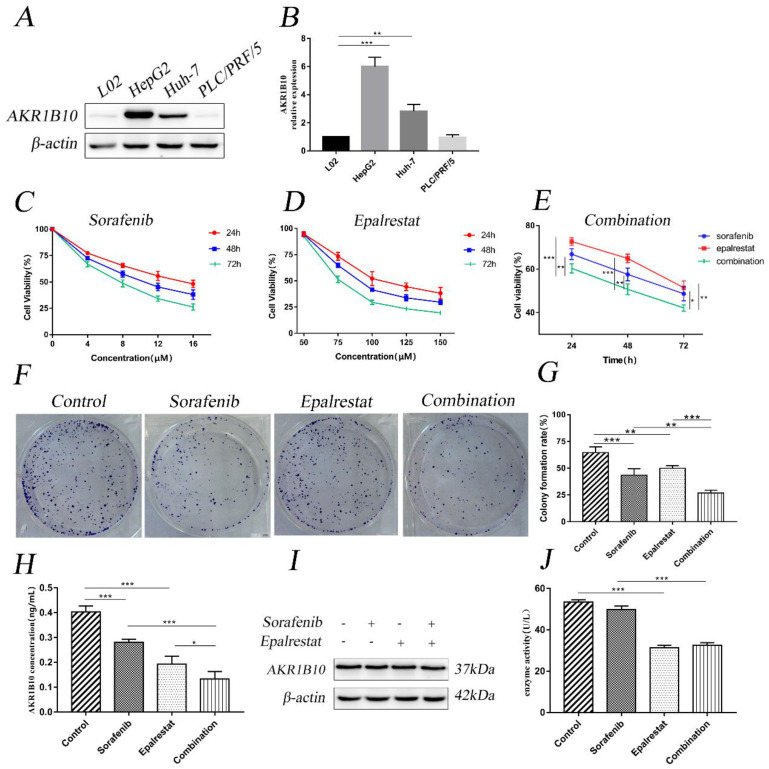
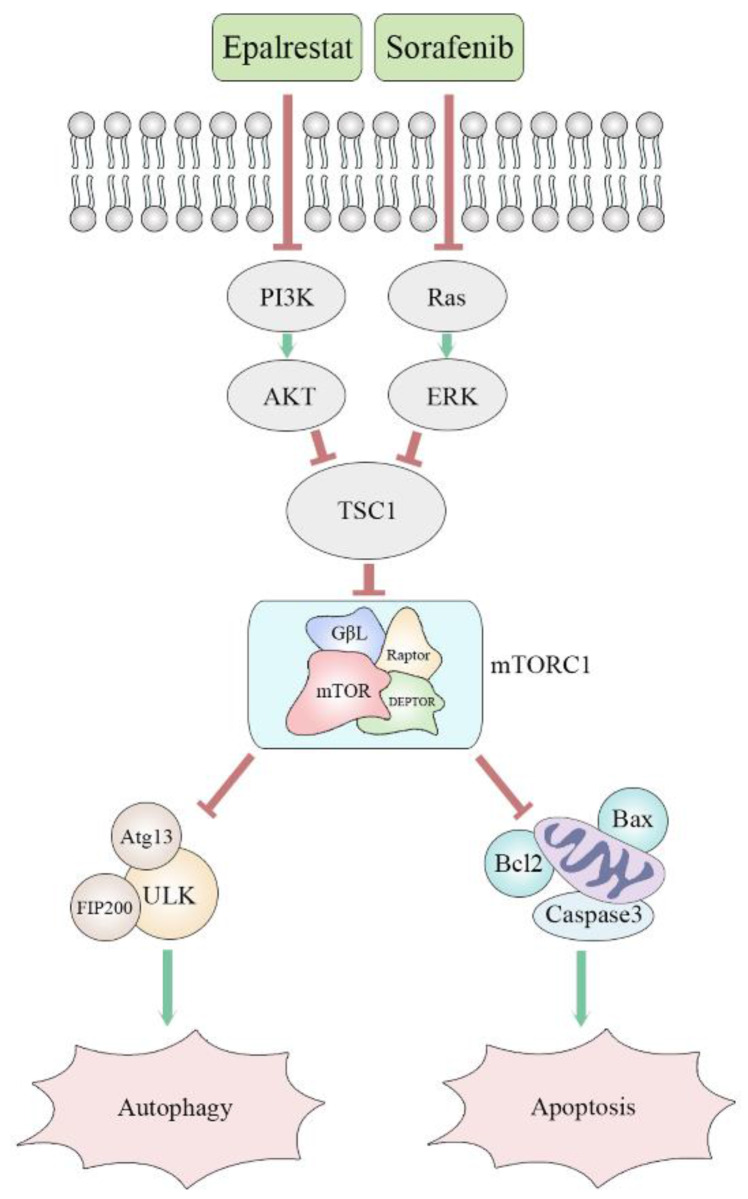
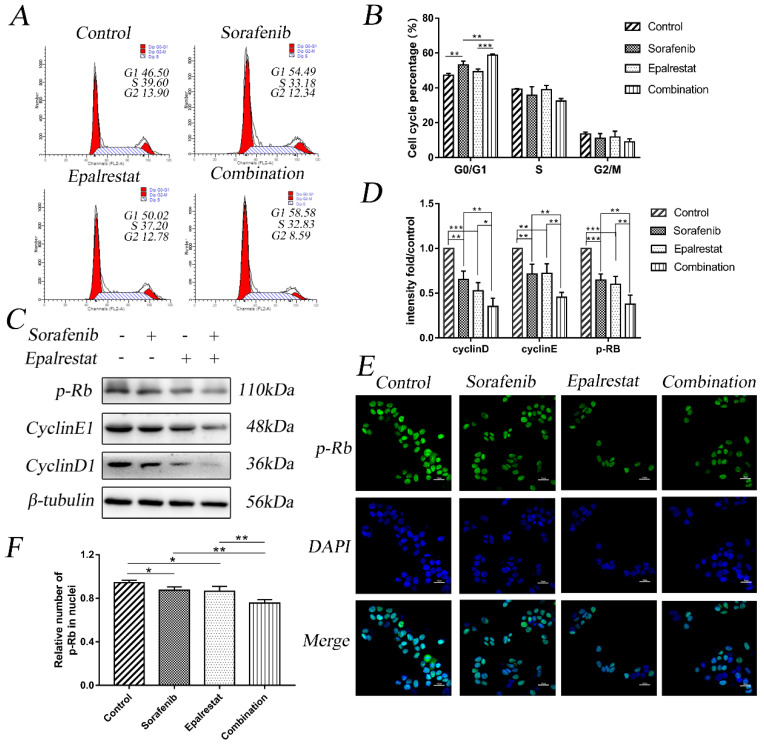
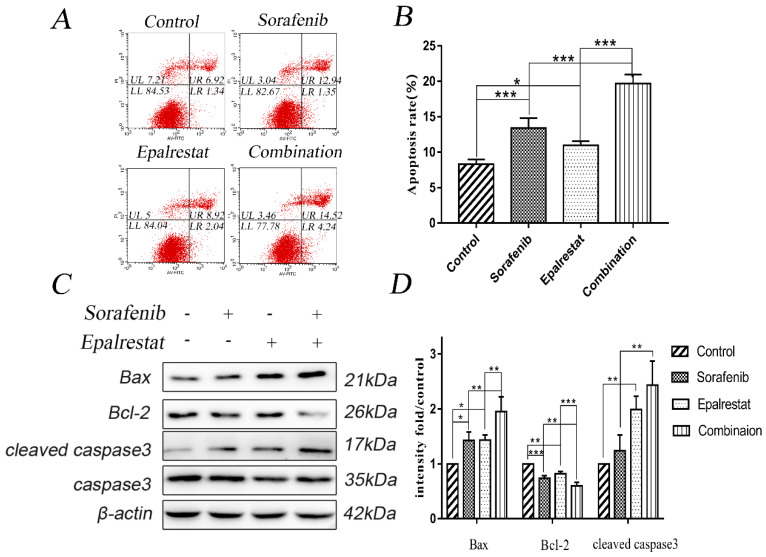
Sorafenib is the standard systemic treatment for advanced hepatocellular carcinoma (HCC), and improving its therapeutic effects is crucial for addressing cancer aggression. We previously reported that epalrestat, an aldo-keto reductase 1B10 inhibitor, enhanced sorafenib's inhibitory effects on HCC xenograft in nude mice. This study aimed to elucidate the mechanism of epalrestat's anti-tumour enhancing effects on sorafenib. HepG2 cells were treated with sorafenib, epalrestat, and their combination. Cell proliferation was assessed with Cell Counting Kit-8 and colony formation assays. AKR1B10 supernate concentration and enzyme activity were detected by ELISA assay and the decrease of optical density of NADPH at 340 nm. Cell cycle and apoptosis analyses were performed with flow cytometry. Western blots clarified the molecular mechanism underlying effects on cell cycle, apoptosis, and autophagy. The anti-tumour mechanism was then validated through TUNEL and immunohistochemistry staining of HCC xenograft sections. Epalrestat combined with sorafenib inhibited HepG2 cellular proliferation , arrested the cell cycle at G0/G1, and promoted apoptosis and autophagy. Treatment with a specific mTOR activator MHY-1485 increased mTOR phosphorylation, while suppressing apoptosis and autophagy. Consistent with results, data from the HCC-xenograft nude mouse model also indicated that combined treatment inhibited the mTOR pathway and promoted apoptosis and autophagy. In conclusion, epalrestat heightens sorafenib's anti-cancer effects via blocking the mTOR pathway, thus inducing cell cycle arrest, apoptosis, and autophagy.
索拉非尼是治疗晚期肝细胞癌(HCC)的标准系统治疗方法,提高其治疗效果对于解决癌症侵袭至关重要。我们之前报道过,醛酮还原酶 1B10(AKR1B10)抑制剂依帕司他增强了索拉非尼对裸鼠 HCC 异种移植物的抑制作用。本研究旨在阐明依帕司他增强索拉非尼抗肿瘤作用的机制。用索拉非尼、依帕司他及其组合处理 HepG2 细胞。用细胞计数试剂盒-8 和集落形成测定法评估细胞增殖。通过 ELISA 测定法和 NADPH 在 340nm 处的光密度降低检测 AKR1B10 上清液浓度和酶活性。通过流式细胞术进行细胞周期和凋亡分析。Western blot 阐明了对细胞周期、凋亡和自噬影响的分子机制。然后通过 HCC 异种移植切片的 TUNEL 和免疫组织化学染色验证了抗肿瘤机制。依帕司他与索拉非尼联合抑制 HepG2 细胞增殖,将细胞周期阻滞在 G0/G1 期,并促进凋亡和自噬。用特异性 mTOR 激活剂 MHY-1485 处理可增加 mTOR 磷酸化,同时抑制凋亡和自噬。与结果一致,来自 HCC-异种移植裸鼠模型的数据也表明联合治疗抑制了 mTOR 通路并促进了凋亡和自噬。总之,依帕司他通过阻断 mTOR 通路增强了索拉非尼的抗癌作用,从而诱导细胞周期停滞、凋亡和自噬。