Roitberg Evgeny S, Orlova Valentina F, Bulakhova Nina A, Kuranova Valentina N, Eplanova Galina V, Zinenko Oleksandr I, Arribas Oscar, Kratochvíl Lukáš, Ljubisavljević Katarina, Starikov Vladimir P, Strijbosch Henk, Hofmann Sylvia, Leontyeva Olga A, Böhme Wolfgang
Zoological Research Museum Alexander Koenig Bonn Germany.
Zoological Research Museum Moscow M.V. Lomonosov State University Moscow Russia.
Ecol Evol. 2020 May 6;10(11):4531-4561. doi: 10.1002/ece3.6077. eCollection 2020 Jun.
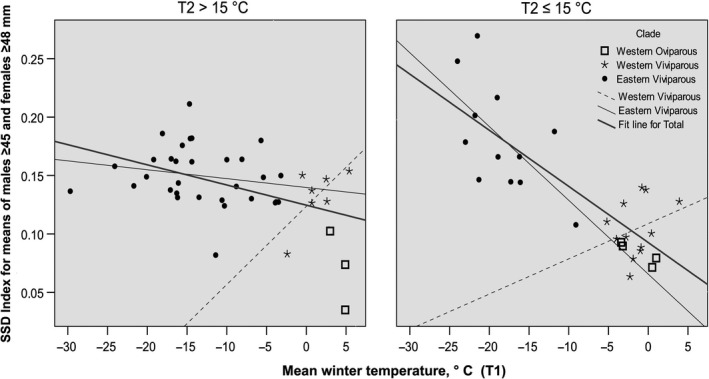
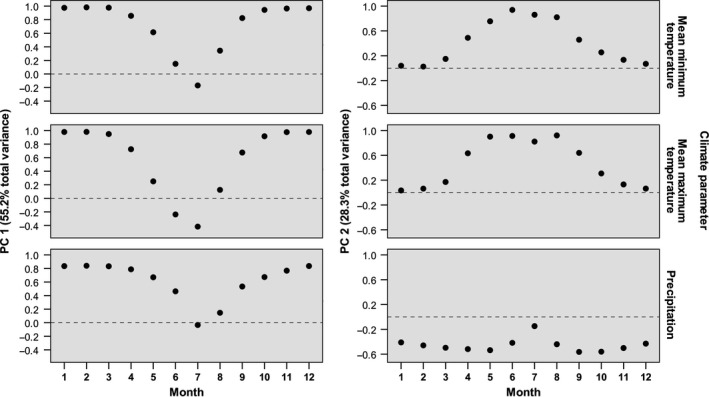
Reproductive mode, ancestry, and climate are hypothesized to determine body size variation in reptiles but their effects have rarely been estimated simultaneously, especially at the intraspecific level. The common lizard () occupies almost the entire Northern Eurasia and includes viviparous and oviparous lineages, thus representing an excellent model for such studies. Using body length data for >10,000 individuals from 72 geographically distinct populations over the species' range, we analyzed how sex-specific adult body size and sexual size dimorphism (SSD) is associated with reproductive mode, lineage identity, and several climatic variables. Variation in male size was low and poorly explained by our predictors. In contrast, female size and SSD varied considerably, demonstrating significant effects of reproductive mode and particularly seasonality. Populations of the western oviparous lineage (northern Spain, south-western France) exhibited a smaller female size and less female-biased SSD than those of the western viviparous (France to Eastern Europe) and the eastern viviparous (Eastern Europe to Far East) lineages; this pattern persisted even after controlling for climatic effects. The phenotypic response to seasonality was complex: across the lineages, as well as within the eastern viviparous lineage, female size and SSD increase with increasing seasonality, whereas the western viviparous lineage followed the opposing trends. Altogether, viviparous populations seem to follow a saw-tooth geographic cline, which might reflect the nonmonotonic relationship of body size at maturity in females with the length of activity season. This relationship is predicted to arise in perennial ectotherms as a response to environmental constraints caused by seasonality of growth and reproduction. The SSD allometry followed the converse of Rensch's rule, a rare pattern for amniotes. Our results provide the first evidence of opposing body sizeclimate relationships in intraspecific units.
繁殖方式、祖先起源和气候被假定为决定爬行动物体型变化的因素,但它们的影响很少被同时评估,尤其是在种内水平上。普通蜥蜴()几乎占据了整个欧亚大陆北部,包括胎生和卵生谱系,因此是此类研究的一个极佳模型。利用该物种分布范围内72个地理上不同种群的10000多个个体的体长数据,我们分析了特定性别的成年体型和两性异形(SSD)如何与繁殖方式、谱系身份以及几个气候变量相关联。雄性体型的变化较小,我们的预测因子对其解释能力较差。相比之下,雌性体型和SSD变化很大,显示出繁殖方式尤其是季节性的显著影响。西部卵生谱系(西班牙北部、法国西南部)的种群与西部胎生(法国至东欧)和东部胎生(东欧至远东)谱系的种群相比,雌性体型较小,SSD的雌性偏向性也较小;即使在控制了气候影响之后,这种模式仍然存在。对季节性的表型反应很复杂:在各个谱系中,以及在东部胎生谱系内,雌性体型和SSD随着季节性增加而增加,而西部胎生谱系则呈现相反的趋势。总体而言,胎生种群似乎遵循锯齿状地理渐变,这可能反映了雌性成熟时体型与活动季节长度之间的非单调关系。预计这种关系会在多年生变温动物中出现,作为对生长和繁殖季节性所造成的环境限制的一种反应。SSD异速生长遵循了与伦施法则相反的规律,这在羊膜动物中是一种罕见的模式。我们的结果提供了种内单元中体型与气候关系相反的首个证据。