Joint Laboratory of Ecological Urban Design (Research Centre for Land Ecological Planning, Design and Environmental Effects; International Joint Research Centre of Urban-Rural Ecological Planning and Design), College of Architecture and Urban Planning, Tongji University, Shanghai, China.
Bioinformatics Center, College of Biology, Hunan University, Changsha, Hunan, China.
Sci Rep. 2020 Jun 18;10(1):9905. doi: 10.1038/s41598-020-66527-3.
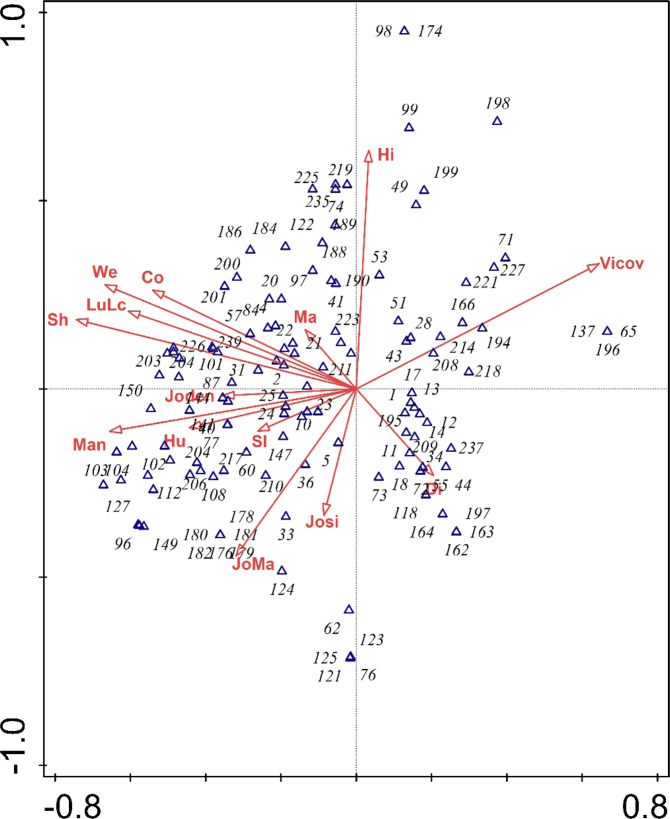
Within urban environment with high-rise buildings and structures, walls represent the most common vertical spaces. Conventionally, such spaces are viewed as abiotic areas, where spontaneous flora is neglected. Through investigations in a typical mountainous city Chongqing, this study concerns the spontaneous species diversity on walls and the influences of wall factors and the adjacent environment. A total of 239 vascular plant species belonging to 172 genera and 75 families were found; 90% of the species are indigenous. More fern species inhabit walls, compared with xerophytes that dominate general urban environment. Variation partitioning indicated that wall attributes played a more important role in explaining the total variation in wall vegetation composition and structure than did the adjacent environment. Given that there are limited possibilities to extend more green space in urban land environment, we support a "let Nature take its course" approach to improve urban biodiversity, where vertical urban space with spontaneous flora can act as a valuable complement to biodiversity and ecosystem services in dense urban environment. This study should raise urban designers' and ecosystem managers' awareness of the possibilities of this type of informal, unconventional habitat as a "supplement" for urban greening and landscaping.
在高楼林立的城市环境中,墙壁代表着最常见的垂直空间。传统上,这些空间被视为非生物区域,忽略了自然生长的植物。本研究通过对典型山地城市重庆的调查,关注了墙壁上的自然物种多样性,以及墙壁因素和相邻环境的影响。共发现 239 种维管植物,隶属于 172 属 75 科;其中 90%的物种是本地种。与在一般城市环境中占主导地位的旱生植物相比,更多的蕨类植物栖息在墙壁上。变异划分表明,与相邻环境相比,墙壁属性在解释墙壁植被组成和结构的总变异方面发挥了更重要的作用。考虑到在城市土地环境中扩展更多绿地的可能性有限,我们支持“顺其自然”的方法来提高城市生物多样性,其中具有自然植物的垂直城市空间可以作为密集城市环境中生物多样性和生态系统服务的有价值的补充。本研究应提高城市设计师和生态系统管理者对这种非正式、非常规栖息地作为城市绿化和美化“补充”的可能性的认识。