Graduate Institute of Clinical Medicine, National Taiwan University College of Medicine, Taipei, Taiwan.
Department of Otolaryngology, National Taiwan University Hospital Yunlin Branch, Yunlin, Taiwan.
Sci Rep. 2020 Jun 17;10(1):9816. doi: 10.1038/s41598-020-66877-y.
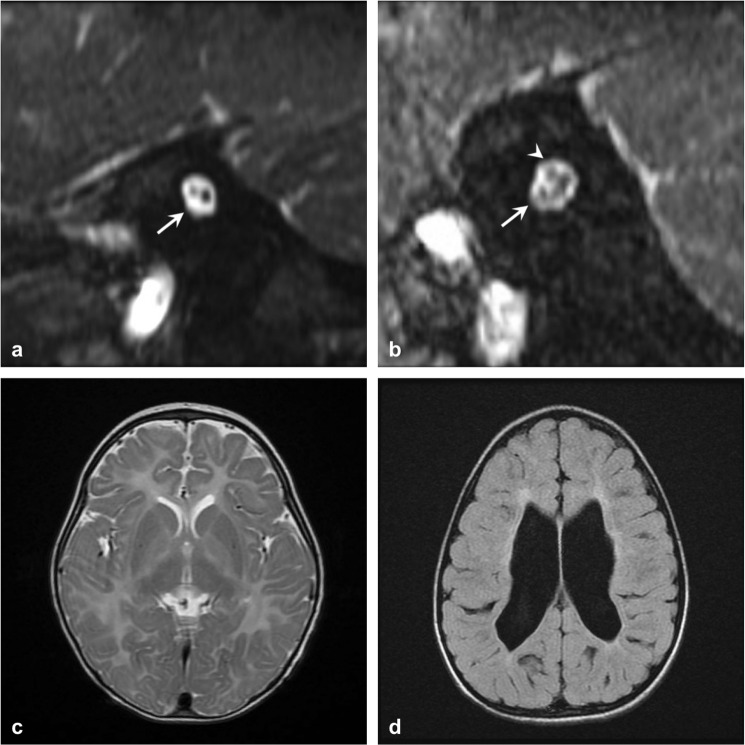
Auditory neuropathy is an important entity in childhood sensorineural hearing loss. Due to diverse etiologies and clinical features, the management is often challenging. This study used an integrative patient-history, audiologic, genetic, and imaging-based approach to investigate the etiologies and audiologic features of 101 children with auditory neuropathy. Etiologically, 48 (47.5%), 16 (15.8%), 11 (10.9%), and 26 (25.7%) children were categorized as having acquired, genetic, cochlear nerve deficiency-related, and indefinite auditory neuropathy, respectively. The most common causes of acquired and genetic auditory neuropathy were prematurity and OTOF mutations, respectively. Patients with acquired auditory neuropathy presented hearing loss earlier (odds ratio, 10.2; 95% confidence interval, 2.2-47.4), whereas patients with genetic auditory neuropathy had higher presence rate of distortion product otoacoustic emissions (odds ratio, 10.7; 95% confidence interval, 1.3-85.4). In patients with different etiologies or pathological sites, moderate to strong correlations (Pearson's r = 0.51-0.83) were observed between behavioral thresholds and auditory steady-state response thresholds. In conclusion, comprehensive assessments can provide etiological clues in ~75% of the children with auditory neuropathy. Different etiologies are associated with different audiologic features, and auditory steady-state responses might serve as an objective measure for estimating behavioral thresholds.
听觉神经病是儿童感音神经性听力损失的一个重要实体。由于病因和临床特征多样,其管理常常具有挑战性。本研究采用综合的病史、听力学、遗传学和基于影像学的方法,调查了 101 例听觉神经病儿童的病因和听力学特征。病因学上,48 例(47.5%)、16 例(15.8%)、11 例(10.9%)和 26 例(25.7%)儿童分别归类为获得性、遗传性、耳蜗神经发育不良相关和原因不明的听觉神经病。获得性和遗传性听觉神经病最常见的病因分别是早产和 OTOF 突变。获得性听觉神经病患者听力损失出现更早(优势比,10.2;95%置信区间,2.2-47.4),而遗传性听觉神经病患者畸变产物耳声发射的阳性率更高(优势比,10.7;95%置信区间,1.3-85.4)。在不同病因或病变部位的患者中,行为阈值与听觉稳态反应阈值之间存在中度至高度相关性(Pearson's r=0.51-0.83)。总之,综合评估可在约 75%的听觉神经病儿童中提供病因线索。不同病因与不同的听力学特征相关,而听觉稳态反应可能作为估计行为阈值的客观指标。