Walter and Eliza Hall Institute of Medical Research, 1G Royal Parade, Parkville, VIC, 3052, Australia.
Department of Medical Biology, University of Melbourne, Parkville, VIC, 3052, Australia.
Nat Commun. 2020 Jun 19;11(1):3060. doi: 10.1038/s41467-020-16823-3.
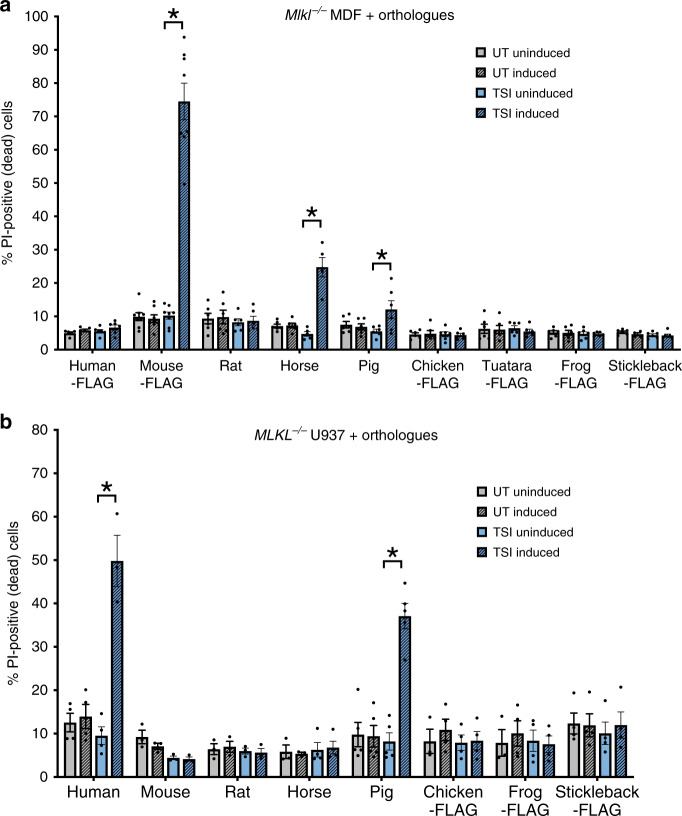
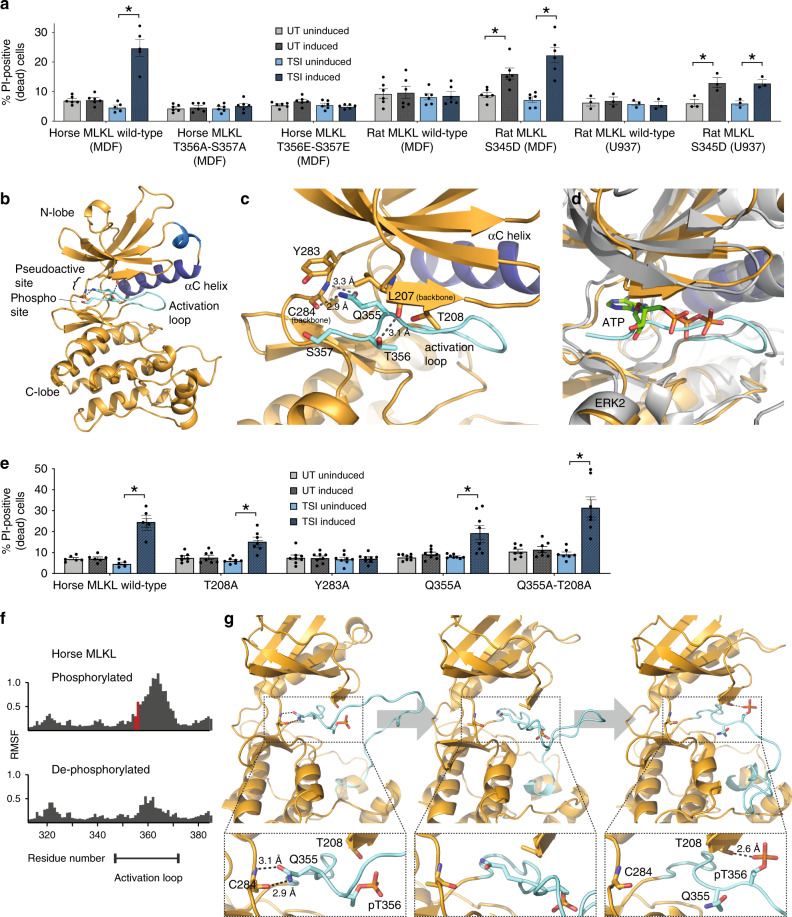
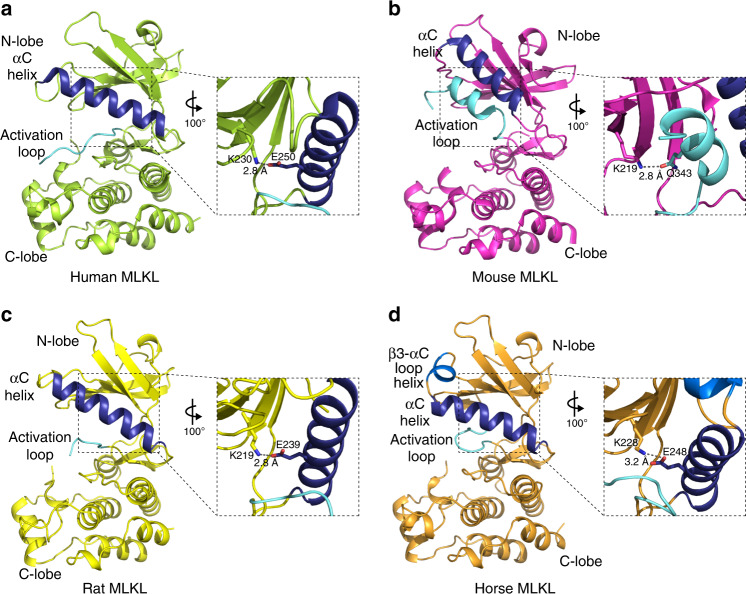
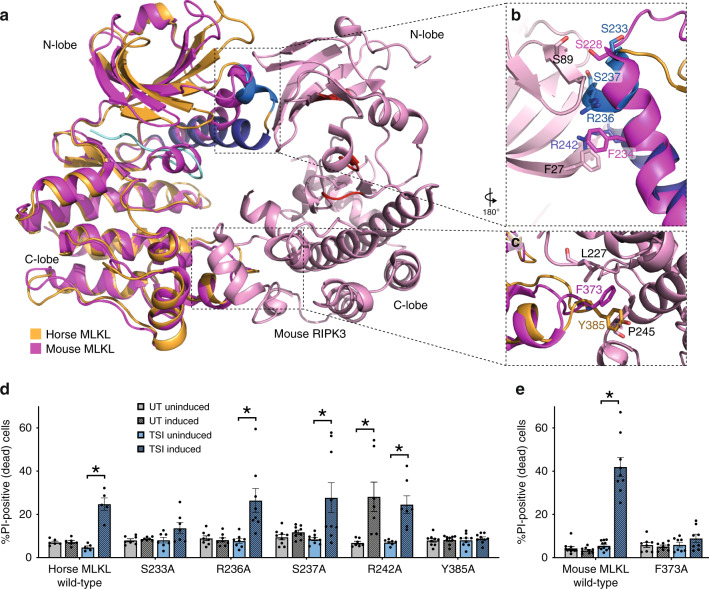
The MLKL pseudokinase is the terminal effector in the necroptosis cell death pathway. Phosphorylation by its upstream regulator, RIPK3, triggers MLKL's conversion from a dormant cytoplasmic protein into oligomers that translocate to, and permeabilize, the plasma membrane to kill cells. The precise mechanisms underlying these processes are incompletely understood, and were proposed to differ between mouse and human cells. Here, we examine the divergence of activation mechanisms among nine vertebrate MLKL orthologues, revealing remarkable specificity of mouse and human RIPK3 for MLKL orthologues. Pig MLKL can restore necroptotic signaling in human cells; while horse and pig, but not rat, MLKL can reconstitute the mouse pathway. This selectivity can be rationalized from the distinct conformations observed in the crystal structures of horse and rat MLKL pseudokinase domains. These studies identify important differences in necroptotic signaling between species, and suggest that, more broadly, divergent regulatory mechanisms may exist among orthologous pseudoenzymes.
MLKL 假激酶是细胞坏死性细胞死亡途径中的末端效应物。其上游调节因子 RIPK3 的磷酸化触发 MLKL 从休眠的细胞质蛋白转化为寡聚体,寡聚体易位并透化质膜以杀死细胞。这些过程的确切机制尚不完全清楚,并且据推测在小鼠和人细胞之间存在差异。在这里,我们检查了九种脊椎动物 MLKL 同源物之间激活机制的差异,揭示了鼠和人 RIPK3 对 MLKL 同源物的特异性。猪 MLKL 可以恢复人细胞中的坏死性信号;而马和猪,但不是大鼠,MLKL 可以重建小鼠途径。从晶体结构中观察到的马和大鼠 MLKL 假激酶结构域的不同构象可以解释这种选择性。这些研究确定了物种间坏死性信号传递的重要差异,并表明更广泛地说,在同源假酶之间可能存在不同的调节机制。