Department of Preventive Medicine, Yonsei University Wonju College of Medicine, Wonju, Republic of Korea.
Department of Dermatology, Yonsei University Wonju Severance Christian Hospital, Wonju, Republic of Korea.
Sci Rep. 2020 Jun 19;10(1):10006. doi: 10.1038/s41598-020-67238-5.
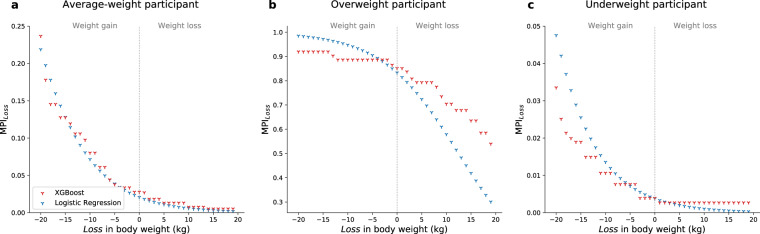
Several studies have reported that weight control is of paramount importance in reducing the risk of metabolic syndrome. Nevertheless, this well-known association does not provide any practical information on how much weight loss in a given period would reduce the risk of metabolic syndrome in individuals in a personalized setting. This study aimed to develop and validate a risk prediction model for metabolic syndrome in 2 years, based on an individual's baseline health status and body weight after 2 years. We recruited 3,447 and 3,874 participants from the Ansan and Anseong cohorts of the Korean Genome and Epidemiology Study, respectively. Among the former, 8636 longitudinal observations of 2,412 participants (70%) and 3,570 of 1,034 (30%) were used for training and internal validation, respectively. Among the latter, all 15,739 observations of 3,874 participants were used for external validation. Compared to logistic regression, Gaussian Naïve Bayes, random forest, and deep neural network, XGBoost showed the highest performance (area under curve of 0.879) and a significantly enhanced calibration of the predictive score with the prevalence rate. The model was ported onto an application to provide the 2-year probability of developing metabolic syndrome by simulating selected target body weights, based on an individual's baseline health profiles. Further prospective studies are required to determine whether weight-control programs could lead to favorable health outcomes.
多项研究报告称,控制体重对于降低代谢综合征风险至关重要。然而,这种众所周知的关联并没有提供任何关于在特定时期内减轻多少体重可以降低个体在个性化环境中代谢综合征风险的实用信息。本研究旨在基于个体的基线健康状况和 2 年后的体重,开发和验证一种 2 年内代谢综合征风险预测模型。我们分别从韩国基因组和流行病学研究的安山和安城队列中招募了 3447 名和 3874 名参与者。在前者中,对 2412 名参与者中的 8636 个纵向观察(70%)和 1034 名参与者中的 3570 个(30%)进行了训练和内部验证。在后者中,对 3874 名参与者中的所有 15739 个观察值进行了外部验证。与逻辑回归、高斯朴素贝叶斯、随机森林和深度神经网络相比,XGBoost 显示出最高的性能(曲线下面积为 0.879),并且与流行率相比,预测评分的校准得到了显著提高。该模型被移植到一个应用程序中,通过模拟选定的目标体重,根据个体的基线健康状况,提供 2 年内发生代谢综合征的概率。需要进一步的前瞻性研究来确定体重控制计划是否可以带来有利的健康结果。